Floor Loudspeaker Reviews

Sort By: Post DateTitle Publish Date

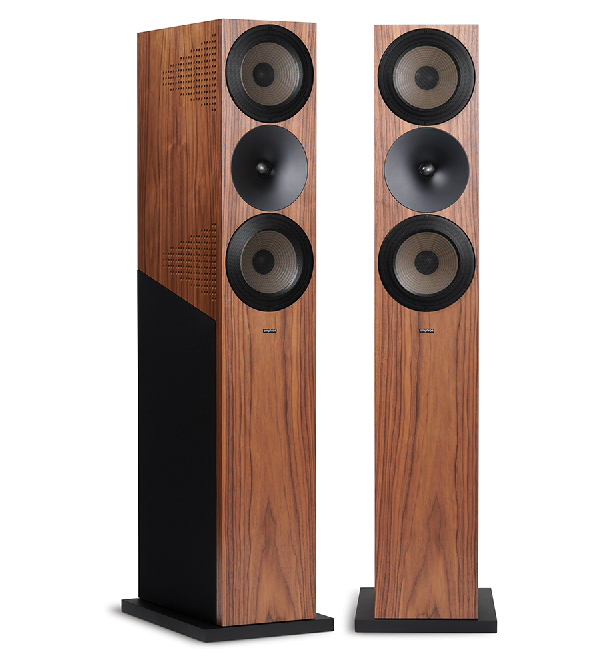
Amphion Krypton 3X loudspeaker

One of the things I value most in life is clarity. In my work, in my intellectual pursuits, and in my relationships, I try to cut through the noise and find the place where I can clearly see facts, goals, feelings, the big picture. If I can find clarity, it's much easier to form opinions, make plans, and take action. Success becomes more likely.


In audio reproduction, my values are similar. I can't enjoy music if the system is producing a clouded, muddy, overly warm, or otherwise unclear sound. I want the electromechanical representation of music to be richly detailed, sharply focused, and full range in dynamics and frequency. In that kind of all-encompassing and attention-demanding aesthetic, I can truly hear what the music is about. Under those conditions, the nature of the recording—good or bad, craft or crud—is plainly heard.

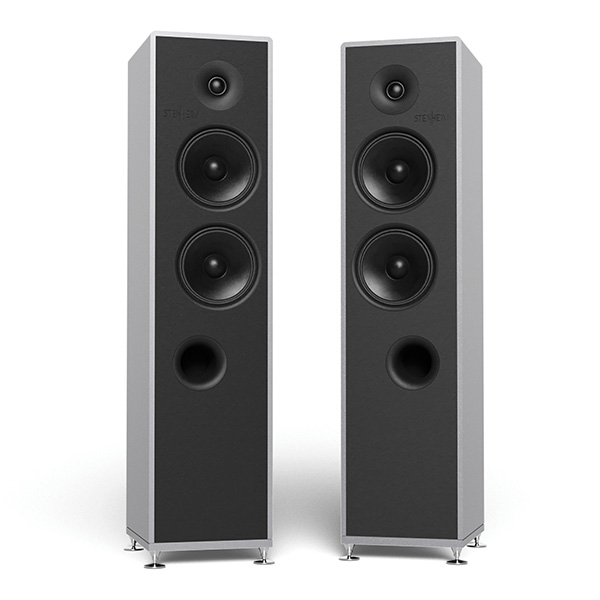
Stenheim Alumine Two.Five loudspeaker

Stereophile has favorably reviewed three loudspeakers from Swiss manufacturer Stenheim. Art Dudley reviewed the Alumine standmount in April 2012 and the Alumine Five floorstander in March 2018. More recently, Herb Reichert reviewed Stenheim's three-and-a-half-way Alumine Three tower in October 2021. My assignment for this month's issue was to review the company's Alumine Two. Five floorstander, which, at $23,500/pair, fits neatly between the Alumine Two ($13,500/pair) and Three ($36,500/pair).

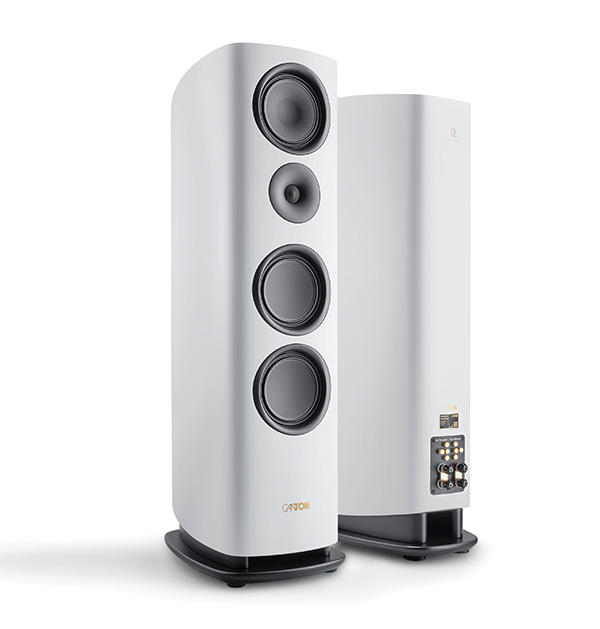
Canton Reference 5 loudspeaker

Canton Elektronik GmbH is a family-owned manufacturer of loudspeakers based in Weilrod, Germany. Founded in 1972—the name is from Latin and German: "Can" from the Latin "cantare," "to sing"; "Ton" from the German for "sound"—Canton is now well past its 50th anniversary. The largest manufacturer of perfectionist speakers in Germany, Canton is still based in the small township where it began, with manufacturing facilities in the Czech Republic.


John Atkinson reviewed the Canton Reference 7K in September 2021, and Ken Micallef followed up. The 7K ended up in Class A, Restricted Extreme LF, of Stereophile's Recommended Components list. Now that Canton has significantly revised its Reference Series, it's time to take another look and listen.

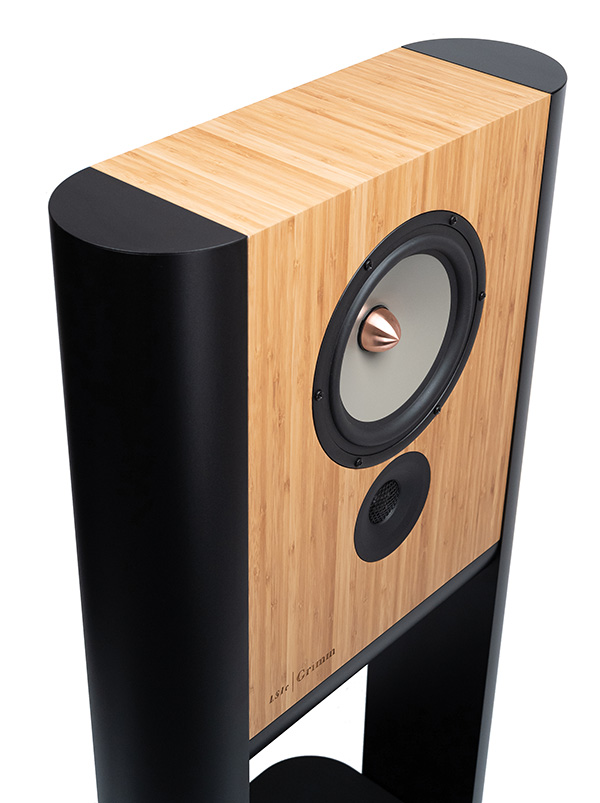
Grimm Audio LS1c active loudspeaker system

It's not unusual for audiophiles to have fond childhood recollections of the old family stereo, but Eelco Grimm's memory of his dad's audio system probably stands alone. It's not just that Piet Grimm, a professional pilot for the Dutch air defense, had a pair of very fine Infinity speakers, a Pioneer receiver, and a Technics turntable. Others surely did, too. It's more that he purchased the system from a military PX shop at a US air force base in Germany, then happily flew the equipment home to the Netherlands on his Northrop F5 supersonic fighter plane. That's not run-of-the-mill cool, that's Top Gun cool.


Years later, Eelco, too, started taking stereo gear to new altitudes, becoming a designer of high-end speakers and electronics. After Grimm Audio, a 15-person enterprise, moved to a building near Eindhoven airport in the southern Netherlands, he realized that it stands in almost the exact spot where his dad used to park his fighter jet.

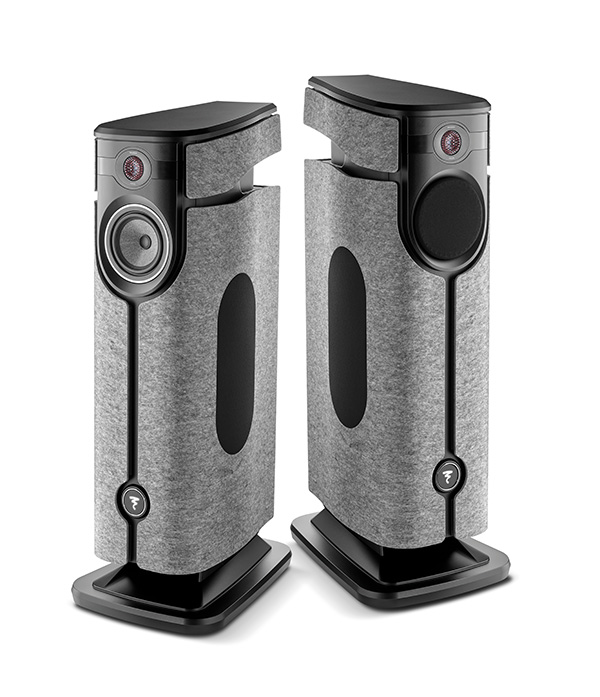
Focal Diva Utopia Wireless Streaming Active Loudspeaker

What if there was a character in Stanley Kubrick's classic movie 2001: A Space Odyssey who was an audiophile? Aboard the Discovery One interplanetary space ship, what would his system look like? He'd probably have a pair of ultramodern speakers that could pluck sound out of the ether. He'd control the system with something like a present-day smartphone or tablet, commanding the HAL 9000 computer to play his favorite songs. The speakers would stand unobtrusively in a white room with 1970s modern-minimalist furniture, no rack of components to drive them, no wires connecting them, no shelves of physical media to play. And they would fill the room with music.


I am sitting earthbound in my living room almost a quarter-century beyond the year 2001, living a similar scenario with the Focal Diva Utopia streaming amplified wireless speaker system. My living room is not at all reminiscent of the Discovery One with its rotating central interior (footnote 1). But with the Diva Utopia system, I feel more in a sci-fi future young me might have imagined than with any hi-fi component I've reviewed so far. About the only thing the Diva Utopia has in common with the stereo systems I grew up with—and with my current reference system—is two floorstanding cabinets and diaphragms that move air to make sound.

MoFi Electronics SourcePoint 888 loudspeaker

A recent high point in my career as a reviewer was writing about the MoFi Electronics SourcePoint 10 standmount loudspeaker for the February 2023 issue of Stereophile. Priced at $2999/pair, the two-way SourcePoint 10 featured an innovative 10" coaxial (HF/LF) drive unit and impressed me with its clean, superbly well-defined low frequencies, natural-sounding midrange, and the ability to play loudly without strain.


The SourcePoint 10 was the first MoFi speaker to be designed by Andrew Jones, whose earlier designs for KEF, Infinity, Pioneer, TAD, and ELAC had all taken up residence in Stereophile's Recommended Components listings over the years. The second of Andrew's designs for MoFi was the SourcePoint 8, which was favorably reviewed by Kalman Rubinson in September 2023. Priced at a competitive $1999/pair, the SourcePoint 8 also used a coaxial drive unit, but as the name suggests, the woofer diameter was 8" rather than 10". KR was also impressed by what he heard, writing that the SourcePoint 8 was a balanced, wide-range speaker that demonstrated how satisfying a small, relatively affordable loudspeaker can be.


Now we have Andrew Jones's third design for MoFi, the floorstanding SourcePoint 888, which costs $4999/pair.

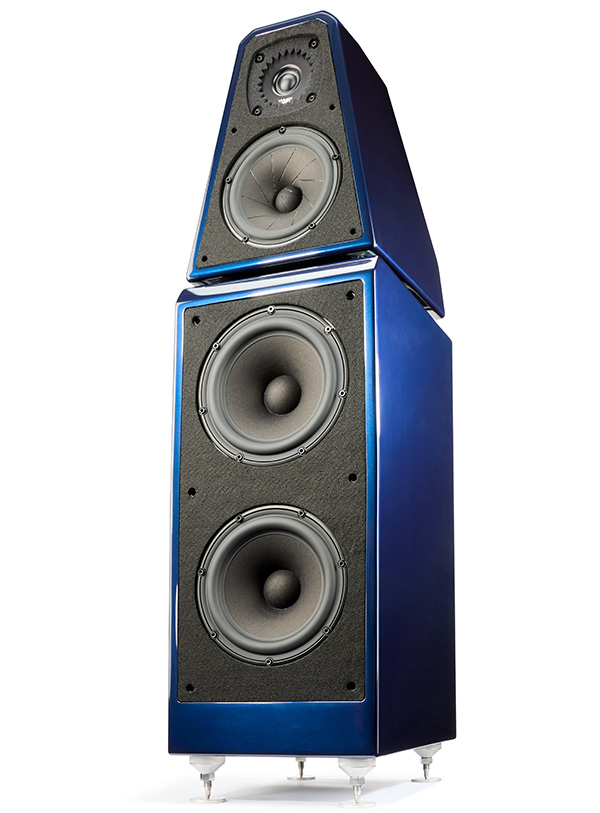
Wilson Audio Specialties The WATT/Puppy Loudspeaker

Since the original WATT/Puppy concept kicked off in the late 1980s, there has been a 40-year evolution leading to the latest version reviewed here. The loudspeaker's price in 2025 is around $40,000/pair compared to the original's $8000. While inflation alone would have lifted the price to $25,000/pair, the current price takes into account the many technological and design improvements. While remaining physically separable, the upper "WATT" (Wilson Audio Tiny Tot) component, namely the head unit of the latest design, can no longer be run as a small full-range loudspeaker in its own right. This is because the mid/treble crossover, which was originally in the WATT, is now relocated to the lower "Puppy" section. Certainly, that original two-box "full range," strongly sculpted WATT/Puppy stack radically broke the mold in deviating from those rather plain, coffin-shaped tower loudspeakers that were popular in this category.


The late David Wilson originally created the WATT as a shelf-mount studio monitor to help produce his recordings. At the time, this compact two-way promised near–state-of-the-art sound quality, especially transparency, indicative of very low self-noise. This quality also helped to maximize dynamic range and contrast. Later, David used the WATT as the foundation for a three-way floorstanding design by matching it to a low-frequency system (the Puppy), which also stood in as a physical platform for the WATT. This idea became reality in the successful W/P line of bass augmented systems.

Estelon X Diamond Mk II loudspeaker

Taste is a funny thing. Love cilantro? Millions swear it tastes like soap. Similarly, design cognoscenti will gush over a minimalist Scandinavian sofa that others dismiss as just a pricey plank with delusions of grandeur.


There's no accounting for taste, or so the truism goes. But arguing over preferences is exactly what many audiophiles do. Similarly, Stereophile reviewers are all about parsing and evaluating sound, and how a product looks isn't usually a big part of the equation. But I'll buck that convention and say that the radically shaped Estelon X Diamond Mk IIs aren't just the most visually sublime speakers I've laid eyes on; they ought to be part of the Cooper Hewitt Museum's permanent collection. Or MOMA's.

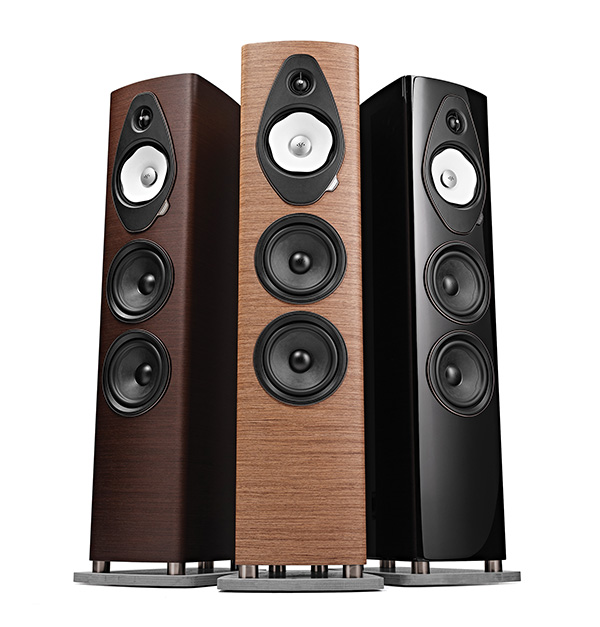
Sonus faber Sonetto V G2 loudspeaker

Here's a hard truth: A written review of a full-sized speaker—any speaker, really—is, at best, semi-useful. We all listen differently, we have different musical tastes, our system electronics are different, and our listening rooms vary a lot. You will gain a general picture of a speaker's capabilities and foibles from John Atkinson's measurements, and I can tell you how the speakers sound to me, in my room. But that's it. You need to hear them for yourself before making a buying decision. The best I can do is tell you how my music brain felt when the speakers were in my house and making music.


But hey, that's better than nothing. If you're in the market for a pair of modestly sized, reasonably priced floorstanding loudspeakers, I encourage you to read on as I describe the lively musical times I spent with the Sonus faber Sonetto V G2s ($6499/pair).

Advertisement
Advertisement
Advertisement