

47 Laboratory 4715 D/A processor & 4716 CD transport
Back in 1984, when I still had all my hair and began listening to digital audio (wait a minute...), I was disappointed with the compact disc. Most of that disappointment came from the format's musical performance, which was poor, but a portion of my dismay came from realizing that my days as a hands-on hobbyist were numbered: I was used to selecting and setting up my own turntable, tonearm, and cartridge, but a CD player defied such involvement. Plugging it in and playing it were all that I or most anyone else could do.
A FollowUp RoundUp
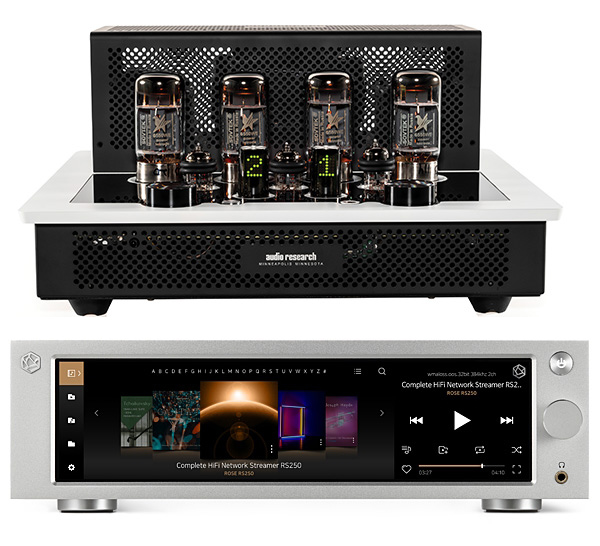
Three products were recently subjected to second opinions: I reviewed the revised RS250A version of HiFi Rose's RS250 streaming D/A preamplifier and the optional DC1 DAC module for Audio Research's I/50 integrated amplifier; Ken Micallef wrote about his time with the Volti Razz loudspeaker.
Abbingdon Music Research DP-777 D/A processor
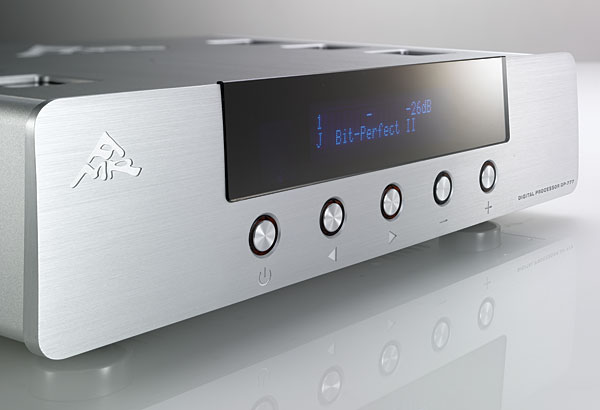
Computer audio is more than just a pleasant distraction. For the jaded reviewer, USB digital converters and the like are an escape from that humdrum, if only because they bring with them so many variables: myriad combinations of different platforms, storage devices, operating systems, device drivers, media players, codecs, word lengths, sampling rates, connection protocols, and more. Challenging though they may be, computer-audio products are a tonic for reviewers inclined toward apathy.
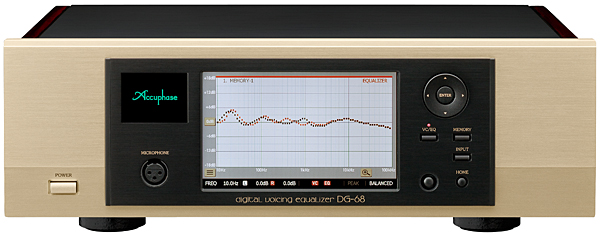
Accuphase DG-68 Digital Voicing Equalizer
We hold these truths to be self-evident, that all men are created equal.
A great conceptsound enough to serve as the foundation for an independent democratic nation.
Yet what's sound in one sphere doesn't necessarily apply to sound in another, namely the rooms in which our systems reside. As much as we audiophiles may wish to declare our independence from room resonances, image smearing from first-order reflections, slap echo, and every other environmental and speaker-related factor that can handicap system performance, no mere declaration will make it so. Not all roomsand not all componentsare created equal.
Adcom GDA-700 D/A processor
 The availability of the Pacific Microsonics High Definition Compatible Digital (HDCD®) PMD100 decoder chip, manufactured by San Jose's VLSI Technology, has brought about a minor revolution in Compact Disc playback. It brings sonic improvements in imaging, soundstaging, and resolution of detail. In the past six months, Stereophile has published a number of reports on the HDCD decoder's operation, what HDCD recordings are available, and the improvements brought by the HDCD chip to specific digital audio processors (footnote 1). High-end manufacturers are incorporating the $40 HDCD chip in their newest decoders, including the $4695 Sonic Frontiers SFD-2 Mk.II D/A processor, the $15,950 Mark Levinson No.30.5, and the $8195 Spectral SDR-2000 Professional HDCD D/A Processor (reviewed in Vol.18 No.5).
Allnic D-5000 DHT D/A processor
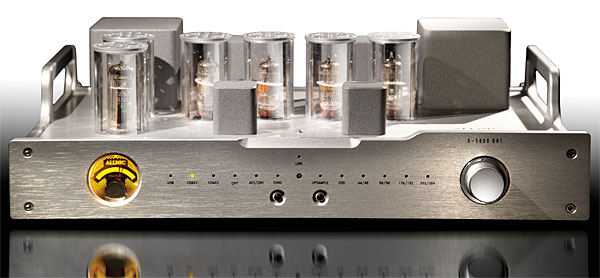
There may have been a time when vacuum tubes and microprocessors seemed strange bedfellows. But nowadaysgiven the countless digital processors with tubed output stages, and an even greater number of tubed amps and preamps whose insides are crawling with the latest solid-state deviceswe're more or less used to the idea. Here as elsewhere, hybrids are no big deal.
Antelope Audio Zodiac Platinum D/A processor–headphone amplifier & Voltikus power supply
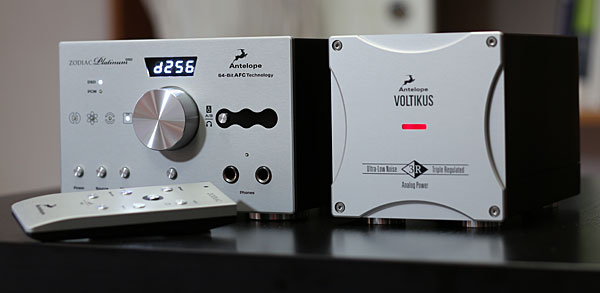
Professional digital audio is like gravity to consumer audio's antigravity: pro gear draws music into digital files, and consumer audio releases those same notes back out again.
It's not surprising, then, that many audiophile digital-to-analog converters come to us from the pro-audio industry, which has a hierarchy similar to the consumer side: value-oriented products all the way up to ultimate-performance brands. Examples of pro-audio companies that also offer audiophile DACs for consumers abound: Benchmark, CEntrance, Grace Design, Korg, Mytek, and Nagra, to name a few.
Apogee Electronics Groove D/A headphone amplifier
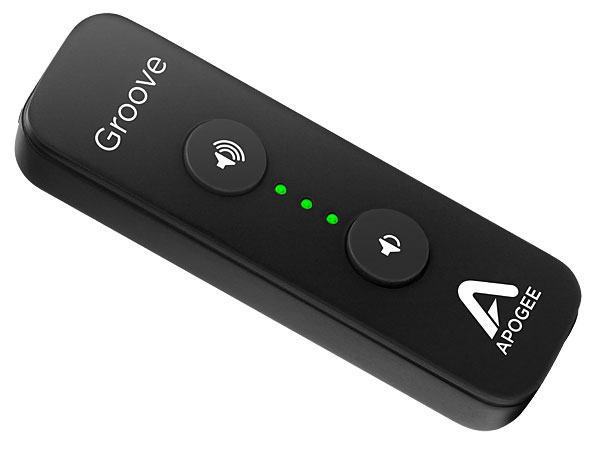
Apogee Electronics Corp. has been in business for 30 years, and I've always thought of them as one of the pro-audio companies responsible for moving digital in the right direction. They've made their mark in recording studios around the planet with digital-audio interfaces and master clocks that have long been considered some of the most technically and sonically advanced, and that were probably used in a high percentage of the recordings in your collection. So when I saw Apogee pop up at the consumer end of the market with a technically unique product, budget-priced at $295, it got my attention.
Apogee Electronics PSX-100 digital converter
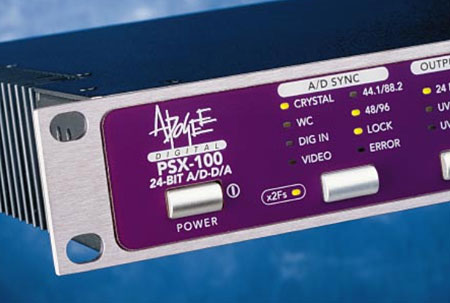
Can a piece of studio gear find happiness on an audiophile's equipment stand? More important, can an audiophile derive satisfaction from its sound?
Apple AirPort Express Wi-Fi Hub-D/A processor
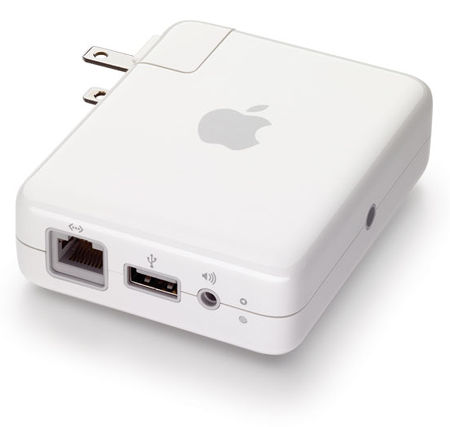
Usually, a Stereophile "Follow-Up" follows up (duh!) a full review of the component in question. This review, however, is intended to flesh out a cryptic comment made by Wes Phillips in April's "As">http://www.stereophile.com/asweseeit/405awsi">As We See It": "When Apple introduced its AirPort Express wireless multimedia link," Wes wrote, "it even included a digital port so that an audiophile—such as Stereophile's editor—could network his system, using the AE to feed his Mark">http://www.stereophile.com/digitalsourcereviews/159">Mark Levinson No.30.6 outboard D/A converter. 'Sounds okay,' deadpans JA."