 The availability of the Pacific Microsonics High Definition Compatible Digital (HDCD®) PMD100 decoder chip, manufactured by San Jose's VLSI Technology, has brought about a minor revolution in Compact Disc playback. It brings sonic improvements in imaging, soundstaging, and resolution of detail. In the past six months, Stereophile has published a number of reports on the HDCD decoder's operation, what HDCD recordings are available, and the improvements brought by the HDCD chip to specific digital audio processors (footnote 1). High-end manufacturers are incorporating the $40 HDCD chip in their newest decoders, including the $4695 Sonic Frontiers SFD-2 Mk.II D/A processor, the $15,950 Mark Levinson No.30.5, and the $8195 Spectral SDR-2000 Professional HDCD D/A Processor (reviewed in Vol.18 No.5).
"The difficulty is that conquering the top end of the global hi-fi market is hardly a way to get fabulously wealthy," said one observer ("Pacific Microsonics—Before the Gold Rush," The Economist, April 15, 1995). For HDCD-encoded CDs to be enjoyed by more listeners, relatively inexpensive processors need to be produced, like the $799 Audio Alchemy DDE v3.0. Similarly, the $1495 Enlightened Audio Designs (EAD) DSP-1000 and the $1000 Adcom GDA-700 are equipped with the PMD 100 HDCD decoder and are considered more "affordable" D/A processors.
The good news is that, by the end of March 1995, six of the 25 manufacturers licensed to use the HDCD process were offering units selling for less than $1500 (Adcom GDA-700, Audio Alchemy DDE v3.0, Electronic Visionary Systems DAC-2, EAD's DSP-1000, Parasound's D/AC-1600 HD, PS Audio's SL Three), and three were offering price-effective upgrades (Counterpoint's D/A-10 HDCD Upgrade, Pink Triangle's DaCapo HDCD Upgrade, and Theta Digital's DS Pro Generation III HDCD Decoding Module).
Another aspect of "getting the technology downmarket," states Michael Ritter, Pacific Microsonic's President (in The Economist) is to produce more HDCD-encoded CDs. Only a limited number of HDCD CDs had been issued by late summer 1995. Pacific Microsonics' just-announced summer 1995 shipments of production versions of the HDCD professional encoder to major producers should increase the availability of encoded discs. Even if the HDCD discs are slow to appear, both Robert Harley and Lawrence B. Johnson of the New York Times have found that all CDs sound better on HDCD-based processors. Other commentators find that HDCD-encoded discs sound better when played over standard non–HDCD-equipped processors. For that reason, this review was carried out with both types of CDs.
The availability of the Pacific Microsonics High Definition Compatible Digital (HDCD®) PMD100 decoder chip, manufactured by San Jose's VLSI Technology, has brought about a minor revolution in Compact Disc playback. It brings sonic improvements in imaging, soundstaging, and resolution of detail. In the past six months, Stereophile has published a number of reports on the HDCD decoder's operation, what HDCD recordings are available, and the improvements brought by the HDCD chip to specific digital audio processors (footnote 1). High-end manufacturers are incorporating the $40 HDCD chip in their newest decoders, including the $4695 Sonic Frontiers SFD-2 Mk.II D/A processor, the $15,950 Mark Levinson No.30.5, and the $8195 Spectral SDR-2000 Professional HDCD D/A Processor (reviewed in Vol.18 No.5).
"The difficulty is that conquering the top end of the global hi-fi market is hardly a way to get fabulously wealthy," said one observer ("Pacific Microsonics—Before the Gold Rush," The Economist, April 15, 1995). For HDCD-encoded CDs to be enjoyed by more listeners, relatively inexpensive processors need to be produced, like the $799 Audio Alchemy DDE v3.0. Similarly, the $1495 Enlightened Audio Designs (EAD) DSP-1000 and the $1000 Adcom GDA-700 are equipped with the PMD 100 HDCD decoder and are considered more "affordable" D/A processors.
The good news is that, by the end of March 1995, six of the 25 manufacturers licensed to use the HDCD process were offering units selling for less than $1500 (Adcom GDA-700, Audio Alchemy DDE v3.0, Electronic Visionary Systems DAC-2, EAD's DSP-1000, Parasound's D/AC-1600 HD, PS Audio's SL Three), and three were offering price-effective upgrades (Counterpoint's D/A-10 HDCD Upgrade, Pink Triangle's DaCapo HDCD Upgrade, and Theta Digital's DS Pro Generation III HDCD Decoding Module).
Another aspect of "getting the technology downmarket," states Michael Ritter, Pacific Microsonic's President (in The Economist) is to produce more HDCD-encoded CDs. Only a limited number of HDCD CDs had been issued by late summer 1995. Pacific Microsonics' just-announced summer 1995 shipments of production versions of the HDCD professional encoder to major producers should increase the availability of encoded discs. Even if the HDCD discs are slow to appear, both Robert Harley and Lawrence B. Johnson of the New York Times have found that all CDs sound better on HDCD-based processors. Other commentators find that HDCD-encoded discs sound better when played over standard non–HDCD-equipped processors. For that reason, this review was carried out with both types of CDs.
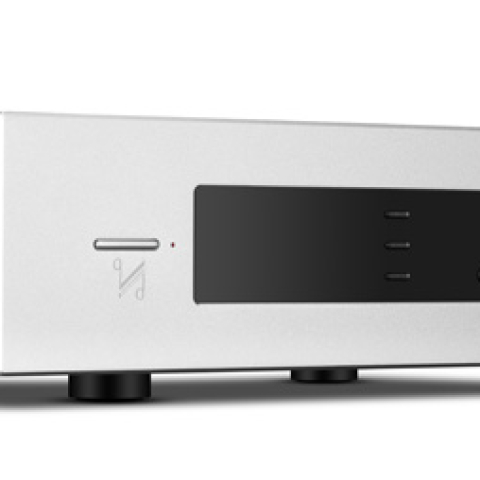
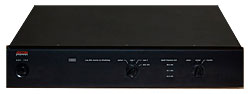
The Adcom GDA-700 is housed in a standard U-shaped chassis, with a top cover held on by Mark Levinson–style countersunk Allen screws in front and Philips screws in back. The inside of the cover is fitted with a layer of damping material. Even so, the chassis makes a hollow sound when the front-panel switches are operated, just as RH had noticed with the now-discontinued GDA-600 (see Vol.17 No.3, p.109). Although this should have no effect on the unit's signal-processing functions, it gives the impression that the Adcom is lightweight, not particularly solid.
There seemed to be minimal requirements for installing and setting up either the Adcom or EAD decoders, other than moving manual rotary switches to the correct positions for proper input and polarity. By contrast, setting the Audio Alchemy units involved toggling pushbuttons on either the DTI's front panel or the DDE's remote to turn on the correct LED settings on the front panels. The Audio Alchemy Remote Wand allowed me to control volume, mute, and balance without moving from my seat, some 15' away. A remote definitely helps in fine-tuning the system while remaining involved in the music. Comparisons among the three decoders were complicated because their output voltage differed markedly. The Audio Alchemy DDE v3.0, with its remote volume adjusted to maximum for best resolution, delivers 3.6V fixed output, considerably more than the GDA-700's 2V maximum. This voltage difference favored the Audio Alchemy decoder, making it sound much more "lively and transparent," but this difference was lessened when the gains were matched (see JA's recommendations for level matching in the sidebar of his Mark Levinson No.38S preamplifier review, Vol.18 No.7). Because two of the three decoders have fixed outputs, I matched the gains for all three by adjusting the preamplifier's volume control before each listening comparison. I set the voltage output from the amplifier at the Quad loudspeaker's terminal to 3.2V AC on a Micronta Digital Multimeter when driven with the 1kHz warble tone on Stereophile's first Test CD. Of course, the Test CD is not HDCD-encoded. Therefore, the DSP-1000's switchable attenuation for non-HDCD CDs was left in the default position (attenuation on) to match the two other decoders. Each musical selection was auditioned on all three converters, with the order of converters used switched (both input and output cables) every two selections. As a result of these time-consuming procedures, the listening comparisons took much longer than other reviews. If I'd had a preamp that "remembered" gain settings, such as the Audio Alchemy DLC or the Mark Levinson No.38S, my job would have been much easier!
Inserted into my system, the Adcom GDA-700 created a deep sonic soundstage with more specific layering and clearer instrumental outlines. It was the most transparent of the three units and yielded better resolution of low-level detail. In addition, it seemed faster, with a strong sense of dynamic pace and bass impact. Bass dynamics were the GDA-700's forte. When a solid pipe-organ note was played, the Adcom helped create a tight, pressured, sustained bass note, as heard during John Rutter's "A Gaelic Blessing" on his Requiem and Five Anthems (Reference RR-57CD). I've heard this same "room lock" effect during a live performance of the pipe organ in the Princeton University chapel, a huge acoustic space with a 50' ceiling and stone walls, modeled on a medieval cathedral. Other bass passages were reproduced well, especially low-level musical detail. Listening to Bruce Yeh's HDCD-encoded Ebony Concerto (Reference RR-55CD), I found the deep tom-tom slap had good, solid impact and heft on Artie Shaw's Clarinet Concerto. The Adcom was able to render the image of a large acoustic space when playing bass; it was almost the equal of the EAD processor, particularly on the "Lux Aeterna" selection from the Requiem CD. Yet the male chorus's words were more distinct over the Audio Alchemy system. Perhaps the DTI's jitter attenuation helps decode speech!
All three of these HDCD-equipped decoders have wide dynamic range, which lends pace and impact to digital music. Now it's possible to have large dynamic contrasts without the glare and harshness associated too often with the CD medium. These improvements are available in all three of these under-$2000 decoders—good news for audiophiles. The Adcom GDA-7000 offers HDCD decoding and excellent sonics, and should join Audio Alchemy DDE v3.0 and the DTI v2.0 on Stereophile's "Recommended Components" list. The Adcom GDA-700 has the best build quality of the three units. Sonically, it was more dynamic, more transparent, and more adept at retrieving low-level detail, and thus more musically involving than the EAD DSP-1000. If transparency of sonics, retrieval of low-level detail, and bass slam and heft are critical, the Adcom GDA-700 may be for you.
Footnote 1: "HDCD Overview" (Vol.18 No.3); an interview with HDCD's inventors ("Reinventing the Digital Future," Vol.18 No.5); HDCD's implications for the audio enthusiast ("Perfect Sound Forever," Vol.18 No.5); HDCD's impact on the sonic quality of high-end digital decoders (in a review of the Spectral HDCD D/A processor, Vol.18 No.5); and news of recent recordings ("Industry Update," Vol.18 No.11).