

Aqua Acoustic Quality Aqua Formula xHD D/A processor
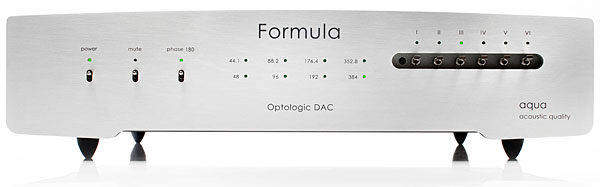
At the 2018 Consumer Electronics Show, when John Atkinson and I entered the room shared by Lamm Industries, Aqua Acoustic Quality, and Kharma room, we were looking for two things: good sound, and digital products for me to review. When we spied AAQ's Formula xHD digital-to-analog converter, the possibility of evaluating a potentially excellent DAC made by someone other than the usual suspects felt like a golden opportunity.
Arcam Delta Black Box D/A processor
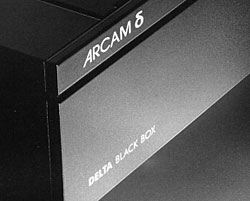 As explained by Ken Kessler elsewhere in this issue, the English A&R Cambridge company made their name by producing one of the UK's most successful integrated amplifiers, the 40Wpc A60. This neatly styled model was in production for a decade or so and was the basis for a large number of good-sounding but inexpensive audio systems. These days, the company, whose products in the US sell under the Arcam banner, is a major British hi-fi manufacturer, with a product line that includes integrated amplifiers, tuners, loudspeakers, cartridges, and even a CD player. A&R was, I believe, the first UK manufacturer to obtain a player-manufacturing license from Philips, and with the product under review here, has broken new territory for a supposedly "audiophile" company in having a custom LSI chip manufactured to their own requirements.
Arcam FMJ D33 D/A processor
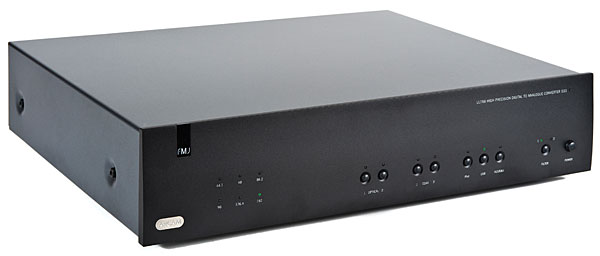
As I wrote in my review of the Bricasti M1 D/A processor in February 2012, it seemed a good idea in the late 1980s: upgrade the performance of your CD player by feeding its digital output to an outboard digital/analog processor. British manufacturer Arcam, one of the first companies to see the opportunities in this strategy, introduced their Black Box in 1988. When I reviewed the Black Box in February 1989, I found that its low-level linearity was among the best I had measured at that time for a product featuring the 16-bit Philips TDA1541 DAC chip set. However, that linearity still wasn't very good in absolute terms. Back then, it required heroic and expensive engineering to obtain D/A performance that did justice to the 16-bit CD. These days, however, the semiconductor foundries produce a plethora of relatively inexpensive D/A processor chips that both handle 16-bit data with ease and wrest full resolution from 24-bit data.
Arcam irDAC-II D/A processor
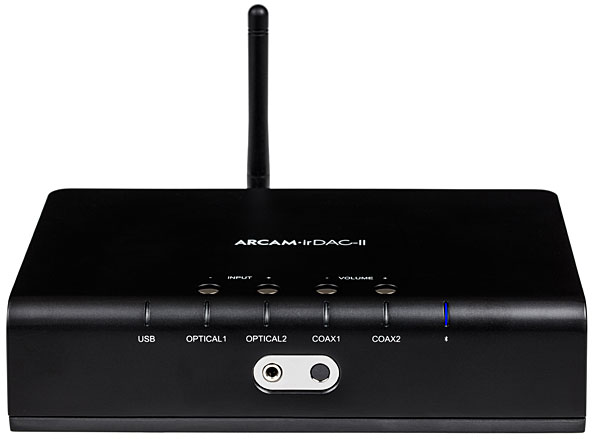
For digital playback, in recent months I've been breathing some rarefied air, pricewise. In December 2016, I reviewed dCS's Rossini Player and Clock, followed in May 2017 by Meridian's Ultra DAC, and in June by Chord's DAVE DAC. The Rossini Player costs $28,499 without the Clock, the Meridian $23,000, and though the DAVE is less expensive than either at $10,588, that's still a fair chunk of change. Even PS Audio's PerfectWave DirectStream DAC, which I bought following Art Dudley's review in September 2014, costs $6899 with the Network Bridge II, which hardly counts as "affordable."
Arvus H2-4D multichannel Dolby Atmos digital processor
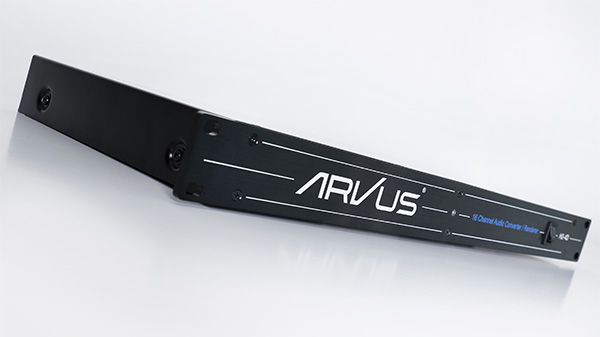
It has taken almost three years, but Dolby Atmos is now permeating the music-streaming sites; note that most of the recent Grammy winners are available in Atmos.
Up to now, access to Atmos has been largely restricted to HT hardware; its success for music will depend on wide availability and non-HT options for audiophile music lovers to stream and to play discs or files in Atmos, especially in lossless versions. Enter the Arvus H2-4D.
ASUS Xonar Essence One Muses Edition D/A processor–headphone amplifier
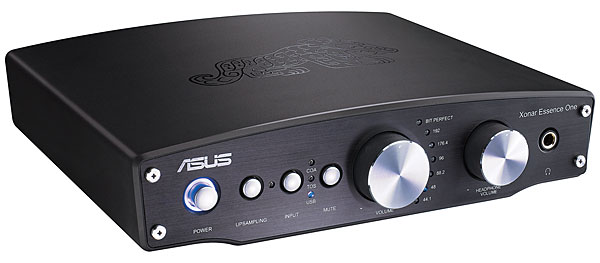
Back in the summer of 2009, USB-connected D/A processors that could operate at sample rates greater than 48kHz were rare. Ayre Acoustics had just released its groundbreaking QB-9, one of the first DACs to use Gordon Rankin's Streamlength code for Texas Instruments' TAS1020 USB 1.1 receiver chip. Streamlength allowed the chip to operate in the sonically beneficial asynchronous mode, where the PC sourcing the audio data is slaved to the DAC. But high-performance, USB-connected DACs like the Ayre were also relatively expensive back then, so in the January 2010 issue of Stereophile I reviewed a pair of soundcards from major computer manufacturer ASUS , the Xonar Essence ST and STX, which, at $200, offered a much more cost-effective means of playing hi-rez files on a PC.
Audio Alchemy Digital Decoding Engine v1.0
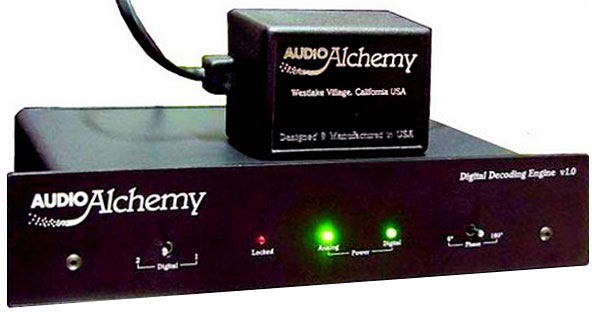
No, the $399 price listed in the specification block isn't a misprint. And yes, the Audio Alchemy Digital Decoding Engine v1.0 is indeed a full-function outboard digital processor. And since this is the August issue, not April, you can stop worrying that this review is some kind of joke.
The $399 Digital Decoding Engine is for real.
Audio Alchemy DTI•Pro 32 Jitter Filter
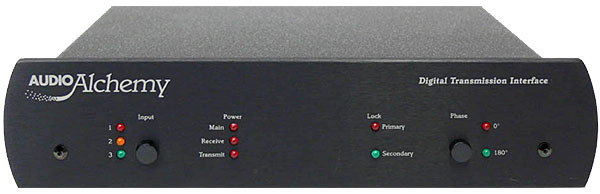
With the introduction of Audio Alchemy's Digital Transmission Interface (DTI) more than three years ago, the company created an entirely new category of hi-fi product: the jitter filter. The original DTI was a good start, but didn't always improve the sound of the better-quality digital front-ends.
Audio Research DAC1 D/A converter
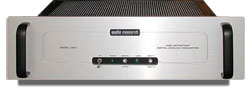 The past 12 months have seen some remarkable developments in digital playback. Standards of digital musicality are far higher than they were a year ago, both on an absolute performance basis and in terms of what you get at various price levels. No other component category has seen such tremendous gains in value for money or number of new products introduced. It seems hard to believe that since Vol.13 No.6 (12 issues ago), we've reviewed such noteworthy digital processors as the Meridian 203, Proceed PDP 2, Stax DAC-X1t, Theta DSPro Basic, Wadia X-32, Esoteric D-2, PS Audio SuperLink, and VTL D/A. Each of these converters brought a new level of performance to its price pointor, in the case of the Stax and VTL, established a new benchmark of ultimate digital performance.
Just as these units provided stiff competition for previous products, so too will they come under the assault of improving technology. The art of digital processor design is so young that we can continue to expect further improvements coupled with lower prices as designers move up the learning curve.
The past 12 months have seen some remarkable developments in digital playback. Standards of digital musicality are far higher than they were a year ago, both on an absolute performance basis and in terms of what you get at various price levels. No other component category has seen such tremendous gains in value for money or number of new products introduced. It seems hard to believe that since Vol.13 No.6 (12 issues ago), we've reviewed such noteworthy digital processors as the Meridian 203, Proceed PDP 2, Stax DAC-X1t, Theta DSPro Basic, Wadia X-32, Esoteric D-2, PS Audio SuperLink, and VTL D/A. Each of these converters brought a new level of performance to its price pointor, in the case of the Stax and VTL, established a new benchmark of ultimate digital performance.
Just as these units provided stiff competition for previous products, so too will they come under the assault of improving technology. The art of digital processor design is so young that we can continue to expect further improvements coupled with lower prices as designers move up the learning curve.
AudioPraise VanityPRO HDMI audio extractor
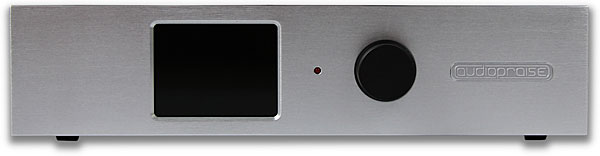
The increasing prominence of Blu-ray explains why a device to extract audio from an HDMI stream has become necessary. At first, Blu-ray players had HDMI outputs for video and audio, but to speed their adoption, they also sported analog audio outputs to help users who had older AV receivers (AVRs). Bye the bye, those audio outputs were pared off.