

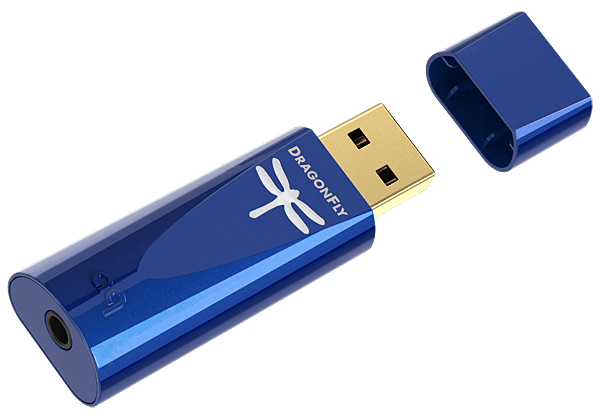
AudioQuest DragonFly Cobalt USB D/A-headphone amplifier
Unlike the world of recorded music, where streaming has decimated sales of physical products, book publishing is seeing the reverse trend: sales of eBooks are declining while those of both hardback and paperback books are recovering. I have been a book junkie all my lifethe two long walls of my listening room are lined with floor-to-ceiling bookshelves and I have many boxes of books in storagebut these days almost all my book reading is with the Kindle app on my iPad mini.
AudioQuest DragonFly Red & Black USB D/A headphone amplifiers
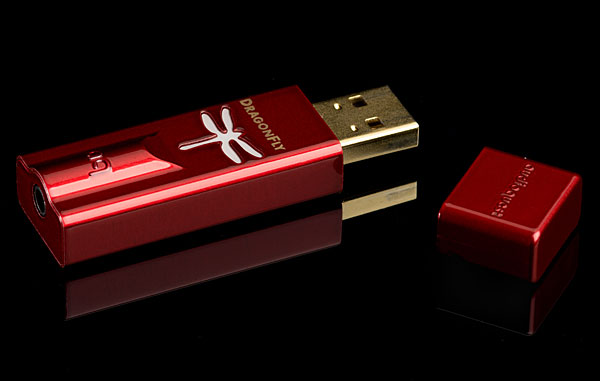
Approximately 331/3 years after AudioQuest's first phono cartridge, the company announced two new USB D/A headphone amplifiers: the DragonFly Black ($99) and the DragonFly Red ($199). Both have circuits designed by the engineer responsible for the original DragonFlyGordon Rankin, of Wavelength Audioand both have the novel distinction of requiring considerably less operating power than their predecessors, so much less that the new DragonFlys can be used with iPhones, iPads, and various other mobile devices.
AudioQuest DragonFly USB D/A converter
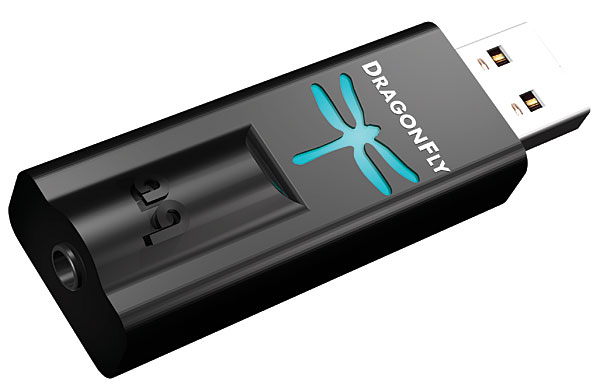
"This product is an industry disrupter."
Thus spoke AudioQuest's Steve Silberman, VP of development, of their brand-new USB D/A converter, the DragonFly. "There are a lot of very good DACs out there," he continued. "There are even a lot of very good affordable DACs. But the problem is, people outside of audio don't want them: They don't want old-style components like that.
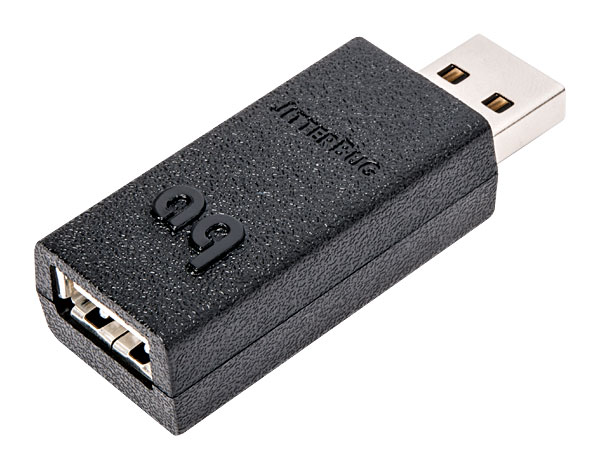
AudioQuest JitterBug USB noise filter
I got an early start on computer audio. At the end of the last century I was using WinAmp with first a CardDeluxe PCI soundcard, then a similar card from RME, to play files on a Windows PC. After I became a MacPerson, I used FireWire audio interfaces from pro-audio company Metric Halo and an inexpensive USB-connected ADC/DAC from M-Audio. But it was with the USB version of Benchmark's DAC 1 that the computer began taking over from physical discs for my music listening. At first I used iTunes au naturel, but as I acquired more high-resolution files, I began using Pure Music to handle all the tedious audio housekeeping, assigning as a dedicated music server a G4 Mac mini I'd bought in 2006.
Auralic Altair D/A processor
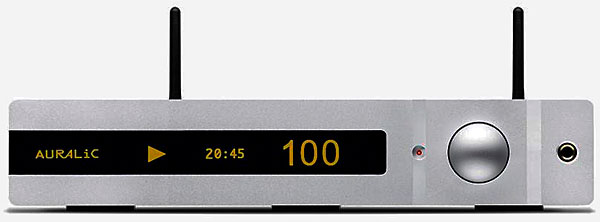
Now that we've entered a world of post-disc audio (sorry, AnalogPlanet.com), audiophile streaming and file-playback products have appeared by the hundreds, and many companies are on their second, third, or even fourth-generation models.
The Chinese company Auralic Limited has been pushing bits around for seven years, releasing a half-dozen streaming and network devices. Their newest, the Altair, combines in a single package the functions of a DAC, streamer, and headphone amplifier with volume control, allowing it also to operate as an all-digital-system preamplifier. Just add power amp and speakers.
AURALiC VEGA D/A processor
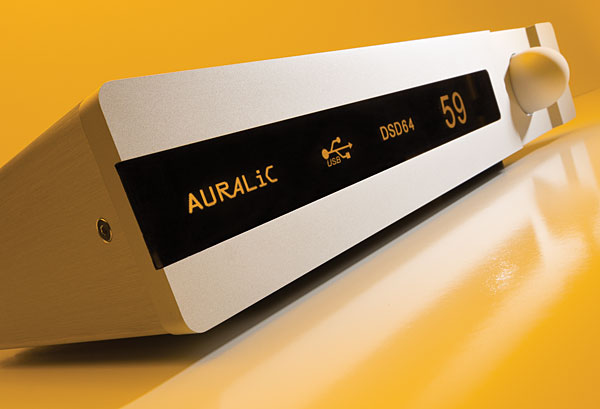
I was alerted to the new VEGA D/A processor from Chinese manufacturer AURALiC by Michael Lavorgna's rave review for our sister site AudioStream.com in April 2013: "Everything I played through the Auralic Vega was equally wow-inducing. Everything. . . . Music I've heard hundreds of times was presented with a crisp, clean, and delicate clarity that was simply uncanny and made things old, new again. . . . Its ability to turn music reproduction into an engaging and thrilling musical experience is simply stunning."
Aurender Flow D/A headphone amplifier
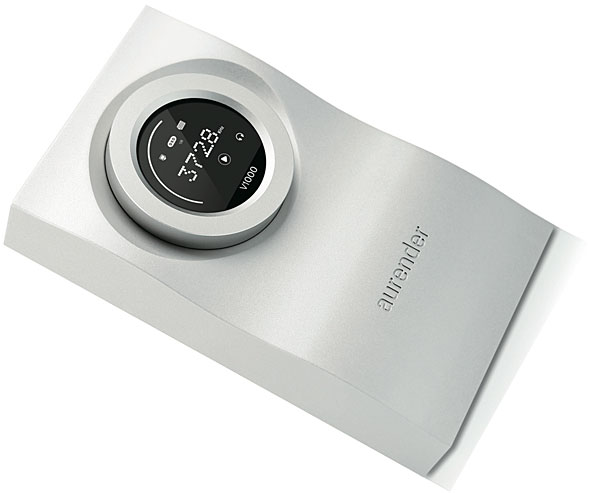
Aurender was a name new to me when I encountered the company at the 2015 Consumer Electronics Show, where they displayed a range of music servers designed in California and manufactured in South Korea. But what caught my attention in Aurender's suite was their Flow portable D/A headphone amplifier ($1295). This handsome, battery-powered device, housed in a machined aluminum case about twice the size of a pack of playing cards, offers optical S/PDIF and USB 2.0/3.0 input ports and a single ¼" stereo headphone jack. Two features distinguish the Flow from the pack: Its USB input can be used with iOS (iPhone/iPad) and Android smartphone sources, and it can accept an mSATA drive (not included in price) of up to 1TB capacity for internal storage of audio files. Visually, the Flow's distinguishing feature is its round LCD display, which stands proud of the faceplate; the bezel encircling the display acts as a velocity-sensitive volume control operating in 0.5dB steps.
Ayre Acoustics Codex D/A headphone amplifier
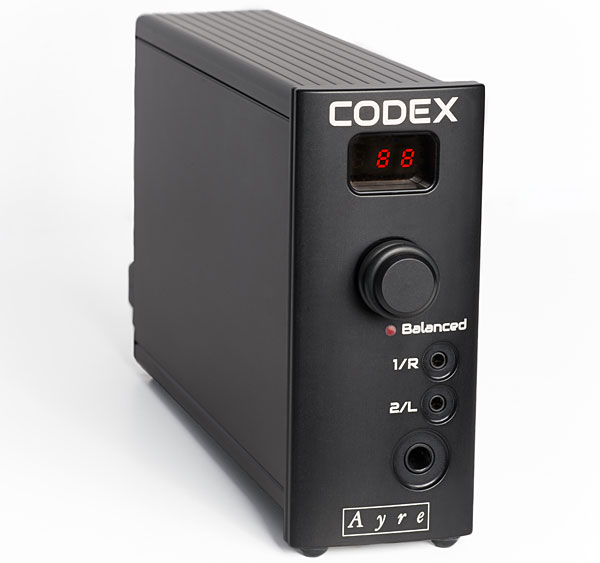
I first spied the Ayre Codex two Januarys ago, at the 2015 Consumer Electronics Show, and its scrappy proletarian vibe sure made it look different from any other Ayre creation. On learning that its price would be well under $2000, I was immediately curious what Charley Hansen and his gangmakers of the $3450 QB-9DSD USB digital-to-analog converter, plus a few five-figure amps and preampscould create when cost is an object.
Ayre Acoustics QA-9 USB A/D converter
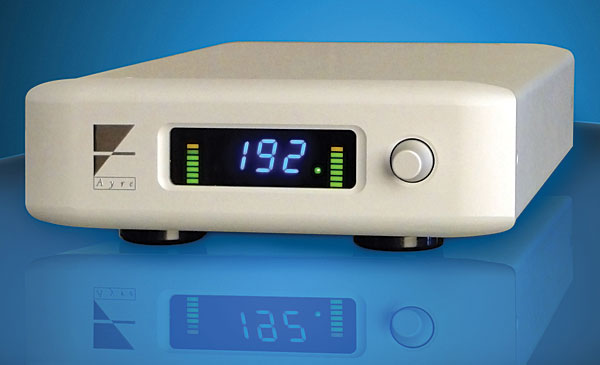
Since its founding in 1993, Colorado-based Ayre Acoustics has made its name with amplifiers and preamplifiers based on truly balanced, solid-state circuitry that didn't use the ubiquitous panacea of loop negative feedback to produce linear behavior. Their first digital product was the D-1x DVD player, reviewed for Stereophile by Paul Bolin in February 2003, which offered unusually good video performance. The D-1x was followed by the C-5xe and DX-5 universal players, respectively reviewed by Wes Phillips (July 2005) and Michael Fremer (December 2010). But the most intriguing digital product to come from Ayre was the QB-9 digital processor. Reviewed by WP in October 2009, the QB-9 has just one input, USB, and uses Gordon Rankin's proprietary Streamlength code to give asynchronous operation, which in theory offers the best jitter suppression. "The QB-9 isn't a computer peripheral," said Ayre's marketing manager at that time, Steve Silberman. "It makes computers real high-end music sources"a statement with which WP agreed.
Ayre Acoustics QB-9 USB DAC
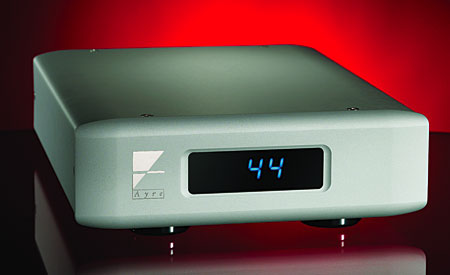
These days, it seems you can't shake a stick without hitting a USB DAC, but Ayre's QB-9 ($2500) is something a little different. Ayre's marketing manager, Steve Silberman, was adamant: "The QB-9 isn't a computer peripheral. It makes computers real high-end music sources."