

Octave Jubilee Class A monoblock power amplifier
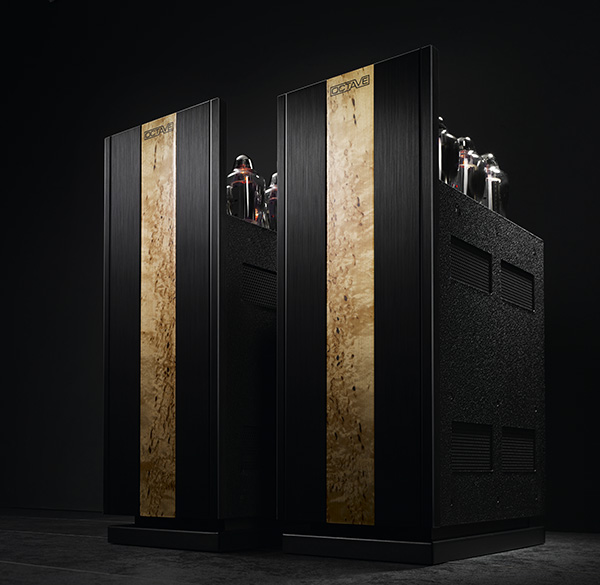
A first for German manufacturer Octave is the Jubilee Class A mono ($85,000/pair), a push-pull class-A monoblock with a self-regulating autobias pentode circuit that can also run in "high power" class-AB mode. The Jubilee Class A monoblock uses KT120, KT150, or KT170 output tubes.
Octave Jubilee Mono SE monoblock power amplifier
When I was a young man, blind dates were always laced with anxiety. (Proms were even worse. Once, when I arrived in a rented tux and my father's prized dress gloves, my date's father ordered me to take out the trash.)
Oracle Delphi Mk.VI Second Generation turntable
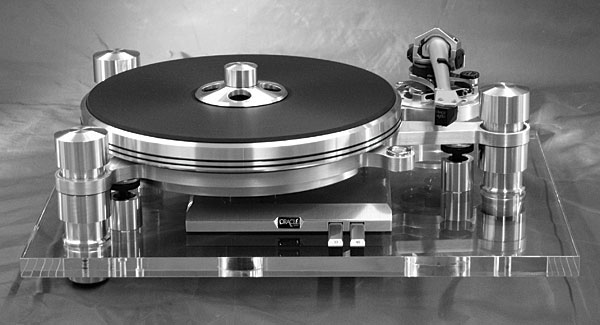
The stats are impressive: Quebec's Oracle Audio Technologies, formerly Trans Audio (footnote 1), has been in business for 37 years, during which they've sold nearly 11,000 Oracle Delphi turntables. That's not bad for a perfectionist turntableand especially not bad for a perfectionist turntable whose first and most estimable competitor, the Linn Sondek LP12, was well established by the time of the Delphi's debut, in 1979.
Oracle Delphi Mk.VI turntable

Thirty years have not diminished the beauty and elegance of Oracle's Delphi turntable. In my opinion, it still ranks among the best-looking turntables ever made. I bought an original Mk.I, used, in 1982, and very positively reviewed the Delphi Mk.V in the December 1997 Stereophile.
In its three decades the Delphi has undergone many upgrades both technical and aesthetic. Not surprisingly, so has the price. The Mk.II Delphi sold for $1250 in 1986; the Delphi Mk.VI with Turbo power supply and dedicated power cord now sells for $8500, which, in today's market, I think is reasonable for what you get. The review sample came with an Oracle/SME 345 tonearm ($3100) and a Benz-Micro Thalia high-output MC cartridge ($1700), for a total cost of $13,300or $11,600 for just 'table and arm.
Ortofon MC-2000 MC phono cartridge
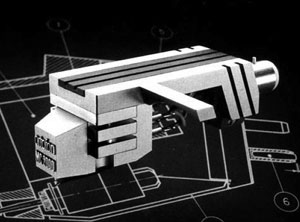
Although the idea of a $1000 moving-coil cartridge no longer shocks audiophiles, it is still not exactly what I'd call "Mainstream Hi-Fi." Audio magazine's 1984 Equipment Directory—the most complete such compendium published in the US—lists only 10 models in this price range, not counting the Kiseki Lapis Lazuli at a whopping three-and-a-half grand! I have not tested most of these, nor have I tried any of the current models from the Japanese Koetsu firm, which was first with the gall to put a $1000 price tag on a cartridge. But I have tested a couple of one-granders during the past few years, and was sufficiently unimpressed to be hesitant about testing any more samples of what were beginning to look like nothing more than monumental ripoffs. So when Ortofon sent us the MC-2000, I was naturally less than enthusiastic about trying it.
Parasound JCA100 Tribute monoblock power amplifier
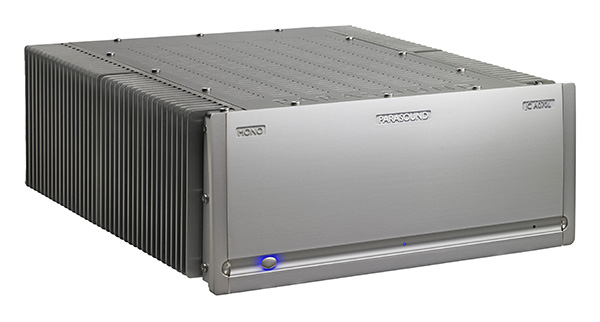
In December 2023, I took the train from New York to Los Angeles to attend the Los Angeles & Orange County Audiophile Society's 30th annual Gala. I took the trip because it is both stimulating and satisfying to spend an afternoon in the company of more than 200 audiophiles and music lovers; I also wanted to see John Curl presented with the Society's fourth Innovation Award, by George and Carolyn Counnas of Zesto. John was given the award "for his groundbreaking contributions to the field of solid-state audio amplifiers, circuit innovation, mastering recorders and much more."
I first met John more than 40 years ago, at a Consumer Electronics Show in Chicago, where I was blown away by John's intuitive and innovative approach to circuit design.
Pass Laboratories XA200.8 monoblock power amplifier
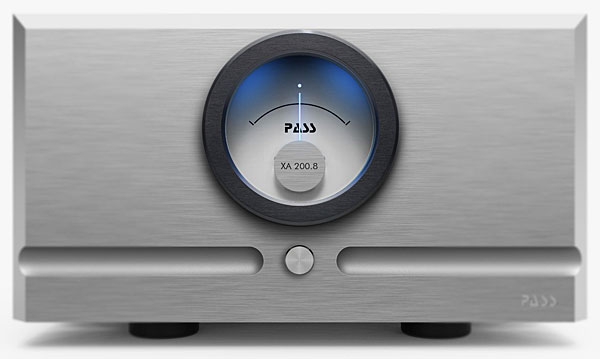
It was almost seven years ago that Nelson Pass, whose talks and exhibits I'd covered at many a Bay Area Burning Amp DIY event and audio show, surprised me with a loan of two Pass Laboratories' XA 160.5 class-A monoblock amplifiers. Ten months later, after I'd commented that my system had challenged the XA 160.5s in the bass department, he sent me a pair of XA200.5 monos. I connected those bigger babies to Wilson Audio Sophia 3 loudspeakers and some now-discontinued digital components with Nordost Odin 1 interconnects and speaker cables. Then came my way, toward the end of 2016, the XA200.8 monoblocks ($42,000/pair).
Pass Laboratories XP-30 line preamplifier
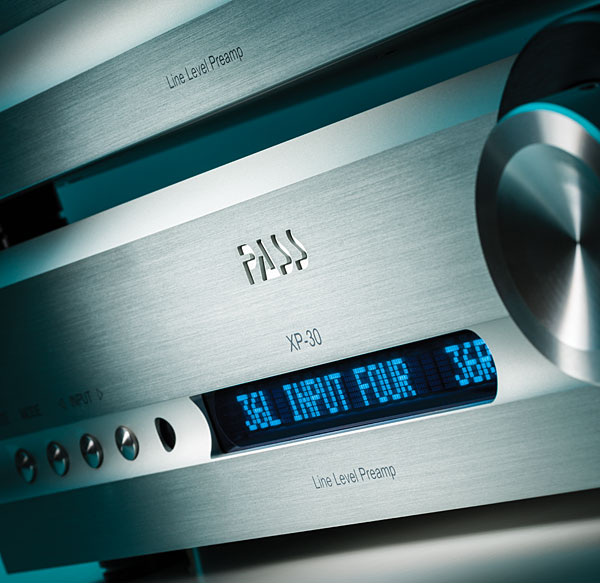
It was the strangest thing. In the fall of 2008 I was comparing Ayre Acoustics' then-new KX-R line preamplifier with no preamplifier at allI was feeding the power amplifier directly with the output of the Logitech Transporter D/A processor. (Levels were matched for the comparisons, of course, made possible by the fact that the Transporter has a digital-domain volume control.) Being a rational being, I knew that the active circuitry of a preamplifier, as well as the extra socketry and cables, would be less transparent to the audio signal than a single piece of wire. I wanted to determine by how much the Ayre preamp fell short of that standard.
Pass Labs XA60.5 monoblock power amplifier

Whereas the Pass Labs preamplifiers are designed by Wayne Colburn, the power amplifiers are the work of company founder and high-end audio veteran Nelson Pass, who even lays out his own circuit boards. The X-model amplifiers, beginning with the X1000 in 1998, were the first implementation of Nelson Pass's patented Supersymmetry topology (see "Nelson Pass on the Patents of Pass"). The XA series, which debuted in 2002, combined Supersymmetry with the single-ended class-A operation of the Aleph series. The XA.5 models offer detail improvements over the XAs.
Pass Labs XP-27 phono preamplifier
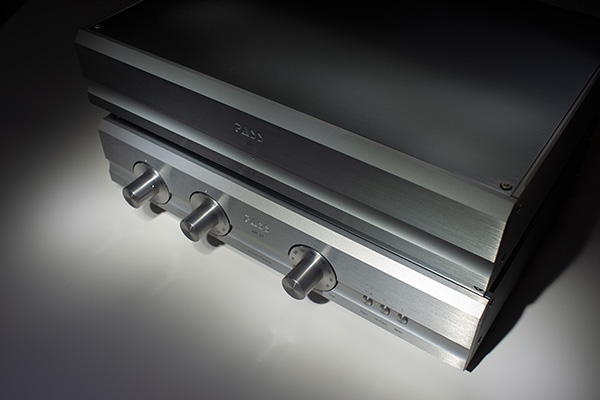
One of the pleasures of reviewingand also usingproducts from Pass Laboratories is an encounter with Nelson Pass's writing, which can usually be found in the owner's manual and is always competent, insightful, and sometimes funny. How often do you get real pleasure and insight from reading an owner's manual?
Pass Labs has a lot of owner's manuals online. Reading through one, I encountered the following passage; you'll find the same or similar language in other manuals and on the Pass Labs website. I present it not only because I admire it and agree with the philosophy it expresses but also because it captures the spirit of the product under reviewthe XP-27 phono preamplifier ($12,075 in silver)at least as I've experienced it during an extended review period. Here it is, quoted at length with some slight adjustments to make it consistent with Stereophile's editorial style...