

The Dilemma of Exotica
A persistent complaint from some of our readers concerns our seeming preoccupation with exotic components. (Presumably what they mean are scarce, unusual, or hard-to-find components, because "exotic" really means "from a foreign country," and there is sure as hell nothing hard-to-find about a Panasonic receiver.) "Why," you ask, "do you devote so much space to reports on components we can't buy from our local audio discounter? Why can't we have more reports about products from the old, established, reliable companies like KLH, Harman/Kardon, Electro-Voice and Sansui, whose stuff we can listen to at a local dealer before we commit our hard-earned dollars to a purchase?" One subscriber even cancelled his subscription because of this, claiming that the unavailability of the products we review makes our reports "irrelevant." Well, he had a point, but not a very good one.
The End of an Era: John Atkinson Retires

The July issue is a milestone in Stereophile's history: It's the last issue in which John Atkinson will be performing the measurements for our equipment reviews. As a start toward digesting this momentous event, I asked JA1 some questions.
The Fallacy of Accuracy
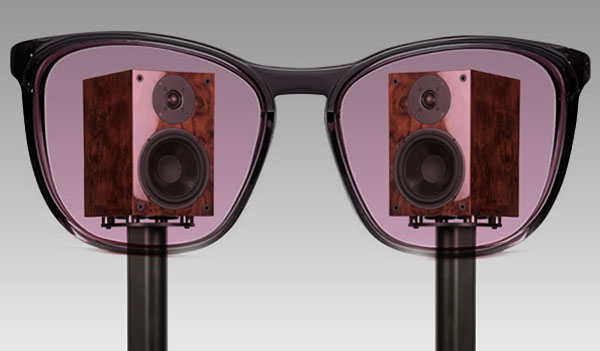
I was in a strange mood last January when I posted this on Facebook: "Do speaker designers strive for accuracy, or for a 'sound' they think potential buyers want?" I doubted that any designer with two working ears would even attempt to design speakers that merely measured wellthere must be at least some subjectivity in their process. I also assumed that few designers would go on record about where they stand on the accuracy question, so I was thrilled when Elac Americas' speaker designer, Andrew Jones, responded...
The First Transducer

A recording engineer's choices of microphones to record singers, guitars, horns, bass, drumsor an entire orchestraare absolutely crucial. Those very subjective choices are, in large part, what separate the best recordings from the also-rans. When I contacted some of the best engineers in the business to talk about mikes, I got an earful. I was told that mikes have a more profound impact on reproduced sound than does any other link in the recording chain. Yes, the acoustic of the recording venue also plays a huge role, and post-session mixing and mastering can of course improve or ruin the soundbut the choice of mikes is absolutely crucial.
The Five Dealer Rule
Surfing the Usenet newsgroups and the Web audio forums recently, it struck me that the old wisdom is correct: If you keep your mouth shut, you won't say anything with which anyone can disagree. A topic that seems to be of perennial interest is how Stereophile chooses the products it reviews. Yet the more I have explained how it's done, the greater the criticism that is heaped on the magazine.
The Flexible Firms

Some years ago, we attended a hi-fi show in New York City where one of the exhibitors was RCA Victor. Their presence there would have been forgotten were it not for the fact that their exhibit, featuring their own discs played on their own line of phonographs, was producing some of the filthiest sound at the entire show. And that, in the proverbial nutshell, is why you never see reports in Stereophile on equipment made by RCA, Philco or General Electric.
The Flip Side of Digital...
The following was submitted as a letter to J">http://www.stereophile.com/interviews/66">J. Gordon Holt, in response to his Editorial "Digital">http://www.stereophile.com/asweseeit/882awsi">Digital Revenge," in issue #53 (August 1982, Vol.5 No.6). We are publishing it as a guest editorial, because the writer is one of the few audio people whose judgement we respect who disagrees with us about digital's merits. The feeling, it would seem, is mutual.—Ed.
The Goodness of Your Heart: A Tragedy in One Act

Note: All dialogue quoted verbatim from e-mail exchanges to which I am privy; the stage directions are imaginary.
Dramatis Personae:
bill, director of marketing for PS Audio
randy, amateur reviewer for a commercial audiophile website
dick, professional reviewer for an established audio magazine (not Stereophile)
The Great Distortion Delusion
Hey, kids, here's the Big News. We've been deluding ourselves all along, worrying about piddling little bits of distortion that we can't hear at all. How's your preamp distortion? 1% at 1 volt out? You have a perfect preamp—a veritable straight wire with gain! That ear-shattering shrillness is all in your mind, because it has now been demonstrated that the human ear cannot perceive distortion levels of less than 6–12% on "normally complex music." If you think you can hear 0.1%, you are deluding yourself.
The Great Wall of China
"A newspaper can flout an advertiser...but if it alienates the buying public, it loses the one indispensable asset of its existence."—Walter Lippmann, 1922, reprinted in Public Opinion, New York: Free Press, 1965.