

Hidden Music, Fake Musicians
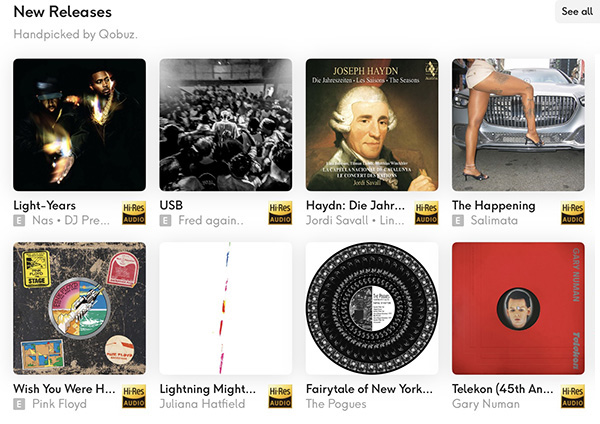
Lately in this space I've focused on all things (rather, some things) analog. This month I return to digital, specifically to streaming. I love listening to records, but I also listen to a lot of streamed music. I'm a Qobuz devotee, since Qobuz is the most approachable streaming service and the friendliest to audiophiles.
High Definition Compatible Digital
"Everybody, including myself, was astonished to find that it was impossible to distinguish between my own voice, and Mr. Edison's re-creation of it."—Anna Case, Metropolitan Opera Soprano, 1915
High End is On Its Way Out?
The night after we got home from the 1999 Consumer Electronics Show in January—see the report in this issue—my dear companion and I attended a performance of Madama Butterfly at San Francisco's beautifully refurbished War Memorial Opera House. It was a Tuesday evening, traditionally a big event for the Opera's benefactors. From our box seats, we had an excellent view of a production musically sumptuous and visually austere—and of a sea of gray and balding heads.
High Fidelity at the Crossroads
101 years ago, the tinfoil cylinder started it all. Within 22 years, its heyday was done, and public support swung to favor the then-new wax-mastered disc. 1948 saw the switch to a slower speed and a finer groove, but the flat disc, traced by a stylus, has held sway for almost 80 years now. Even today, people with multi-speed turntables and a couple of arms (or plug-in cartridges) can reproduce from a single phono unit the earliest or the latest discs merely by the flip of two switches (for speed change and cartridge change). All that is about to come to an end.
High-End Audio & the Invisible Hand

A recent e-mail from a reader asked why we list the recordings and systems used by Stereophile writers in their reviews. I responded that we do so in order that readers can place our value judgments in context, and predict how those products might sound with different ancillaries and recordings when they audition the products reviewed at their local high-end audio retailer.
High-End Standards
The American computer industry was a little shaken up to learn recently that the Japanese micro manufacturers had gotten together and standardized their component interconnections so that any Japanese computer will (supposedly) plug into any Japanese printer, modem, or competing computer, and work right off the bat. Anybody who has tried to fire up an Apple computer with a Diablo (Xerox) printer will appreciate what the Japanese move means in terms of compatibility. It means "For no-hassle interconnections, buy Japanese."
High-Fi?
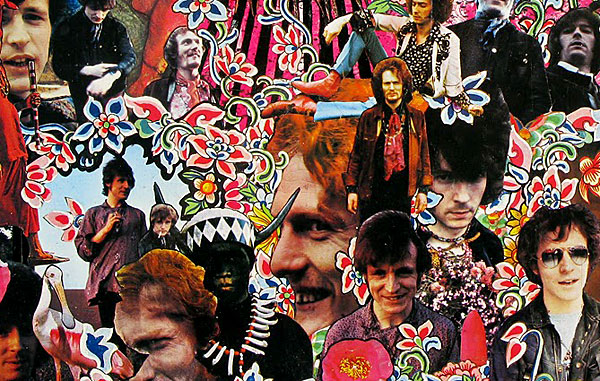
"No one thing turned more people into audiophiles than the '60s counterculture," said Bruno, arm flung over his cash register. "It opened up the doors of sonic perception. Even the great audio designers of the day were countercultural mavericks!"
Bruno is the lanky, braided-beard, thirtysomething owner of a small, well-stocked record shop in Montreal, and we stood facing each other on either side of a glass case filled with vinyl paraphernalia. Bruno has made the most of his limited space. Every foot of each wall supports a shelf crammed with music-related merchandise: rock and jazz memorabilia, album covers, refurbished turntables. There's even a rack in the back for music and audio magazines, including Stereophile.
Hoisted on your own petard?
After completing a PhD in electrical engineering at Imperial College London, Floyd E. Toole joined Canada's National Research Council (NRC), where he would stay for more than 26 years doing audio-related research. He continued his research at Harman International after leaving the NRC in 1991. When Toole left Harman in 2007 (footnote 1), Harman kept the work up under NRC alum Sean Olivewhich fact surely has much to do with the excellence of their current loudspeaker lineup.
Home Alone
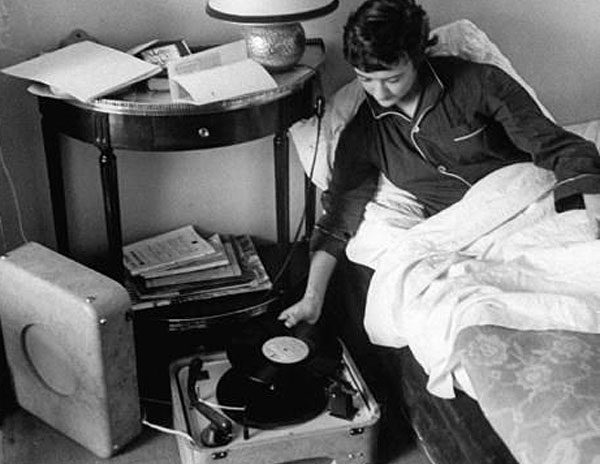
We all have secrets, and it's about time I came clean with one of mine: I enjoy recorded music more than concerts.
I know, that's a sacrilegeas a lifelong music lover, I'm supposed to relish the live event, with all of the energy and connection between musicians and audience that can happen only when they're all breathing the same air. That may be true for you, but not for me. I've harbored the guilt for years: When I take the plunge and attend a concert, I rarely enjoy the experience enough to justify the effort and expense.
Home Theater vs High-End Audio
A hot topic for discussion in recent issues of Stereophile has been the impact Home Theater has had on the High End. Some of the magazine's contributors—J">http://www.stereophile.com/asweseeit/693awsi">J. Gordon Holt and Corey Greenberg, for example—have written that the advent of Home Theater means that we should expand the audio context of the magazine to include reviews of video components (footnote 1). Others, including Bob Harley, Tom Norton, and myselfhttp://www.stereophile.com/asweseeit/393awsi">myself;, feel that we should stick">http://www.stereophile.com/features/68">stick to what we know and love—audio—and enter the new field only to advise Stereophile's readers on how to achieve the best sound from a Home Theater system. However, missing from the debate in our pages so far have been any comments from those in the business of selling and demonstrating high-end products and, increasingly, Home Theater systems. Accordingly, this month I am running a guest editorial from a man who perhaps typifies the high-end, specialist retailer: Ken Gould of Audio Nexus (footnote 2). Please note that Mr. Gould's opinions are his own and do not represent those of the magazine.—John Atkinson