

I Say It's Television...
"When it comes to video, most audiophiles are insufferable snobs."—J. Gordon Holt, 1984
I Say It's Video!
A couple of months back (March">http://www.stereophile.com/asweseeit/393awsi">March 1993, p.7), I wrote that as far as I was concerned, video was television dressed up in fancy dress, thus there was no place for coverage of the medium in Stereophile. As the magazine's founder, J">http://www.stereophile.com/interviews/66">J. Gordon Holt, has been a committed videophile for many years, I sat back and awaited a reaction from him. One was not long coming. I am running his response as this month's "As We See It" feature.—John Atkinson
I'd Love to Turn You On

For over three decades, I have felt compelled to turn people on to music. Throughout my career as a DJ, all of my endeavors have been linked by the desire to spread the joy of listening to records, in the hope that people would feel something like the emotional resonance I feel. My Classic Album Sundays adventuresee www.stereophile.com/content/classic-album-sundays-bellwether was born from this lifelong dedication to musical curating, and propelled by a eureka hi-fi moment.
If Either of These Amplifiers is RIGHT . . .
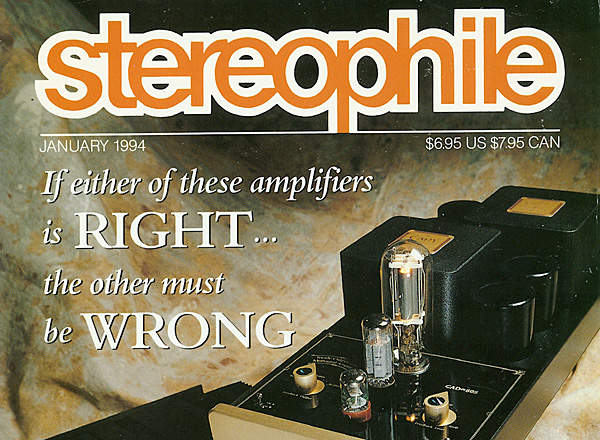
It was January 1986. Stereophile's then publisher, Larry Archibald, and I were driving in his diesel 'Benz sedan from Las Vegas to Santa Fe. We had shaken hands at the just-concluded Consumer Electronics Show on my replacing J. Gordon Holt as the magazine's editor, and now, during the 750-mile drive, we mapped out the strategy to take what was then an "underground," digest-format, somewhat irregularly published magazine to the position of dominance in audio publishing it still enjoys.
In Defense of the CD
Attacking the compact disc has lately become almost a blood sport among audiophiles and audio writers. Not a month goes by that I don't read—often in Stereophile—some vehement statement about how CDs are a musical abomination.
In My Room

Listening rooms are real, imperfect places. Their character arises from their defects. I like real, imperfect things (footnote 1).
Not that there's such a thing as a perfect listening room. Every domestic listening room shares the same basic problem: Its most fundamental natureits size and shape, the amount of space it carves outresults in resonances that can profoundly alter the sound of reproduced music, especially in the bass.
In Praise of Imported LPs
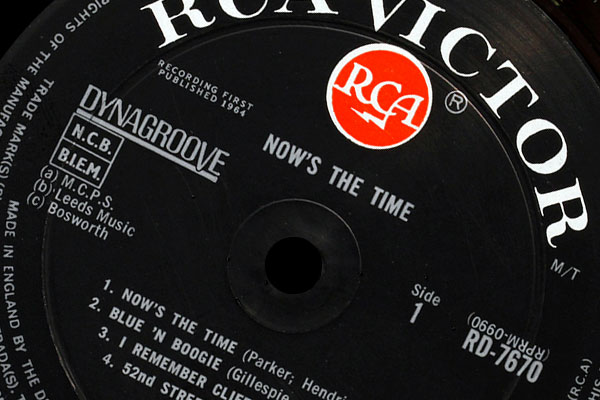
By the time you read this in late 1963 (probably a month after it is written, judging by the speed with which the US mails speed second-class matter on its appointed rounds), Capitol Records will have announced the first bit of really good news for the high-fidelity perfectionist in years: the release of imported disc pressingstaped, cut, and stamped in Europe. London has been importing for yearsall the Londons you buy are pressed by Decca in England. But this will be the first opportunity we will have of sampling the products of some of London's overseas competitors.
Inhumanly Perfect Performances?
"Modern recordings, for all their glory . . . have conditioned audiences to expect an inhuman degree of performance accuracy, comparable to what a recording studio's editing team can produce by patching together the best moments from multiple takes."—James F. Penrose, Wall Street Journal, January 25, 2008
Intimate Machines
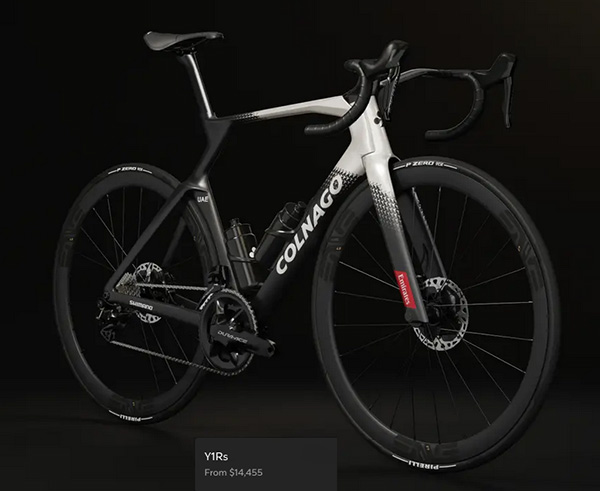
In this space in the September 2025 Stereophile—exactly a year ago—I wrote about bicycles. I was researching a bicycle purchase, and the more I read about bikes, the more parallels I saw between bikes and hi-fi, especially economic parallels between that industry and this one.
Intoxication, Art, & the Audio Hobby
For art to exist, for any sort of aesthetic activity to exist, a certain physiological precondition is indispensable: intoxication.—Friedrich Nietzsche