

MBL 6010 D preamplifier
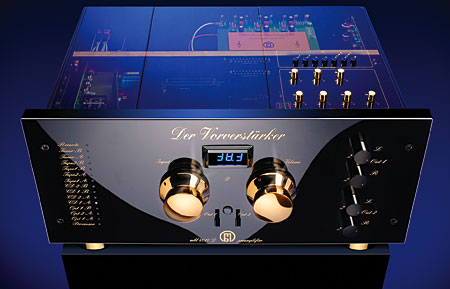
Don't be confused by the MBL 6010 D's oddly baroque, even retro looks. Behind all the glitzthe oversize, perfectly finished, black-lacquered faáade; the two big, solid brass knobs plated with 24-karat gold; the ornate lettering; and the incongruous digital volume displayresides a thoroughly modern, remote-controlled, unusually versatile, and well-thought-out solid-state preamplifier. Not that the 6010 is a new design. It's been around for a long time, and the current "D" iteration is at least five years old.
MBL Noble Line N11 line preamplifier
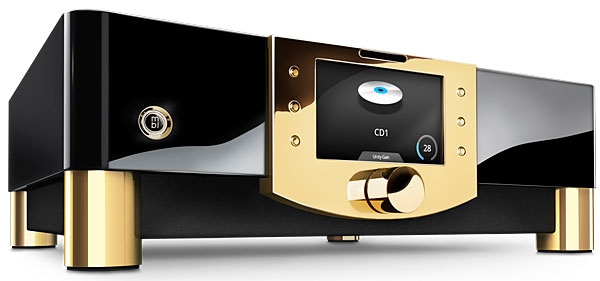
During the four years that I've reviewed for Stereophile, I've had the privilege of evaluating products from some of the world's best-known audiophile companies: Audio Research, Bel Canto, CH Precision, dCS, D'Agostino, Dynaudio, EMM Labs, Jadis, Krell, Nordost, and Wilson, among others. But one long-standing manufacturer whose exhibits at audio shows invariably inspire ecstatic reports, Germany's MBL, has remained outside my purview.
McCormack Line Drive TLC-1 preamplifier
A truly great preamplifier lets everything through, both music and distortion, but with such generosity that neither...is cramped and narrow.—Larry Archibald(footnote 1)
McIntosh C1000 preamplifier system
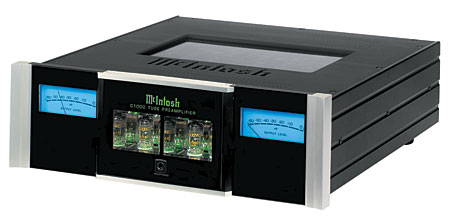
Still burning in my bank of childhood memories are misty images of the glowing green lettering on the McIntosh tube preamps and tuners that populated the windows of the audio stores that once lined lower Manhattan's Cortlandt Street. Leonard's and most of those other retailers are long gone—as are most of the audio brands that shared their windows with McIntosh, and that once symbolized the might of American innovation and manufacturing. Even the World Trade Center, the controversial complex that replaced Cortlandt Street's "Radio Row," where the hi-fi industry was born, is tragically gone.
McIntosh C12000 preamplifier
As I was talking with an audio-retailer friend recently, he reached for a Rolls-Royce metaphor to describe the McIntosh brand. Expensive? Sure, but not as expensive as some boutique high-end products. Fast? Sure, but there are faster thingsalso bigger things, smaller things, wackier things, and cheaper things.
But when you look at a Rolls or a Bentley, you immediately recognize it for what it is, and you want to sit down in it. And so it is with McIntosh, except you don't want to sit down in it; you want to sit down in front of it, between the speakers of the hi-fi system it occupies.
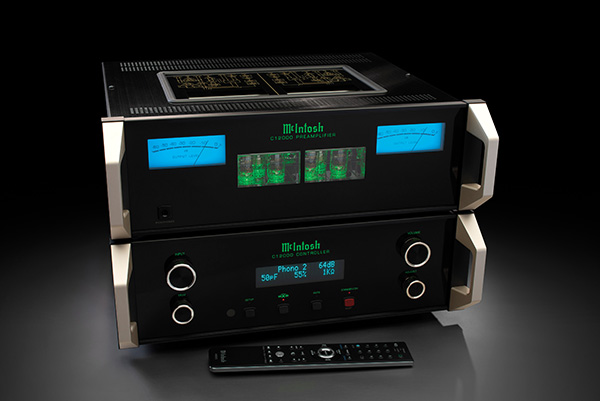
The C12000 is McIntosh's current flagship preamplifier. It's part of McIntosh's Hybrid Drive series of products that combine tubes and transistors in interesting ways.
McIntosh C200 preamplifier
In August, I reviewedhttp://www.stereophile.com/amplificationreviews/804mcintosh">reviewed; McIntosh's MC501 monoblock power amplifier. In terms of what I'd thought was possible from Mac, this was a revelation. Once memories and lurking preconceptions had been set aside and the amps installed in my system, the MC501 easily established itself as among the finest overall performers I have ever reviewed.
Meridian 207 Pro CD player
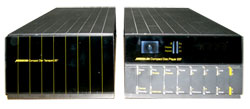
In a way, you could say that Meridian started the now epidemic practice of modifying stock CD players (usually of the Philips-Magnavox species). The original Meridian player, the MCD, was a reworking of the first-generation Philips and was praised">http://www.stereophile.com/cdplayers/285meridian">praised by J. Gordon Holt in these pages in his 1985 review (Vol.8 No.2). The Meridian Pro (Vol.8 No.6) won similar plaudits, and is still to be seen lurking in JA's system. And the original 207 was well-received by MC in Vol.10 No.3.
Meridian 208 CD player/preamplifier
"Desperation is the Mother of Invention." Isn't that how the proverb goes? Certainly it applied ten years ago in the case of the Philips engineers working on the development of the Compact Disc system. Given a specification that had included a 14-bit data word length, they had duly developed a 14-bit DAC chip, the TDA1540, only then to be informed that the CD standard decided upon after Sony joined forces with the Dutch company would involve 16-bit data words. (Thank goodness!)
Moon 891 streaming preamplifier
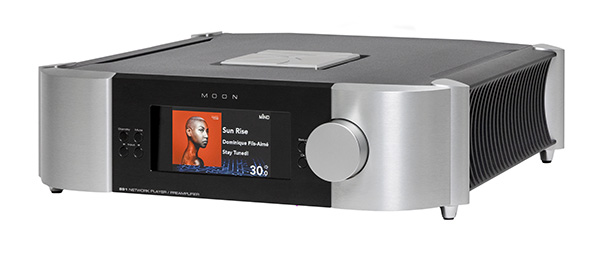
No fewer than eight boxes, powered by six after-market power cables, comprise my current reference front-end. As much as separate boxes can afford superior isolation and provide far more room for visionary engineers to work their magic, the advantages of a single box, which requires a single power cable and far fewer after-market interconnects, are obvious.
Enter Simaudio's Moon 891 network player/preamplifier ($25,000; footnote 2). Also called a "streaming preamplifier,"it includes a DAC that converts PCM and MQA files up to 32/384 (with 24-bit files upconverted to 32-bit) and DSD files up to 256. It also includes what Simaudio company co-owner Costa Koulisakis describes as "a fully configurable" MC/MM phono stage. Both theoretically and practically, it's an ideal solution for someone with space and/or budget constraints.
Music First Audio Baby Reference passive preamplifier
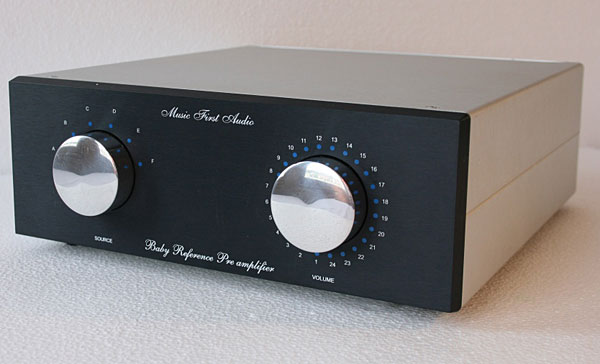
In April 1987, Anthony H. Cordesman had mixed feelings about the Mod Squad Passive Line Drive System Control Center. (Read his review here.) Introduced in 1984, the Line Drive offered volume and balance controls, five line-level inputs, and switching and monitoring for two tape decks. You didn't plug it into the wall; it provided no gain. Was it even a proper preamp? (footnote 1)
AHC demurred. "I'm not sure that I'm ready to advise anyone to take the risk of not buying a unit with a top-quality phono stage, no matter how well CD or DAT perform," he concluded, between commenting on Middle East wars.