

Music in the Round #2
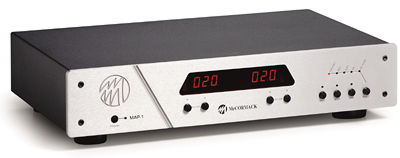
It doesn't take much to read between the lines of Sony's discontinuation of the TA-P9000ES">http://www.stereophile.com//amplificationreviews/700/">TA-P9000ES analog preamplifier and their introduction of the SCD-XA9000ES SACD player with IEEE1394 digital output at Home">http://www.stereophile.com/news/11662/">Home Entertainment 2003. (A similar feature from the DVD-Audio camp has been promised.) Surely, we will at long last be able to have external digital processing and DACs in our preamp or control units. In addition to the freedom to mix and match components, this opens the door to having a single digital component manage bass and channel balance for all sources, and room/speaker correction without redundant redigitization.
Music in the Round #20
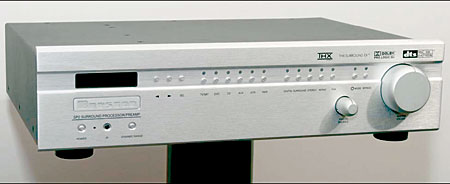
Bryston describes its SP2 multichannel preamplifier-processor ($4995) as consisting of a stereo analog preamp with a volume-controlled 5.1-channel analog pass-through plus a full-featured multichannel digital audio processor, and claims that none of those functions compromises any of the others. The analog preamp is fully equivalent in features and performance to their BP26 preamp. The digital processor includes all the latest Dolby Digital, DTS, and THX modes, and is based on Texas Instruments' powerful Aureus DSP chip, which can be updated via an S/PDIF input. The digital and analog sections have independent power supplies, and there are no video inputs or functions other than a control port for the optional, external SPV-1 video switcher.
Music in the Round #34
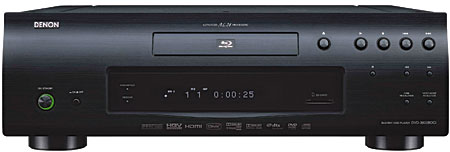
Sometimes, I think life would be easier if I were an audio customer. If I didn't have to wait on the priorities of the electronics companies, I might have gone out and bought a Blu-ray player months ago. Had I done so, I would have been shocked to find that almost all BD players are released with fewer than the advertised number of features, and sometimes require firmware updates—sometimes even a return to the manufacturer—to have them installed.
Music in the Round #43
The debate over which audio component is most important in determining the quality of a system's sound is one that has been with us for decades. Recently, it came up in a conversation I had during a visit to a Manhattan high-end shop, when I was told about a discussion on the topic by Ivor">http://www.stereophile.com/interviews/1101ivor">Ivor Tiefenbrun (of Linn) and David">http://www.stereophile.com/interviews/690wil">David Wilson (of Wilson Audio Specialties). You don't have to be a seasoned audiophile to predict their respective positions, but when I was pressed to take a stand, I paused.
Music in the Round #44
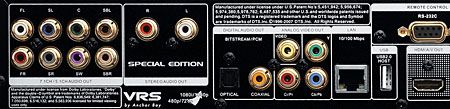
When I started">http://www.stereophile.com/musicintheround/854">started out on my multichannel mission in 2000, it was with an all-digital Meridian">http://www.stereophile.com/floorloudspeakers/201">Meridian system that relied on lossy, compressed sources like the original Dolby Digital and DTS formats, or on synthesized surround based on Dolby Pro-Logic or Meridian's own TriField. With the appearance of first SACD and DVD-Audio and then Blu-ray, discrete lossless multichannel recordings became available, but there was no way to output those signals in digital form for interconnection to other components for playback or further manipulation. Most audiophiles, me included, already had analog preamps and power amps. It was only with the appearance of HDMI and the accompanying HDCP content protection that we could output those digital signals, and over a single cable to boot. Today, there are A/V receivers, some costing less than $500, and more than a handful of audiophile-oriented preamp-processors, that can accept such lossless high-resolution multichannel content as PCM, DSD, Dolby TruHD, and dtsHD Master Audio.
Music in the Round #47

The AV7005 is Marantz's second multichannel preamplifier-processor and, at $1499.99, the least expensive pre-pro I've used or reviewed. The Integra DTC-9.8, which has been resident in my stable since 2007, when it cost $1600, and its successors, have since then steadily risen in price. The Marantz's predecessor, the AV8003 ($2599.99), was highly praised in many quarters. I never got my hands on one because, like a churlish child, I felt it lacked features I considered essential. Other reviewers didn't seem bothered by those limitations, or were unaware of them. The AV7005, however, looks and feels like a winner for music and home theater. I see no evidence of skimpingthe AV7005 sports such high-end features as balanced outputs, network controllability and streaming, and, of course, HDMI v1.4a for compatibility with 3D and all audio codecs.
Music in the Round #58
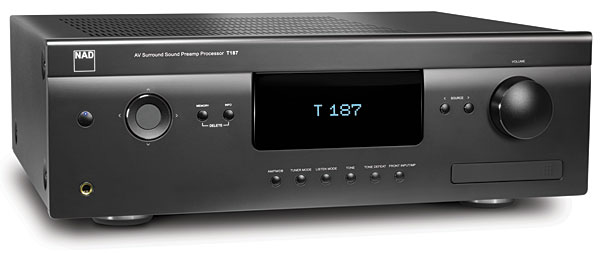
NAD's T 187. Another pre-pro? And not inexpensive at $3000! Why do I care?
First of all, NAD has come to the forefront of established full-range manufacturers as innovators in digital audio. From their original digital preamp, the 118, which I reviewed in the July 1998 issue; to the M2 Direct Digital amp, reviewed by JA in March 2010; to the Masters M51 high-resolution DAC, reviewed last July by Jon Iverson; and their Masters M50 and M52 music-streaming devices, NAD has never simply repackaged available chips and modules, but has always gone their own way.
Music in the Round #73
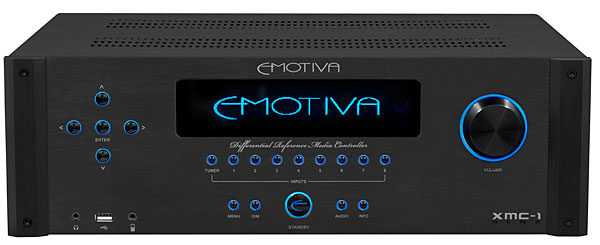
Most new preamplifier-processors now fall into one of two categories. First are the fully featured models, with ever-growing numbers of channels to support such immersive surround-sound formats as Dolby Atmos, Aureo3D, and DTS-X. An example is Marantz's 13.2-channel AV-8802, which replaces the 11.2-channel AV-8801a sample of which I've owned for barely a year and use only in 5.2! The second category is that of such high-end models as Classé's Sigma and NAD's M17, which offer only 7.1 or 7.2 channels, and from which nonessential features have been trimmed in favor of audiophile-grade circuit components and construction. But if money is no object, there is a third class of pre-pro, exemplified by Trinnov's Altitude32 and Datasat's RS20i, in which no compromise is made in any of these parameters.
Music in the Round #88: SPL Volume 8 and SMC 7.1
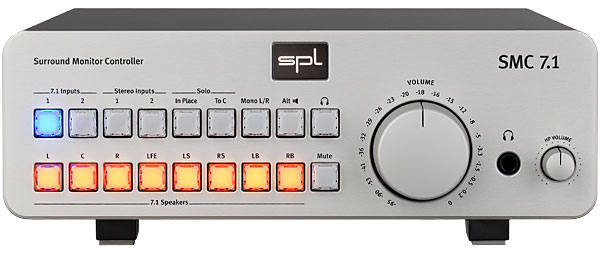
I have not been attending audio shows as often as I used to, and this January, for the first time in more than 20 years, I'm skipping the annual Consumer Electronics Show. My personal return on investment has become hard to justify, especially when attendance at each annual CES requires a round trip from New York City to Las Vegas, Nevada. More important, audio shows now seem focused mostly on either two-channel music playback or multichannel home theater, whereas what interests me is listening to music in surround sound.
Music in the Round #94: Benchmark & Marantz
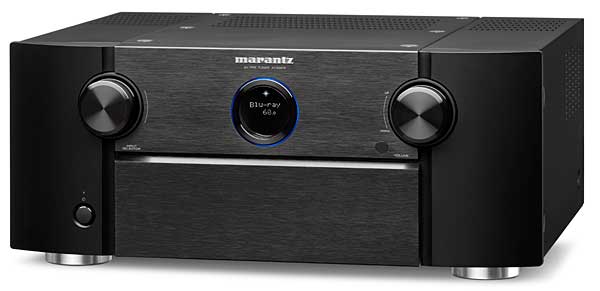
Sometimes, I feel I'm two people. One, a card-carrying audiophile, is always looking for ways to optimize his enjoyment of multichannel music recordings, a purist pursuit that begins with file playback and leads to DACs, amps, and speakers, while eschewing anything that can complicate or compromise the sound. Thus, while his main system may seem elaborate to outsiders, to him it seems streamlined: NAS>player>DAC>preamp>power amps>speakers. In fact, it's possible to combine the NAS and player in a single device, if that device's CPU and RAM are capable of doing all the tasksbut these product categories continue to evolve so quickly that he prefers to keep them discrete.