

Vandersteen Model Seven Mk.II loudspeaker & M7-HPA monoblock power amplifier
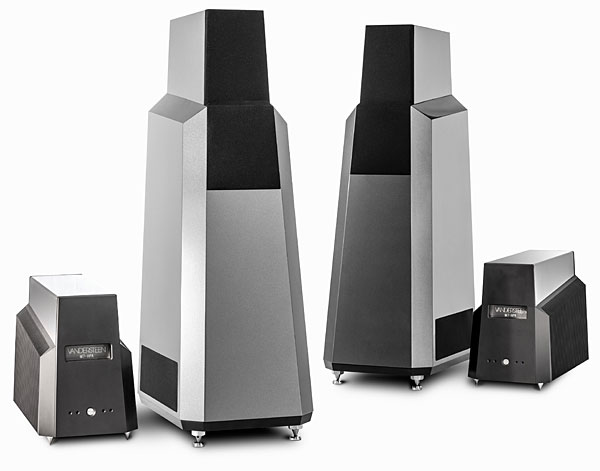
Driving the Model Sevens at the 2014 CES were Vandersteen's then-new M7-HPA monoblocks, which provide a high-passfiltered output (above 100Hz) to the upper-frequency drive-units of the Model Seven. At the time, I made a note to myself that I would like one day to try these amplifiers with the Sevens in my own room. That opportunity came later rather than sooner, after Vandersteen had updated the Model Seven to Mk.II status.
Vandersteen Quatro Wood CT loudspeaker & M5-HPA monoblock power amplifier
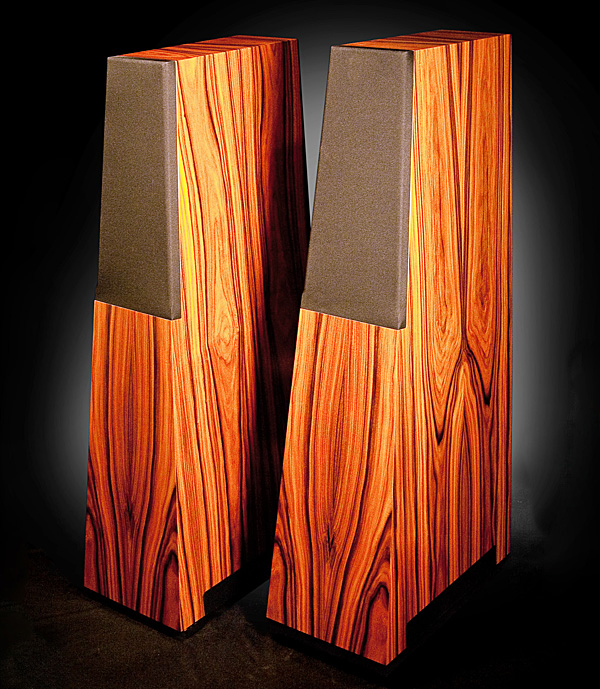
"Stirring the stew" is what I've heard it called when a company introduces a new version of a product every three or four years. When a new product is launched, sales generally rise rapidly to a maximum and then slowly decline. If the stew is stirred every few years, plotting the product's sales volume against time results in a sawtooth wave, without sales ever dropping close to zero.
Vandersteen Quatro Wood loudspeaker
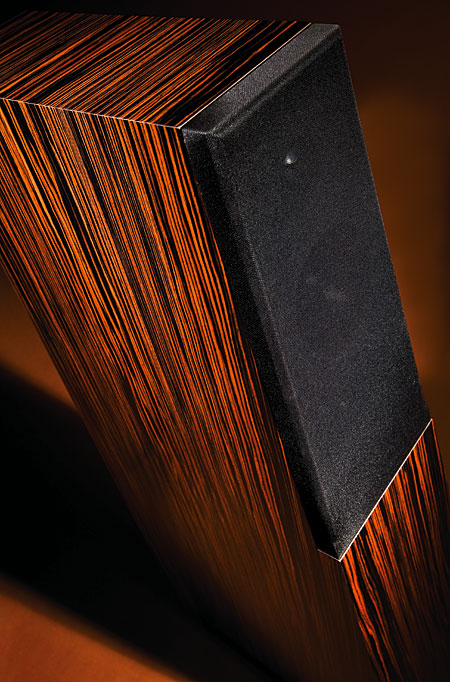
Richard">http://www.stereophile.com/interviews/688vandersteen">Richard Vandersteen was in good form at the 20th-anniversary seminar held by retailer Advanced Audio on November 11, 2006. When asked about his priorities in loudspeaker design, he sat erect in the seat next to me and thundered, "I will not [slams table with open hand] spend one red cent on cosmetics that I could have put into improving the sound of a loudspeaker!"
Verity Audio Sarastro II loudspeaker
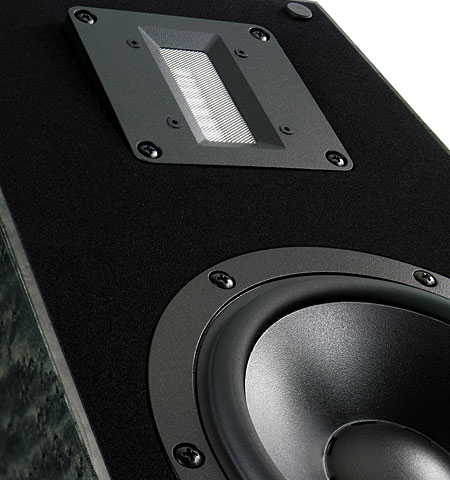
I've been listening with great pleasure to Verity Audio's Parsifal Ovation loudspeakers the past few years, so I was intrigued to hear the company's step-up model, the Sarastro II. At 150 lbs each and $39,995/pair, the Sarastro II weighs and costs nearly twice as much as the Ovation. Would it sound twice as good?
Verity Audio Sarastro loudspeaker
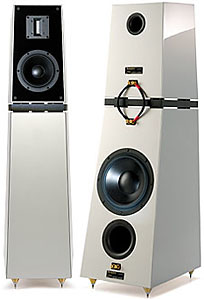
Over the past year or so, a parade of expensive loudspeakers has passed through my listening room (footnote 1), each claimed by its manufacturer to deliver the real musical deal. Like the people who designed them, these speakers have come in all shapes, sizes, and personalities. While the designer of every one of these speakers has claimed "accuracy" and "transparency" as his goal, the truth is, any concoction of pulsing cones, ribbons, sheets of Mylar, or whatever that's bolted into or on top of a box makes music because it is a musical instrument. How could it be otherwise, when all of these accomplished and expensive loudspeakers have sounded very different from one another, and made me feel different while listening to them?
Vienna Acoustics Beethoven Baby Grand Symphony Edition loudspeaker
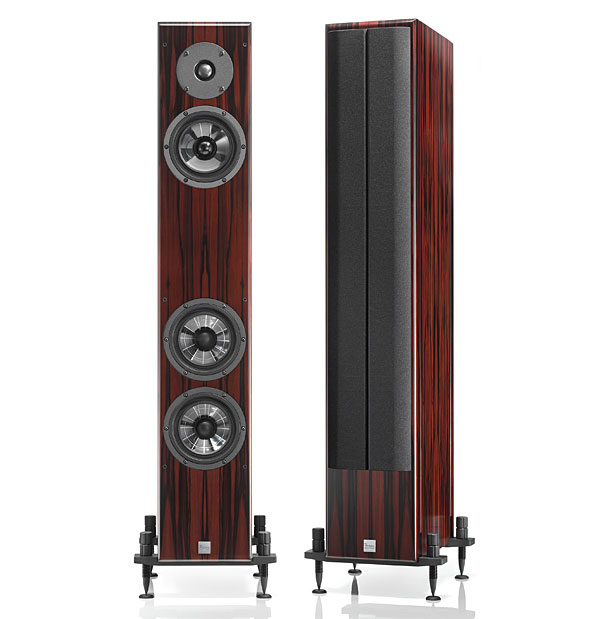
I went to Vienna. It was and is a beautiful city, with much of its late 19th- and early 20th-century character still intact. And while there will always be other claimants to the honor, it's arguably still the classical-music center of the planet. I managed to score standing room for a performance of Puccini's Turandot at the Vienna State Opera (as I recall, standing room at the time was the equivalent of about $1 US). Act 1 was so rough that it evoked catcalls from the unforgiving Viennese audience, but after that, things settled in nicely.
Vienna Acoustics Beethoven Concert Grand loudspeaker
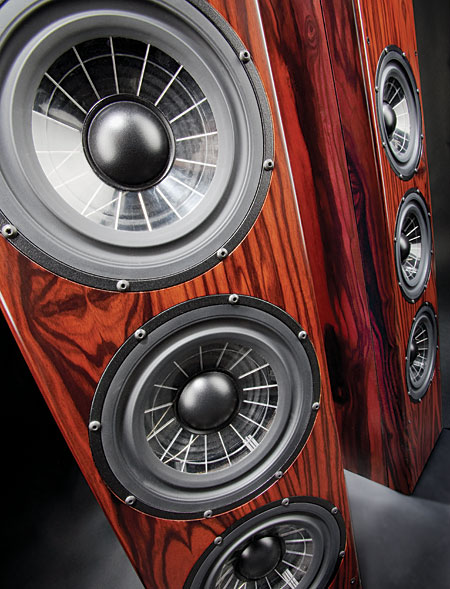
I told a friend that I'd received a pair of Vienna Acoustics' new Beethoven Concert Grand loudspeakers for review. "They're designed more for music lovers than for audiophiles," he said. I can't imagine a more damning statement—about audiophiles.
Vienna Acoustics Klimt The Kiss loudspeaker
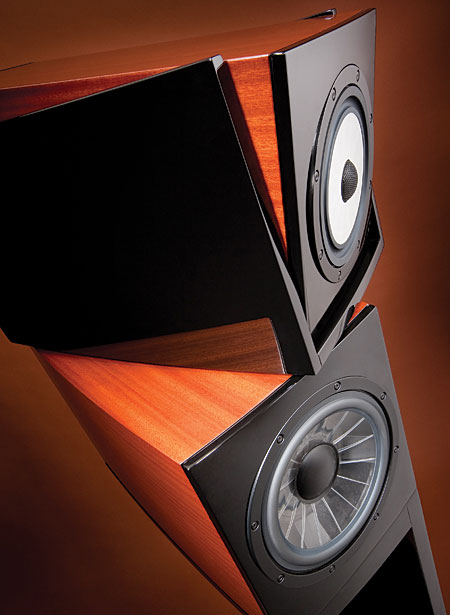
Almost every assumption you might make about Vienna Acoustics' Klimt The Kiss loudspeaker by looking at it would be wrong. It is not a stand-mounted two-way loudspeaker. It's a three-way, with a coincident tweeter-midrange. And that ain't no stand—it's an integral part of the speaker. It does not have a conventional cabinet—there are two separate enclosures, complete with micrometer control of both vertical and horizontal axes. And those sure aren't plain-vanilla drive-units—they're about as unique as they come.
Vienna Acoustics Mahler loudspeaker
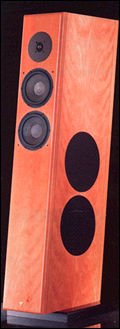
How can you tell an audiophile from a normal person? Well, given a list of names like "Haydn, Mozart, Bach, Beethoven, and Mahler," the normal person might respond, "Composers." The audiophile's response is likely to be "Loudspeakers from Vienna Acoustics." Anyway, that's my association when I see these names, which may tell you something about my state of normalcy.
Vienna Acoustics Mozart loudspeaker
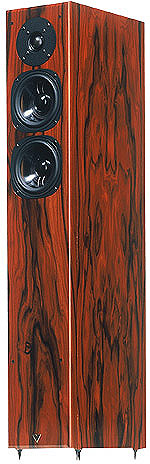
Vienna is a beautiful city known for many things, but the design and manufacturing of audio equipment is not one of them. Waltzes and strudel, yes; loudspeakers, no. One exception is Vienna Acoustics, a company that has introduced a line of loudspeakers named after composers: Mozart, Bach, Beethoven, and Haydn. At the 1996 Las Vegas WCES, Sumiko, US distributor of Vienna Acoustics products (footnote 1), demonstrated the second-from-the-top Mozart, and Stereophile reviewers as diverse in their approaches as Jonathan Scull, Tom Norton, and Sam Tellig (as well as yours truly) were unanimous in our admiration of the sound.