

Vandersteen 2C loudspeaker
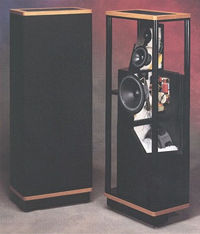
Whenever I think of cone speaker systems, I think of three brand names: Snell, Thiel, and Vandersteen. There are many good loudspeakers and many good designers and manufacturers, but it is these three who, in my opinion, consistently produce the best cone loudspeaker systems. All three companies produce full-range systems, transparent systems, and systems which mate well with a wide range of equipment. Their systems can be owned and enjoyed for years. Long after some fad or special feature has given a competing designer brief notoriety, these are the products you turn back to for music.
Vandersteen 2Ce Signature II loudspeaker
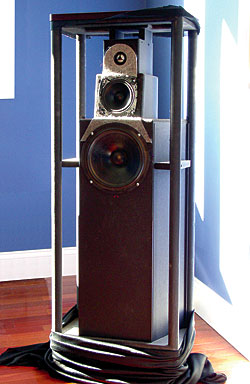
There are three requirements: You must invent a very good loudspeaker that sells for between $1000 and $2000/pair. You have to make enough of them, over a long enough time, to achieve a certain level of brand recognition and market penetration. And you must create a dealer network of reasonable size, with an emphasis on well-promoted specialty shops.
Vandersteen 2Ce Signature loudspeaker
In the Beginning Was the Word...
At first blush, the sound of the Vandersteen Model 2Ce Signature transported me to a bucolic nature trail in the Berkshires on one of those high, dry August days when the amber stillness of late afternoon imparts a sense of otherness against the endless vistas of green and brown and blue. In my Wordsworthian reverie, as I made my way up the mountainside, remembrances of venerable loudspeakers past called out to me from the sturdy stands of New England foliage. Mark you the lofty maple and the supple white birch; the noble pine, the mighty oak and humble larch; there, on the crest, an Acoustic Research AR3a; farther up the ridge, a copse of Advent, KLH, and Allison—and finally, high on yonder peak, beckoning like God's own flip-top, crush-proof box, the Vandersteen 2Ce Signature.
At first blush, the sound of the Vandersteen Model 2Ce Signature transported me to a bucolic nature trail in the Berkshires on one of those high, dry August days when the amber stillness of late afternoon imparts a sense of otherness against the endless vistas of green and brown and blue. In my Wordsworthian reverie, as I made my way up the mountainside, remembrances of venerable loudspeakers past called out to me from the sturdy stands of New England foliage. Mark you the lofty maple and the supple white birch; the noble pine, the mighty oak and humble larch; there, on the crest, an Acoustic Research AR3a; farther up the ridge, a copse of Advent, KLH, and Allison—and finally, high on yonder peak, beckoning like God's own flip-top, crush-proof box, the Vandersteen 2Ce Signature.
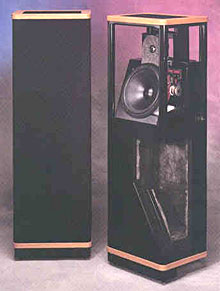
Vandersteen Audio 1B loudspeaker
Dear Diary:
Vandersteen Audio 2Ce loudspeaker
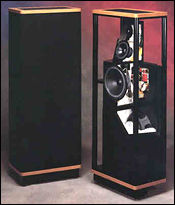
Eighty thousand pairs. According to Vandersteen Audio, that's the number of Vandersteen 2s of various generations which have been sold since the loudspeaker—and company—first saw the light of day in 1977. The 2 has been continually refined along the way—a new driver here, a new crossover change there, heavy-duty stands—more changes, in fact, than the occasional changes in model designation would indicate. The 2's main calling card has always been a high perceived value for money. If anything, this calling card has only been enhanced over the years as its price remained remarkably stable while the cost of high-end audio in general was perceived—rightly or wrongly—as being on a dizzying upward spiral.
Vandersteen Audio 3A loudspeaker
High-end-audio manufacturers are both more and less adventurous than their more mainstream contemporaries. While mainstream-audio manufacturers will almost invariably change their models every year, the changes are more often than not cosmetic—at least in between successive models. High-end manufacturers, on the other hand, will keep the same model in the line for several years, but make cosmetically invisible refinements along the way.
Vandersteen Audio Quatro loudspeaker
Record playback could have been designed to go from the inside out instead of the other way around. With most pieces of music ending louder than they started, doesn't it make more sense to end the side at the widest circumference, longest wavelength, least congested part of the groove spiral? Compact discs read from the center hole out, and they don't even have to.
Vandersteen Audio Treo loudspeaker
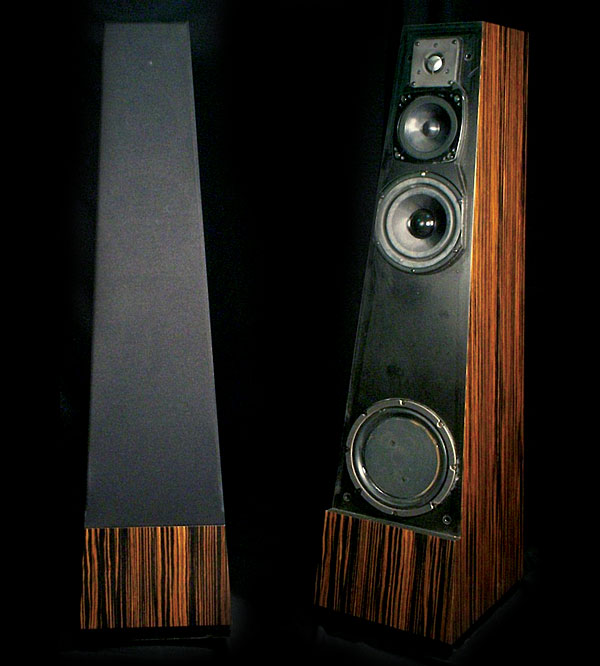
In one sense, Richard Vandersteen has been the victim of his own success. His Model 2 loudspeaker (footnote 1), introduced at the 1977 Consumer Electronics Show, put his company on the map but proved a hard product to improve on. Based on the idea that the HF and midrange drive-units should have the minimal baffle area in their acoustic vicinity, both to optimize lateral dispersion and to eliminate the effects of diffraction from the baffle edges, the Model 2 also used a combination of a sloped-back driver array and first-order crossover filters to give a time-coincident wavefront launch.
Vandersteen Cinema loudspeaker system (SGHT Review)
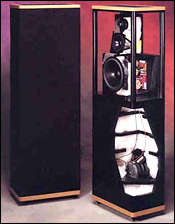
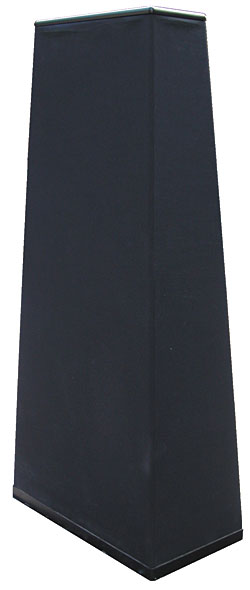
The Vandersteen 3A is a higher-end variation on the theme established by the company's first loudspeaker, the 2C. The latter is still available, though much updated into the current, highly popular 2Ce. A four-way design, the 3A has separate sub-enclosures for each drive unit; the whole affair is covered with a knit grille-cloth "sock" with wood trim end pieces. A rear-mounted metal brace allows the user to vary the tiltback—an important consideration for best performance with this loudspeaker.
Vandersteen Model Seven loudspeaker
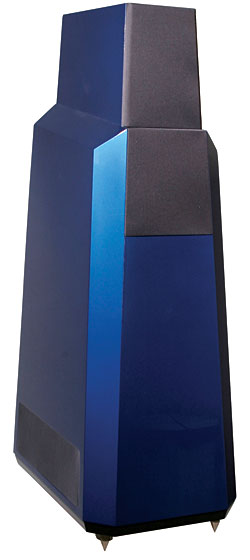
It's difficult to believe that the former top model of Vandersteen Audio's line of loudspeakers, the Model 5, has been in production in one form or another since 1997. Time passes quickly when you're having fun. Like all Vandersteen speakers, the 5 was and remains a good value and performance proposition. For all the 5's high technology and excellent performance both measured and audible, its price now starts at under $20,000/pair (up from about $10,000/pair when the 5 was introduced in 1997), including a built-in, proprietary powered subwoofer in each cabinet, and a sophisticated equalization system for room compensation.