

Von Schweikert Ultra 55 loudspeaker
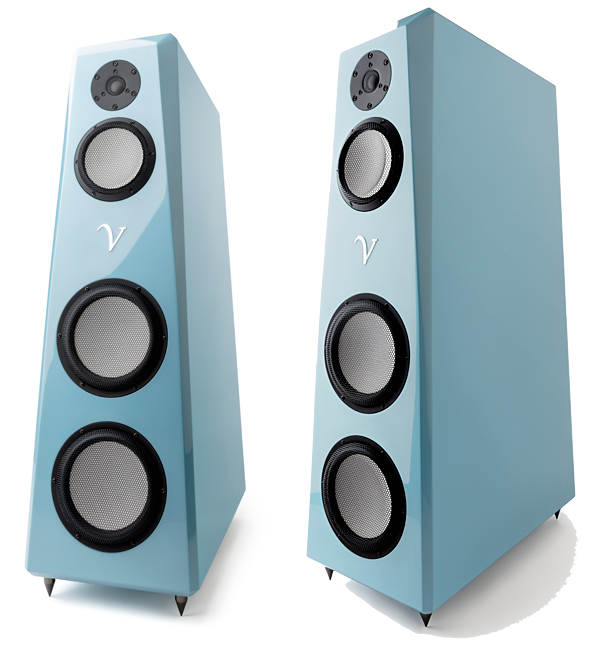
Achieving room-filling, high-quality sound in a hotel room is difficult enough. Getting it in a cavernous ballroom is even more problematic. Yet, over the past few years at AXPONA, RMAF, and most recently at the February 2020 FLAX (Florida Audio Expo), Von Schweikert Audio, in association with The Audio Company of Marietta, Georgia, has managed thatand, other than the approximately 100 bodies occupying every seat in the house, they've done it without any room treatment, or without any that I could see.
Vortex Screen loudspeaker
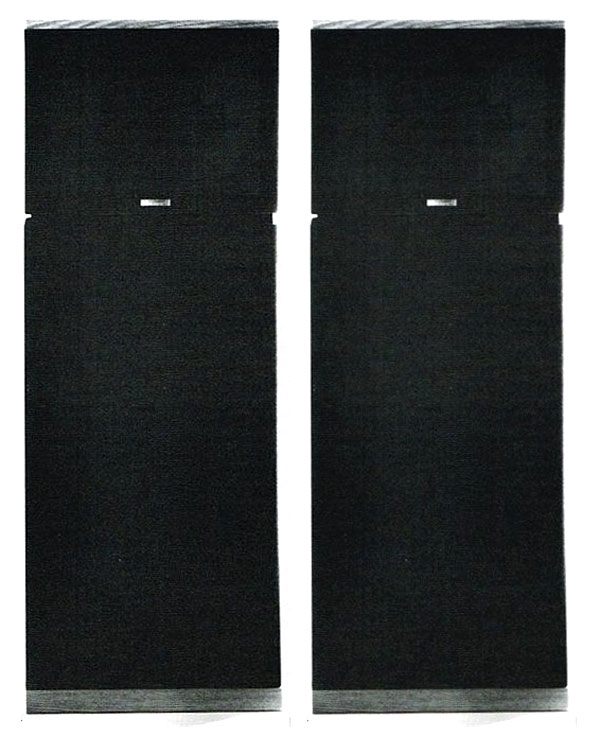
One of the joys of reviewing audio reproduction equipment is discovering a little-known product that provides an extraordinary level of performance and musical satisfaction at an affordable price. These components, sometimes made in a garage, reflect the designer's single-minded zeal for musical accuracy, not the sometime corporate mentality of meeting a price point or catering to the latest fad.
Voxativ Ampeggio 2024 loudspeaker
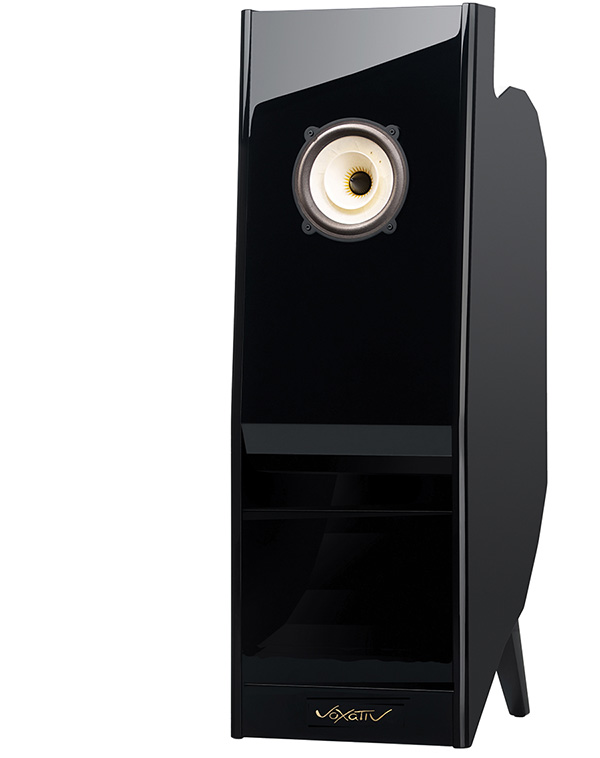
Evaluating a loudspeaker that would become Stereophile's 2011 Product of the Year, Art Dudley, at the time the magazine's editor-at-large, wrote, "The Voxativ Ampeggio went beyond sounding good: More than once, with too many records to mention, I found myself stopping to marvel at its brilliantly good pitch certainty. In terms of being able to simply nail a note, whether in isolation or tucked within a whole string of the little bastards, I've heard few other speakers this accomplished. And while it's one thing to focus on such a characteristic for a moment at a time, it's quite another to bask in it subconsciouslyand the Voxativs allowed me to do just that."
"I've now encountered a single-driver dynamic speaker I could live with," Art concluded. "In most audio reviews that's faint praise, but in this one it's a revelation."
Voxativ Ampeggio loudspeaker
It wasn't so much a vow as a prediction: After selling my last pair of Ticonal-magnet drivers and the homemade horns I'd carted around to three different houses, I supposed I would never again have a Lowther loudspeaker in my humble house.
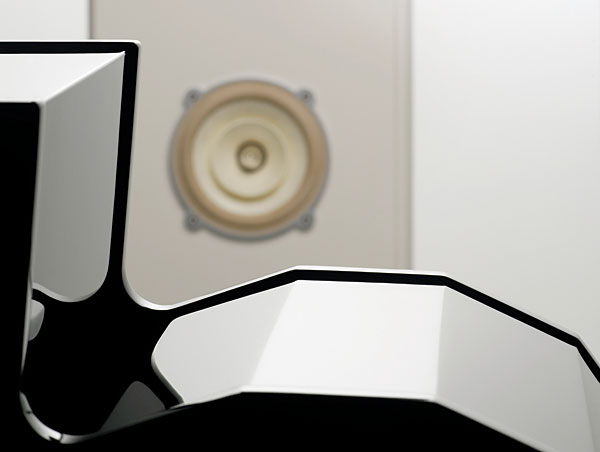
That remains literally true: The 7" full-range drivers to which I'm listening today are from a German company called Voxativ; the horn-loaded cabinets from which they play were also designed by Voxativ, and are made in Germany by the Wilhelm Schimmel piano company. And, with all due respect to Lowther, the 75-year-old English loudspeaker firm that launched a thousand DIY fantasiesnot to mention a thousand very lively wavefrontsthe Voxativ drivers and horns take the Lowther concept further than anyone else of whom I'm aware.
Watkins WE-1 loudspeaker
First I should clear up what may be an ambiguity in the driver-lineup spec for these speakers. In each system, three 8" cone units serve as woofers. Two of these crossover from the midrange drivers at 100Hz. Crossover to the third 8-incher, the subwoofer, is at 40Hz. Thus, two woofers are active from 100Hz down to 40Hz, and all three are active below 40. In other words, the third woofer does not come into play until the frequency drops to the point where the radiating area of two 8-inchers starts to become inadequate for moving air, at which point the additional area of the third speaker is thrown in. Below 40Hz, all three are working together.
Waveform Research Mach 17 loudspeaker
I first heard the Canadian-made Waveform Research Mach 17 loudspeaker system in New York City at HI-FI '96, Stereophile's Home Theater & Specialty Audio Show. Another Ontario native, Chris">http://www.stereophile.com/interviews/996russell">Chris Russell of Bryston Ltd., had raved to me about their sound. His recommendation sent me outside my assigned reporting area and down to the sixth floor of the Waldorf=Astoria, to dimly lit room 602—full of ASC">http://www.stereophile.com/roomtreatments/215">ASC Tube Traps, amplifiers, cables, and the twin truncated pyramids of the Mach 17s.
Wharfedale Diamond 10.7 loudspeaker
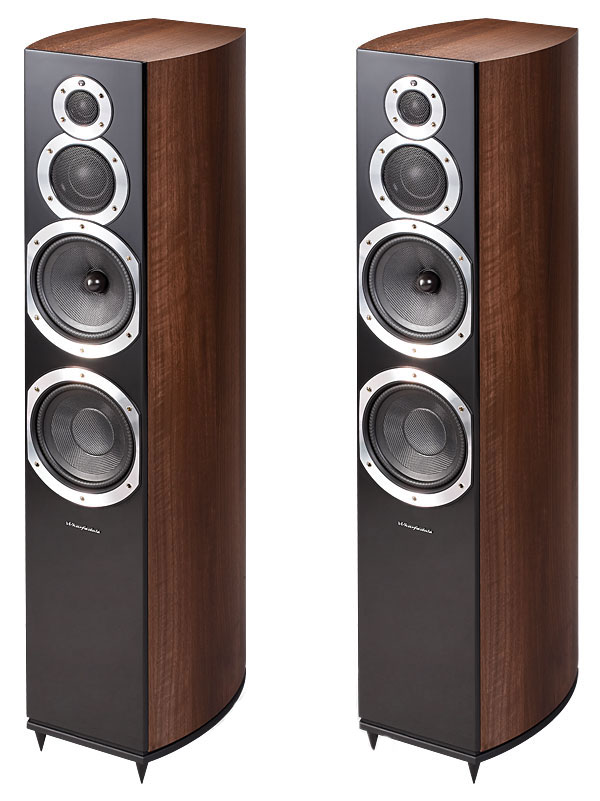
In a recent email, a reader, having read my review of the Monitor Audio Silver RX6 loudspeaker in the June 2012 issue, said that he'd like to see it compared with the similarly priced Wharfedale Diamond 10.7 ($1299/pair) and Epos Elan 10 ($1000/pair). That sounded interesting. The floorstanding 10.7 is the flagship model of Wharfedale's Diamond series, six models up from the Diamond 10.1 bookshelf (which I reviewed in reviewed in July 2011) and featuring the same dome tweeter. And the Epos Elan 10 essentially replaces the Epos M5i, which I reviewed in February 2011, and which has served as my reference bookshelf speaker ever since. I requested samples of both. (My review of the Epos Elan 10 is scheduled to appear in the February 2014 issue.)
Wharfedale Jade 7 loudspeaker
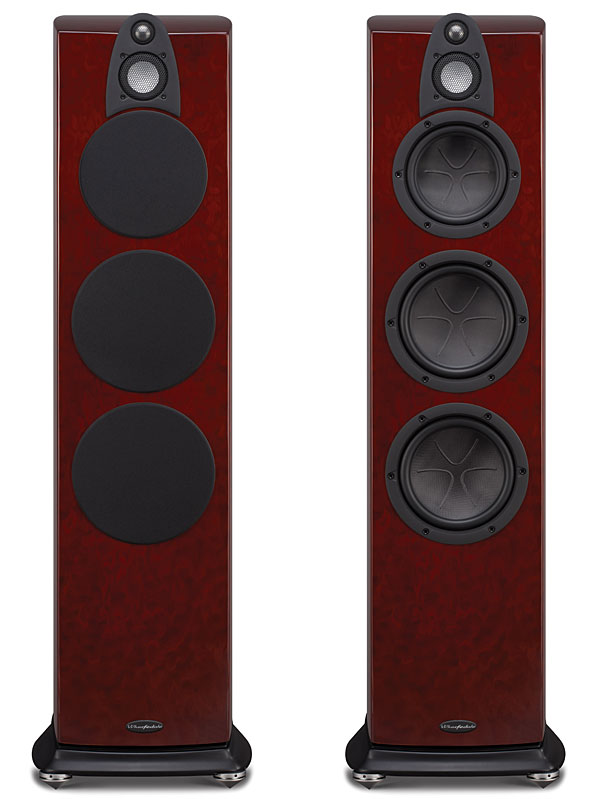
Is there a country that, per capita, has produced more major loudspeaker brands than Great Britain? The British brands that immediately come to mind are Tannoy, KEF, Bowers & Wilkins, Quad, Rogers, Spendor, Harbeth, Castle, Acoustic Energy, ProAc, Monitor Audio, Epos, Celestion, Lowther, PMCand Wharfedale.
Wilson Audio Modular Monitor (WAMM) loudpeaker system
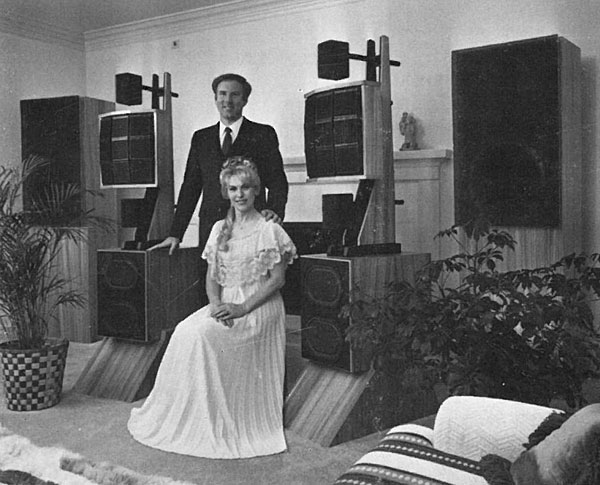
No, we made no typos in the specifications sidebar. The weight of the Wilson Audio Modular Monitor (WAMM) speaker system is enough to make you consult a structural engineer before dropping it on your living room floorfragile, 300-year old New England frame houses are probably out. And the recent price increase from $32,000 to $35,000 is enough by itself to buy a pair of Quad ESL-63swhich is not a bad speaker system. The WAMM represents an all-out assault on both the state of the art in speaker systems and on the limits to which wealthy audiophiles will go in order to have the best.
Wilson Audio Sasha W/P loudspeaker
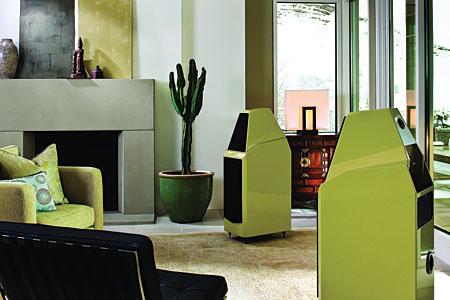
Before last year, I had no more than a professional interest in the products of Wilson Audio Specialties. But before last year I hadn't experienced Wilson's">http://www.stereophile.com/artdudleylistening/listening_86">Wilson's Sophia Series 2 loudspeaker ($16,700/pair)—which, like the wines I tend to order when my wife and I go out to dinner, is the second-cheapest item on their menu. Within weeks of the Sophias' arrival, respect had turned to rapture, like to love, and an entirely new appreciation for Wilson Audio was mine (footnote 1).