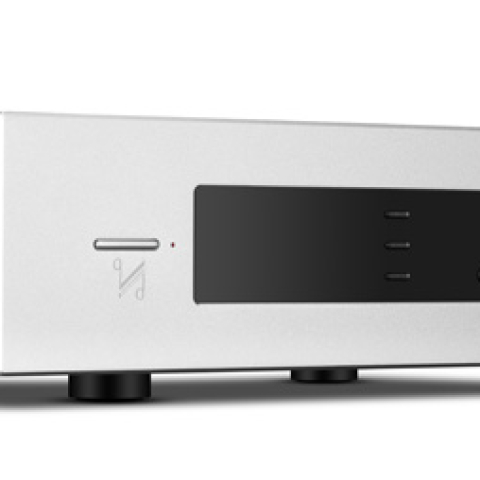
If you've been following my loudspeaker reviews for any length of time, you'll have noted that I almost never use tube amplification. I'm always suspicious that a typical tubed design, with its relatively high source impedance, acts as a suboptimal tone control. But as none of the amplifiers I had were hitting the Carmel 2s' sweet spot, I got out of storage the sample of the PrimaLuna DiaLogue Premium HP integrated amplifier that Robert Deutsch had reviewed in December 2014. The PrimaLuna offers a fairly low output impedance, especially from its 4 ohm output transformer tap in triode mode: It measured 1.1 ohms from 20Hz to 1kHz, rising to 1.33 ohms at 20kHz. Accordingly, I hooked up the YGAs to the DiaLogue Premium HP's 4 ohm taps, set the PS Audio's volume control to its maximum so I could control volume with the PrimaLuna, switched the amplifier to triode mode—which RD had felt sounded "more laid-back, more relaxed"—and sat back to listen . . .
Listening
. . . and listen. And then listen some more. Even though the Carmel 2s' delivery of low frequencies was still ungenerous, the PrimaLuna amplifier proved best at getting them to sing with a single, unified voice that was evenly matched in character from the midbass through to the top of the audioband. Yes, with "Last Train Home," from Pat Metheny's Still Life (Talking) (ALAC file ripped from CD, Geffen 24145-2), the repeated eighth-notes on bass guitar weren't as well defined with the PrimaLuna as they'd been with any of the solid-state amplifiers I'd tried, but there was now enough midbass to minimize the impression of leanness, and the low frequencies blended seamlessly with the midrange. The bass guitar in "I Put a Spell on You," from Jeff Beck's Emotion & Commotion (ALAC file ripped from CD, Atco R2 523695), sounded a bit gruff, but the YGAs kept Joss Stone's gutsy voice at 100. On first impression, the Carmel 2's midrange was superbly natural; it certainly sounded that way with many recordings of voices. Having heard Lyn Stanley sing in person at an audio show, I was prompted to buy the DSD64 download of the chanteuse's Potions: From the 50's (A.T. Music/Acoustic Sounds). Not only is this is an immaculate-sounding recording—engineered and mixed by Al Schmitt, mastered by Bernie Grundman—but Stanley really gets into some classics from the Great American Songbook, such as "Lullaby of Birdland," "Cry Me a River," and "Misty." But my favorite track is the old hit by Leiber and Stoller, "Love Potion #9." The Carmel 2's clean highs gave the cymbals and triangle a superbly real quality, the definition in the lower octaves allowed the double bass to speak clearly, and Stanley's husky alto was deliciously present in the room. And Otis Redding's barking baritone on his Otis Blue: Otis Redding Sings Soul (mono 24/192 FLAC file, Atco/Pono Music) thrilled me as much as it had when I bought the vinyl, 50 years ago.
But with some spoken-word recordings, such as David Wilson's commentaries on the high-resolution files of his reissued Wilson Audiophile–label recordings, I became aware of a slightly resonant quality. Similarly, naturally recorded solo-piano recordings, such as Robert Silverman's traversal of the two Rachmaninoff sonatas (CD, Stereophile STPH019-2), had a little too much upper-midrange bloom. I put on a recording I know really well: Richard Lehnert's spoken introductions to the "Channel Identification" and "Channel Phasing" tracks on Editor's Choice (CD, Stereophile STPH016-2), and yes, there was a touch of midrange overhang in the sound of his voice. It wasn't audible with jazz vocal recordings, where it was masked by everything else in the mix, but recordings of solo piano and unaccompanied spoken voice are ruthlessly revealing.
Playing pink noise, too, is very revealing of colorations, and here the Carmel 2 did well. With the dual-mono pink-noise track from Editor's Choice, I heard no change as I moved my head above and below the tweeter axis. However, I could hear a narrow band of brightness in the mid-treble that slightly emphasized the fret buzz of my Fender bass in the first two tracks of Editor's Choice. The central image of the noise signal was narrow at all frequencies and spatially well defined, confirming the excellent stereo imaging I experienced with the Carmel 2s.
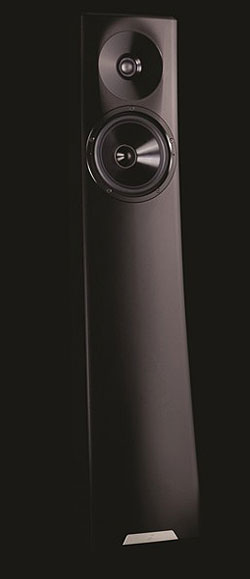 The low-frequency warble tones on Editor's Choice began shelving down below 125Hz, and while the 50Hz band was relatively strong, the tones at 40Hz and below sounded increasingly weak. That impression was confirmed with the half-step–spaced tonebursts on this disc, though these did speak very cleanly. Therefore, after having finished my listening, I was surprised to read in a review of the Carmel 2, in the October 2015 Hi-Fi Plus, that the speaker offered "surprisingly deep, powerful, and extended bass." Yes, something like the sampled kick drum in "Angel Echoes," from Fourtet's There Is Love in You (ALAC file ripped from CD, Domino), sounded punchy through the YGAs—but, like the double bass in the Lyn Stanley recording, kick drums have their most energy in the midbass, where the Carmel 2 can handle it. So, as for the YGAs' bass performance: Clean, articulate, expressive, and tuneful? Yes. Extended? Not really.
Having said that, when I played "Limit to Your Love," from James Blake (CD, A&M), the dropped-bass synth notes were more audible than I'd expected. The Carmel 2s' woofers were vibrating alarmingly with this track, even at modest SPLs, so perhaps some nonlinear content was aiding audibility.
To put this into context: With most recordings of rock and orchestral classical music, the Carmel 2s excelled. They handled with aplomb the bass, drums, and guitar power chords in "Bullet with Butterfly Wings," from Smashing Pumpkins' (Rotten Apples) The Smashing Pumpkins Greatest Hits (256kbps MP3 download, Virgin), and successfully projected the sheer magnificence of Emil Gilels's performance of Brahms's Piano Concerto 2, with the Berlin Philharmonic conducted by Eugen Jochum (ALAC files ripped from CD, Deutsche Grammophon). In the latter, the horn motif above the whispered piano-arpeggio response sounded as mysterious as I have heard it in my system, and the orchestra's ensuing declamation of the theme sent shivers down my spine.
"Shenandoah," from Bill Frisell's live album East/West (ALAC file ripped from CD, Elektra Nonesuch), played to all the Carmel 2's strengths. The filigree textures of Frisell's electric guitar and guitar loops were exquisitely reproduced, Viktor Krauss's superbly defined double bass had sufficient weight to be convincing, the treble textures of Kenny Wollesen's cymbals and snare were well differentiated, and, as the arrangement builds to greater complexity and volume, all of these threads remained clear. The YGA speakers' stable, accurate imaging placed me back in Yoshi's, in Oakland, California—a club I have visited only once, but the memory of which has stayed with me over the years.
Conclusions
The low-frequency warble tones on Editor's Choice began shelving down below 125Hz, and while the 50Hz band was relatively strong, the tones at 40Hz and below sounded increasingly weak. That impression was confirmed with the half-step–spaced tonebursts on this disc, though these did speak very cleanly. Therefore, after having finished my listening, I was surprised to read in a review of the Carmel 2, in the October 2015 Hi-Fi Plus, that the speaker offered "surprisingly deep, powerful, and extended bass." Yes, something like the sampled kick drum in "Angel Echoes," from Fourtet's There Is Love in You (ALAC file ripped from CD, Domino), sounded punchy through the YGAs—but, like the double bass in the Lyn Stanley recording, kick drums have their most energy in the midbass, where the Carmel 2 can handle it. So, as for the YGAs' bass performance: Clean, articulate, expressive, and tuneful? Yes. Extended? Not really.
Having said that, when I played "Limit to Your Love," from James Blake (CD, A&M), the dropped-bass synth notes were more audible than I'd expected. The Carmel 2s' woofers were vibrating alarmingly with this track, even at modest SPLs, so perhaps some nonlinear content was aiding audibility.
To put this into context: With most recordings of rock and orchestral classical music, the Carmel 2s excelled. They handled with aplomb the bass, drums, and guitar power chords in "Bullet with Butterfly Wings," from Smashing Pumpkins' (Rotten Apples) The Smashing Pumpkins Greatest Hits (256kbps MP3 download, Virgin), and successfully projected the sheer magnificence of Emil Gilels's performance of Brahms's Piano Concerto 2, with the Berlin Philharmonic conducted by Eugen Jochum (ALAC files ripped from CD, Deutsche Grammophon). In the latter, the horn motif above the whispered piano-arpeggio response sounded as mysterious as I have heard it in my system, and the orchestra's ensuing declamation of the theme sent shivers down my spine.
"Shenandoah," from Bill Frisell's live album East/West (ALAC file ripped from CD, Elektra Nonesuch), played to all the Carmel 2's strengths. The filigree textures of Frisell's electric guitar and guitar loops were exquisitely reproduced, Viktor Krauss's superbly defined double bass had sufficient weight to be convincing, the treble textures of Kenny Wollesen's cymbals and snare were well differentiated, and, as the arrangement builds to greater complexity and volume, all of these threads remained clear. The YGA speakers' stable, accurate imaging placed me back in Yoshi's, in Oakland, California—a club I have visited only once, but the memory of which has stayed with me over the years.
Conclusions
To a greater or smaller extent, all speakers editorialize. One reason Stereophile's writers list the recordings they use to reach their review conclusions is that the sonic character of the product being tested dictates what music is played. With the YG Acoustics Carmel 2, I found I was playing more rock and jazz and less solo piano; and, in classical, more orchestral than vocal music. I was choosing the recordings that played to the Carmel 2's many strengths—its clarity, transparency, well-defined stereo imaging, excellent dynamic range, clean top octaves, and low-frequency articulation—and not those that revealed its few weaknesses: a slightly colored upper midrange, a rather lean bass.
But once I'd found the amplifier—a tubed integrated!—that also played to its strengths, I very much enjoyed my time with the Carmel 2. This least-expensive speaker in the YG Acoustics line is still costly at $24,300/pair, but it is extraordinarily well made, superbly finished, impressively engineered, and offers a quality of sound on a par with its price. The Carmel 2 will not be the speaker for all systems and rooms, but when properly set up in a sympathetic acoustic and matched with appropriate electronics, it will sing.
. . . and listen. And then listen some more. Even though the Carmel 2s' delivery of low frequencies was still ungenerous, the PrimaLuna amplifier proved best at getting them to sing with a single, unified voice that was evenly matched in character from the midbass through to the top of the audioband. Yes, with "Last Train Home," from Pat Metheny's Still Life (Talking) (ALAC file ripped from CD, Geffen 24145-2), the repeated eighth-notes on bass guitar weren't as well defined with the PrimaLuna as they'd been with any of the solid-state amplifiers I'd tried, but there was now enough midbass to minimize the impression of leanness, and the low frequencies blended seamlessly with the midrange. The bass guitar in "I Put a Spell on You," from Jeff Beck's Emotion & Commotion (ALAC file ripped from CD, Atco R2 523695), sounded a bit gruff, but the YGAs kept Joss Stone's gutsy voice at 100. On first impression, the Carmel 2's midrange was superbly natural; it certainly sounded that way with many recordings of voices. Having heard Lyn Stanley sing in person at an audio show, I was prompted to buy the DSD64 download of the chanteuse's Potions: From the 50's (A.T. Music/Acoustic Sounds). Not only is this is an immaculate-sounding recording—engineered and mixed by Al Schmitt, mastered by Bernie Grundman—but Stanley really gets into some classics from the Great American Songbook, such as "Lullaby of Birdland," "Cry Me a River," and "Misty." But my favorite track is the old hit by Leiber and Stoller, "Love Potion #9." The Carmel 2's clean highs gave the cymbals and triangle a superbly real quality, the definition in the lower octaves allowed the double bass to speak clearly, and Stanley's husky alto was deliciously present in the room. And Otis Redding's barking baritone on his Otis Blue: Otis Redding Sings Soul (mono 24/192 FLAC file, Atco/Pono Music) thrilled me as much as it had when I bought the vinyl, 50 years ago.
The low-frequency warble tones on Editor's Choice began shelving down below 125Hz, and while the 50Hz band was relatively strong, the tones at 40Hz and below sounded increasingly weak. That impression was confirmed with the half-step–spaced tonebursts on this disc, though these did speak very cleanly. Therefore, after having finished my listening, I was surprised to read in a review of the Carmel 2, in the October 2015 Hi-Fi Plus, that the speaker offered "surprisingly deep, powerful, and extended bass." Yes, something like the sampled kick drum in "Angel Echoes," from Fourtet's There Is Love in You (ALAC file ripped from CD, Domino), sounded punchy through the YGAs—but, like the double bass in the Lyn Stanley recording, kick drums have their most energy in the midbass, where the Carmel 2 can handle it. So, as for the YGAs' bass performance: Clean, articulate, expressive, and tuneful? Yes. Extended? Not really.
Having said that, when I played "Limit to Your Love," from James Blake (CD, A&M), the dropped-bass synth notes were more audible than I'd expected. The Carmel 2s' woofers were vibrating alarmingly with this track, even at modest SPLs, so perhaps some nonlinear content was aiding audibility.
To a greater or smaller extent, all speakers editorialize. One reason Stereophile's writers list the recordings they use to reach their review conclusions is that the sonic character of the product being tested dictates what music is played. With the YG Acoustics Carmel 2, I found I was playing more rock and jazz and less solo piano; and, in classical, more orchestral than vocal music. I was choosing the recordings that played to the Carmel 2's many strengths—its clarity, transparency, well-defined stereo imaging, excellent dynamic range, clean top octaves, and low-frequency articulation—and not those that revealed its few weaknesses: a slightly colored upper midrange, a rather lean bass.