 Listening
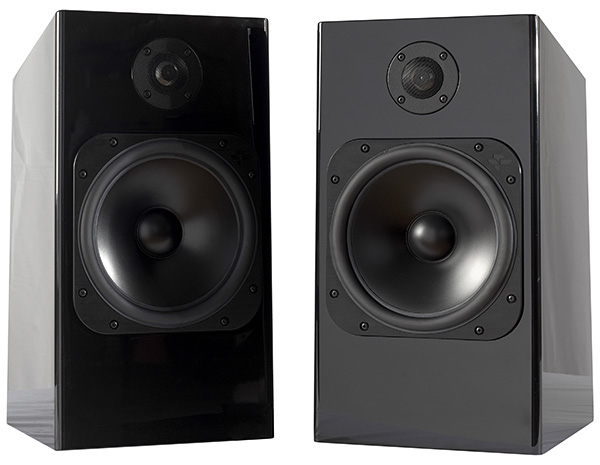
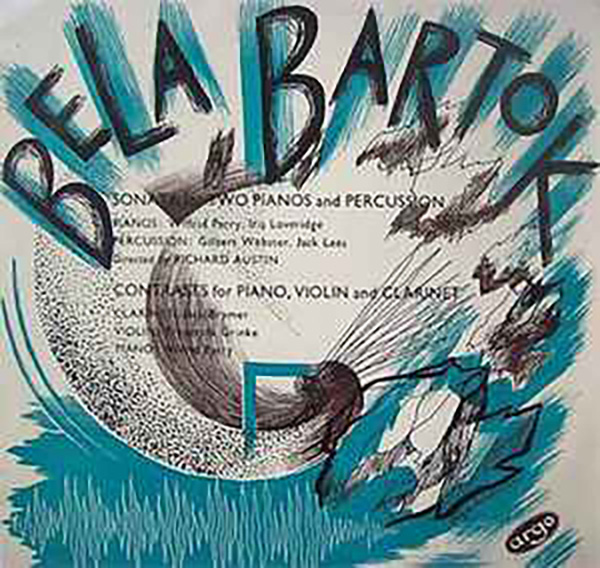
I collect black discs from the early 1950s because back then the vinyl was thick and heavy and its labels and covers used superior quality inks with super-saturated colors, often with gold or silver metallic lettering. My favorites among these classic beauties are discs made in Britain by EMI, Decca, and Argo. Lately, I've developed a special fondness for mono Argos pressed in England during the late '50s to early '60s. Their sound has a burnished gleam I find uniquely appealing. On the first day of my Totem Element Fire auditions, I played my favorite composer, Béla Bartók, on a blue-label Argo disc from 1956 (Argo RG 89). When I used the transducer combo of Audio-Technica's ART20 MC cartridge and the Totem Element Fire V2 loudspeakers to play Bartók's Contrasts for Piano, Violin, and Clarinet, I was rewarded with terse well-formed bass drum sounds that went low (possibly to 30Hz) and made this wild Bartók sound sharp and bold and moving about rhythmically like Mondrian's famous painting, Broadway Boogie Woogie. This new deeper bass made Bartók's Sonata for Two Pianos and Percussion feel wilder and larger with way more jolt and suck-me-in powers than it did with the Falcons. Think bold and expansive. But also neutral and composed.
 Playing the Bartók, the Fires' soundspace was not only wider than the Falcons', but more liquid looking. Beyond its steady and correct tones, and precision soundstage mapping, the Totem's best trait was its glassless, grainless, eye-grabbing transparency. This level of see-into-ness is what we pay extra for, and surely, what Vince Bruzzese designed the Torrent woofer to accomplish. When the Element Fire V2s weren't playing music, it was the aesthetic quality of their transparency that lingered in my memory.
 When I refer to the Element Fire's transparency, I want to emphasize how this clarity has a unique feel that is different (texture and viscosity-wise) from speakers like my Falcon LS3/5a or the Genelec G Three I reviewed in 2022. The Totem's transparency is more grainless, magic mushroom organic than the Falcon's, and less bright and electrically charged than Genelec's. The Element Fire's transparency reminded me of those seductive silent spaces I experience with DS Audio's photo-optical cartridges.
Almost humorously, when I switched from Totem's Fire V2s to my 1997 Totem Model 1s, I was loaded up on "expectation bias." I was certain the 1s would sound rubber-coned, and less sharply focused and transparent than my Falcons and the Element Fires. Which they did. But the impact of those shortcomings was minimal and easy to ignore. What I was not prepared for was how bright and awake and full-tilt punchy-danceable these older boxes were. I was like, whoa! These plucky things can rock and bop and skiffle. And make me pull out my Meters records. The Model 1s played thicker and grayer and less transparent than the Fires, but it didn't matter, the 1s projected this bopping kind of energy that kept my mind zeroed in on how artists were executing their performances. And that for me was proof: Totem's Model 1 stands the test of time. Compared to the DeVore Fidelity O/93
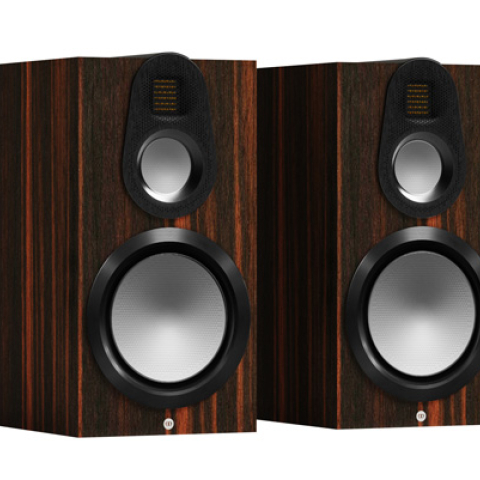
I've had a pair of 10 ohm DeVore Fidelity Orangutan O/93s for 10 years. Their 10" paper cones match my 15 ohm Falcons in their ability to perform with low-power, no-feedback amplifiers like my reference Elekit TU-8900. But to my surprise, Falcon's Gold Badges and DeVore's Orangutans both respond brilliantly to high power. With the John Curl–designed Parasound Halo A 21+ amplifier, both speakers achieved a 20% deeper, more architecturally rendered soundspace with more eye-popping detail. The longer I use this amp, the more I appreciate the refined elegance of its speaker-pleasing authority.
 Conclusion
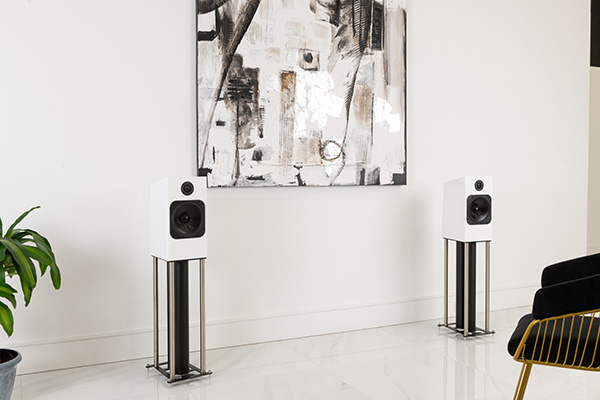
Totem Acoustic's Element Fire V2 excelled at The Three Ts: tone, tempo, and transparency. But of those traits, it was the Fire's top-tier transparency that struck the most awe.
Footnote 1: See youtube.com/watch?v=nUE80DTNxK4.