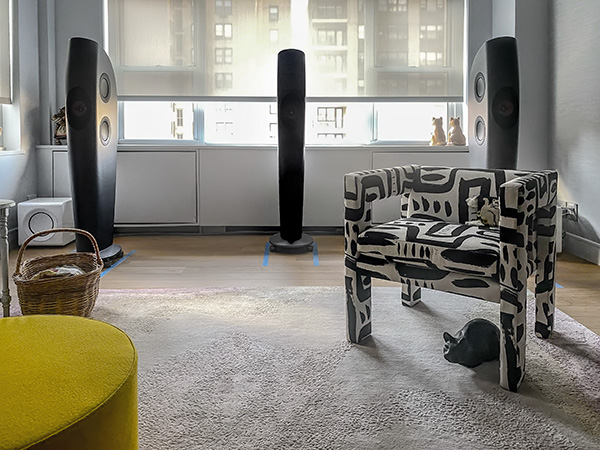
Kal's renovated listening room features three KEF Blade Two Meta speakers.
Holding that thought, I asked Kal to demonstrate his meticulously executed 5.3 channel system. Which he did by playing original five-channel orchestral recordings using JRiver's Media Center and Dirac Live.
What I noticed immediately as I stared at three (L/C/R) KEF Blade Two Metas backlit by a fierce October sun was a profound sense of refined spectral balance. No sounds seemed overemphasized or out of place. The image that floated in front of me was considerably taller and wider and deeper back and further forward than anything I'd previously experienced with conventional box speakers.
Kal's eight precisely stationed speakers and subwoofers presented a vivid picture of a full orchestra on stage with me in the audience—surrounded on all sides by evenly dispersed energy. I did not hear the two KEF LS60s positioned directly to my sides. But I could hear well-formed portions of sound energy near and around my seated body, which was about 13' away from the center channel.
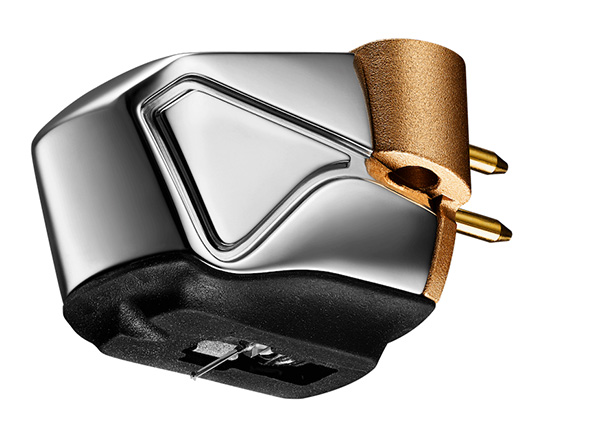 Audio-Technica ART20 Phono Cartridge
Everyone who knows me knows I think most audio components sound like they look. I doubt I'm alone in this view, because I think it's pretty obvious how audio components reflect the sonic, aesthetic, and engineering ethos of the cultures that created them. I think it is obvious how England, Germany, China, and Japan represent distinctly different world views, each reflecting the attitudes, history, and traditions of people. While working my way through life, I've endeavored to paint like the Chinese, think like a German, listen like a Brit, dream like the Russians, and make objects like the Japanese. I admire Japanese culture and aesthetics because they feel more closely connected with intellect, and the life of the mind, than my own culture's. That's the chief reason my most favorite audio objects are phono cartridges made in Japan. Their materials-based sound aesthetic reflects the sacredness of Japanese craft, the precision of Japanese manufacturing, and the Buddha-like mindfulness of Japanese listening culture.
 According to Audio-Technica's website, the ART20 is a 9gm moving coil with a generating system based on A-T's $1500 ART9XI but with a 0.6mm thicker front yoke that increases magnetic flux density, and the voltage output from 0.5mV to 0.55mV, without adding more coil turns, or raising its 12 ohm coil impedance.
The ART20's cantilever is specified as a solid boron shaft with a nude, square shank, line contact stylus secured with a titanium anchoring plate for "enhanced rigidity and low tip mass." The back part of the cantilever—behind the coils—is tapered in steps to, I presume, reduce mass and distribute resonances. According to the ART20's specifications, its coils are wound with PCOCC wire and move in a field powered by neodymium magnets and a Permendur yoke. Vertical tracking force is specified at 1.6–2.0gm with 1.8gm "standard." I did my auditions at the standard force on my Sorane SA-1.2 tonearm with a Jelco HS-15 headshell.
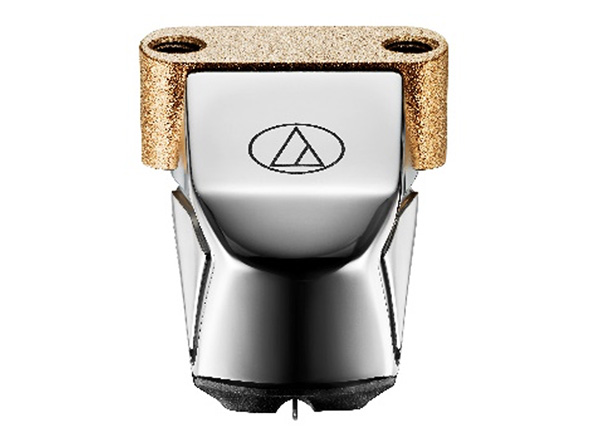
Audio-Technica's ART20 features an aluminum body covered by a titanium shell with an elastomer undercover. Its black bottom, chrome fuselage, and bronze-colored support suggest a bright vibrant clarity with ink-black silences. Which pretty much nails its sound.
According to Audio-Technica's website, the ART20 is a 9gm moving coil with a generating system based on A-T's $1500 ART9XI but with a 0.6mm thicker front yoke that increases magnetic flux density, and the voltage output from 0.5mV to 0.55mV, without adding more coil turns, or raising its 12 ohm coil impedance.
The ART20's cantilever is specified as a solid boron shaft with a nude, square shank, line contact stylus secured with a titanium anchoring plate for "enhanced rigidity and low tip mass." The back part of the cantilever—behind the coils—is tapered in steps to, I presume, reduce mass and distribute resonances. According to the ART20's specifications, its coils are wound with PCOCC wire and move in a field powered by neodymium magnets and a Permendur yoke. Vertical tracking force is specified at 1.6–2.0gm with 1.8gm "standard." I did my auditions at the standard force on my Sorane SA-1.2 tonearm with a Jelco HS-15 headshell.
Audio-Technica's ART20 features an aluminum body covered by a titanium shell with an elastomer undercover. Its black bottom, chrome fuselage, and bronze-colored support suggest a bright vibrant clarity with ink-black silences. Which pretty much nails its sound.
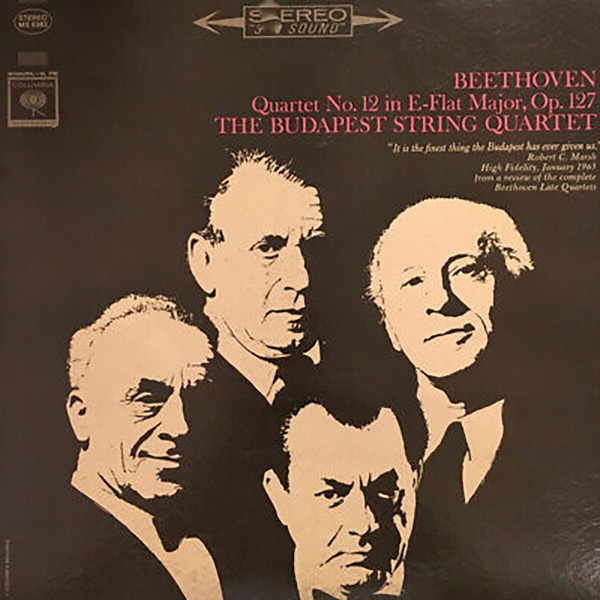 What I heard: The first music I played with the ART20 was one of Beethoven's poetic masterpieces, the first of his late quartets: String Quartet No.12 in E-Flat Major, Op.127 performed by the Budapest String Quartet on a six-eye Columbia disc (ML 4503).
With the ART20, this recording sounded as brilliant and tone wonderful as it did with Nagaoka's MP-200 but was now dramatically more transparent. It exhibited none of the stiffness or dynamic restraint most cartridges display before break-in. It resolved in a way that made my Falcon Gold Badges sound like electrostatic speakers: sparkplug fast, with a crystalline spatiality, and Nikkor-lens clarity.
When my need to assess tone and transparency arises, I often resort to an old favorite. Josquin Des Préz: Missa Pange Lingua/Motets & Instrumental Pieces, a Decca Gold Label disc with a green rag paper gatefold cover and a booklet that explains the structure and origins of each composition (Decca Stereo LP DL 79410). New York's Pro Musica Motet Choir and Wind Ensemble (and Decca's recording team) make this a demonstration-quality recording I will never stop listening to. It's a purist Decca LP that sounds raw and direct, and minimally enhanced by studio doctoring.
What I heard: The first music I played with the ART20 was one of Beethoven's poetic masterpieces, the first of his late quartets: String Quartet No.12 in E-Flat Major, Op.127 performed by the Budapest String Quartet on a six-eye Columbia disc (ML 4503).
With the ART20, this recording sounded as brilliant and tone wonderful as it did with Nagaoka's MP-200 but was now dramatically more transparent. It exhibited none of the stiffness or dynamic restraint most cartridges display before break-in. It resolved in a way that made my Falcon Gold Badges sound like electrostatic speakers: sparkplug fast, with a crystalline spatiality, and Nikkor-lens clarity.
When my need to assess tone and transparency arises, I often resort to an old favorite. Josquin Des Préz: Missa Pange Lingua/Motets & Instrumental Pieces, a Decca Gold Label disc with a green rag paper gatefold cover and a booklet that explains the structure and origins of each composition (Decca Stereo LP DL 79410). New York's Pro Musica Motet Choir and Wind Ensemble (and Decca's recording team) make this a demonstration-quality recording I will never stop listening to. It's a purist Decca LP that sounds raw and direct, and minimally enhanced by studio doctoring.
 After about 20 sides, I put on Songs by Stephen Foster (Nonesuch LP H-71268). Foster's super-fun "Nothing But a Plain Old Soldier" grabbed my attention and opened my ears by sounding brusque, immediate, and squeaky sparkling clean. With the Audio-Technica, low-level details were pronounced and microfocused. Playing into PrimaLuna's EVO 100 phono stage and loaded with 100 ohms, this clarity I witnessed was not sterile, or overstated, or fake, or off-putting. It wasn't thin or gray. It was starkly clear, with a splash of flesh and blood. Baritone Leslie Guinn's singing accompanied by Gilbert Kalish on melodeon felt gay and mirthful in a way that made me smile all the way through. (I mean who doesn't love silly songs or the tones of a melodeon?) The beauty of the ART20's sparkling clarity was how it kept my mind on the song. The spirits trapped inside the recording were whispering out from the grooves, "Look here. Listen to this. Isn't it delightful?" The best part was that the ART20 made each Stephen Foster song into a smile-inducing earworm.
The ART20 played that Foster disc maybe 10% cooler than my Dynavector XX-2A, and possibly 20% cooler than my Benz Micro Gullwing SLR, which plays it 10% warm. This "coolness" I'm describing reflects how I visually perceive the "cast" or the temperature of light illuminating the soundstage; it is not a frequency response anomaly.
After about 20 sides, I put on Songs by Stephen Foster (Nonesuch LP H-71268). Foster's super-fun "Nothing But a Plain Old Soldier" grabbed my attention and opened my ears by sounding brusque, immediate, and squeaky sparkling clean. With the Audio-Technica, low-level details were pronounced and microfocused. Playing into PrimaLuna's EVO 100 phono stage and loaded with 100 ohms, this clarity I witnessed was not sterile, or overstated, or fake, or off-putting. It wasn't thin or gray. It was starkly clear, with a splash of flesh and blood. Baritone Leslie Guinn's singing accompanied by Gilbert Kalish on melodeon felt gay and mirthful in a way that made me smile all the way through. (I mean who doesn't love silly songs or the tones of a melodeon?) The beauty of the ART20's sparkling clarity was how it kept my mind on the song. The spirits trapped inside the recording were whispering out from the grooves, "Look here. Listen to this. Isn't it delightful?" The best part was that the ART20 made each Stephen Foster song into a smile-inducing earworm.
The ART20 played that Foster disc maybe 10% cooler than my Dynavector XX-2A, and possibly 20% cooler than my Benz Micro Gullwing SLR, which plays it 10% warm. This "coolness" I'm describing reflects how I visually perceive the "cast" or the temperature of light illuminating the soundstage; it is not a frequency response anomaly.
 When I played a 1974 Nippon Phonogram Company reissue of Sarah Vaughan (Mercury/EmArcy SFX-7332), I alternated loading between 100, 200, and 500 ohms, and decided that 200 ohms was steering the ART20's nude stylus with the greatest certainty, resulting in the cleanest, quietest clarity.
Footnote 3: Audio-Technica U.S., Inc., 1221 Commerce Dr., Stow, OH 44224. Tel: (330) 686-2600. Web: audio-technica.com