Sidebar 3: Measurements
Before performing any measurements, I ran one of the Simaudio Moon Evolution 880M amplifiers (serial no. L6311636) for an hour at one-third its specified maximum power of 800W into 8 ohms, thermally the worst case for an amplifier with a class-B output stage. By the end of the hour, the side-mounted heatsinks were way too hot to touch, at 148.5°F (64.8°C). The chassis was cooler, with the top plate measuring 126.4°F (52.4°C), though the aluminum vertical corner pieces were 164.3°F (73.5°C). Though the distortion with the amplifier completely cold was a low 0.00825%, this was predominantly crossover distortion, which will be subjectively disturbing because of its high proportion of high-order harmonics. At the end of the preconditioning period, the distortion had almost halved, to 0.0045%, and the crossover spuriae had disappeared. This suggests that potential purchasers of this amplifier should not audition it until it has warmed up.
I performed a full set of measurements on the amplifier, using Stereophile's loan sample of the top-of-the-line Audio Precision SYS2722 system (see www.ap.com and the January 2008 "As We See It"), using the 880M's balanced input. I repeated some of the tests using the unbalanced input with a shorting plug connecting pins 1 and 3 of the 880M's XLR jack.
The voltage gain into 8 ohms was the same for the balanced and unbalanced inputs, at 31.5dB, which is about 4dB higher than the norm. Both inputs preserved absolute polarity (ie, were non-inverting), the XLR jack being wired with pin 2 hot. The input impedance at low and middle frequencies was 23k ohms for both sets of jacks, dropping inconsequentially to 18k ohms at 20kHz. The output impedance (including 6' of speaker cable) was slightly higher than usual for a solid-state design, at 0.125 ohm at 20Hz and 1kHz, rising to 0.132 ohm at 20kHz. Nevertheless, the modulation of the amplifier's frequency response by the Ohm's Law interaction between this output impedance and the impedance of our standard simulated loudspeaker was just ±0.1dB (fig.1, gray trace).
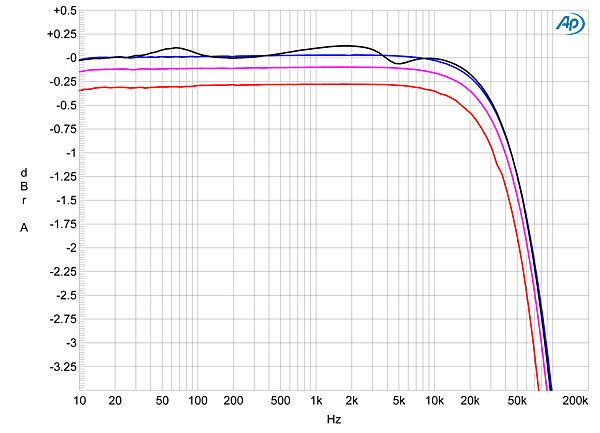
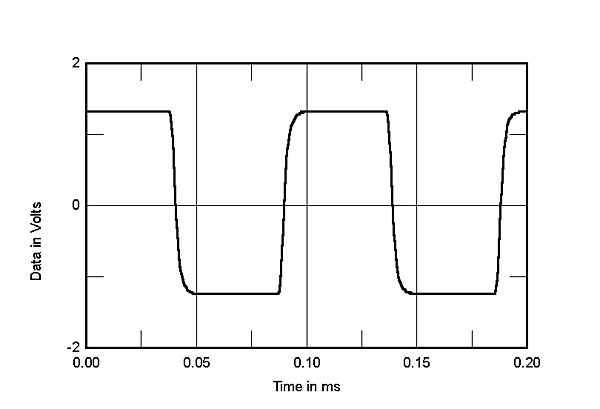
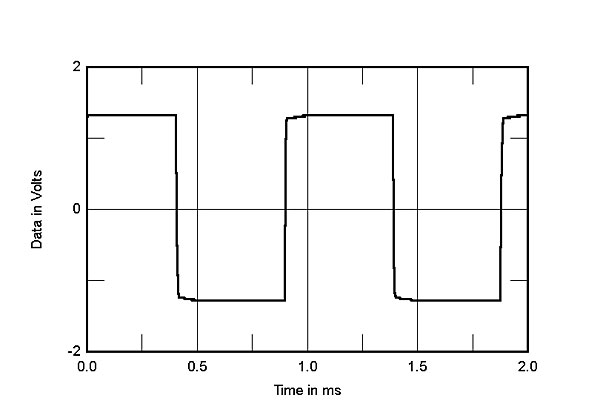
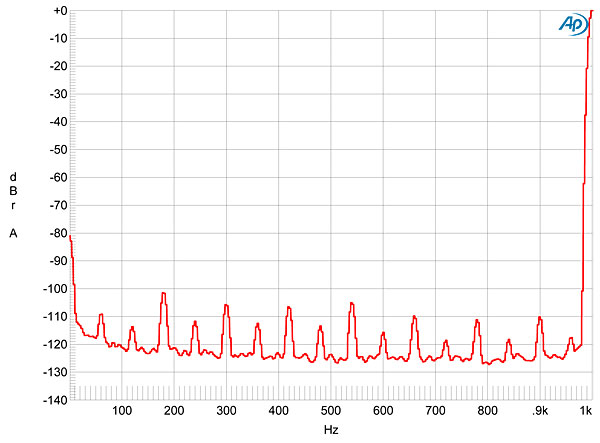
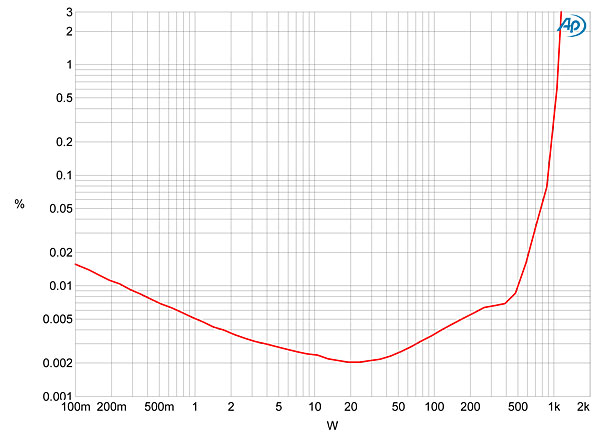
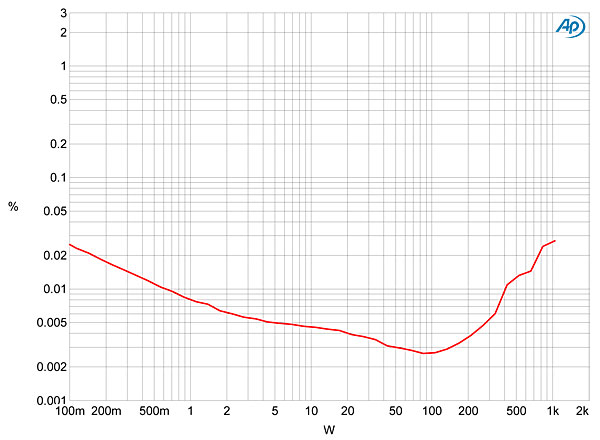
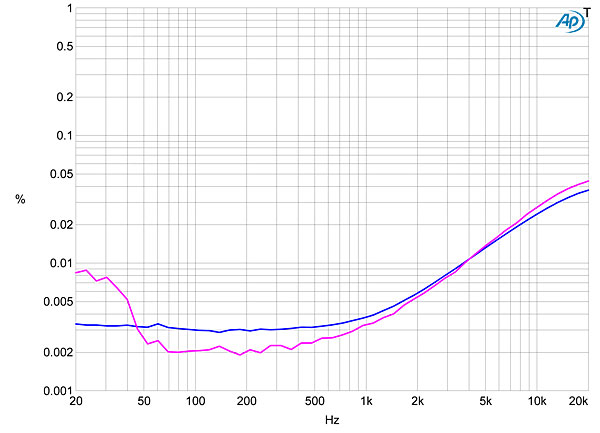
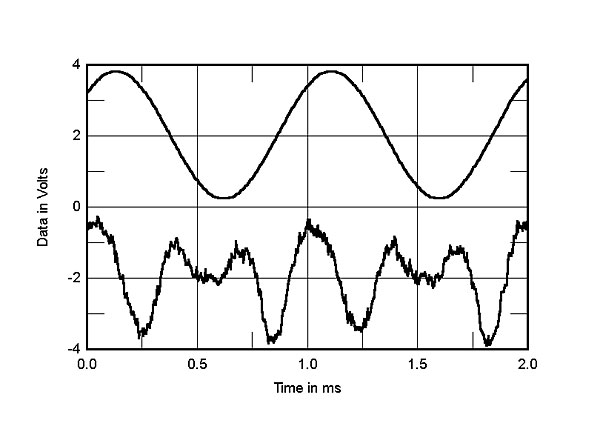
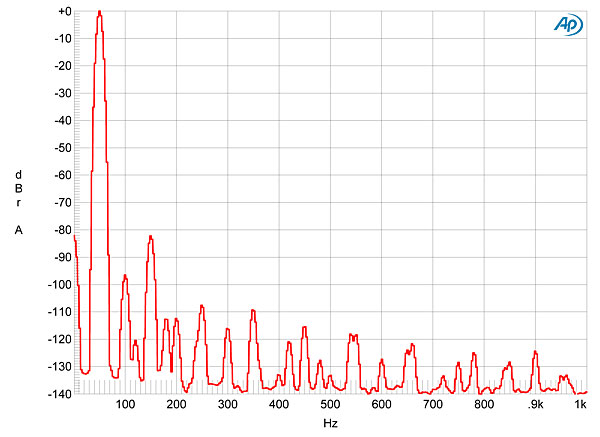
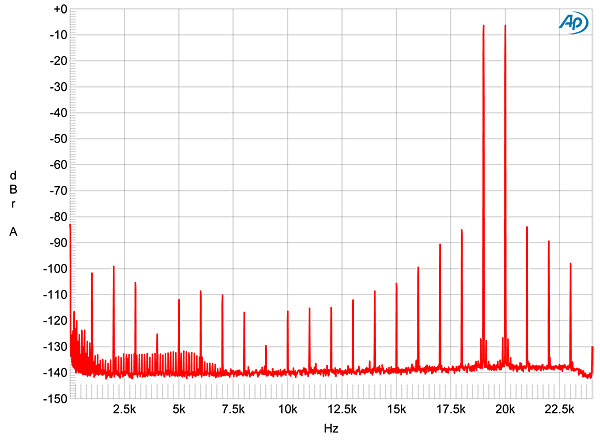
Fig.1 Simaudio Moon Evolution 880M, frequency response at 2.83V into: simulated loudspeaker load (gray), 8 ohms (blue), 4 ohms (magenta), 2 ohms (red) (0.5dB/vertical div.).
The frequency response was flat in the audioband, but with a slight rolloff evident starting just below 20kHz and reaching –3dB at 90kHz. A 10kHz squarewave was reproduced with short risetimes (fig.2), and a 1kHz squarewave had superbly sharp corners (fig.3).
Fig.2 Simaudio Moon Evolution 880M, small-signal 10kHz squarewave into 8 ohms.
Fig.3 Simaudio Moon Evolution 880M, small-signal 1kHz squarewave into 8 ohms.
The unweighted, wideband signal/noise ratio, ref. 1W into 8 ohms with the input shorted, was 81.8dB, due mainly to some low-level, odd-order harmonics of the AC supply frequency (fig.4). Switching in an A-weighting filter improved the ratio to a good 91.4dB.
Fig.4 Simaudio Moon Evolution 880M, spectrum of 1kHz sinewave, DC–1kHz, at 1W into 8 ohms (linear frequency scale).
The Moon Evolution 880M comfortably exceeded its specified maximum power of 800W/29dBW into 8 ohms, clipping (defined as 1% THD+noise) at 1050W (30.2dBW, fig.5). The AC wall voltage had dropped from 123V with the amplifier idling to 120V with it clipping. However, the 10A fuse on the rear panel blew at the same 1050W into 4 ohms (27.2dBW, fig.6). Clearly, the 880M is not comfortable driving sustained high powers into low impedances with sinewaves—with its much higher crest factor, music will be less demanding than sinewaves, of course—so I didn't test its maximum output into 2 ohms.
Fig.5 Simaudio Moon Evolution 880M, distortion (%) vs 1kHz continuous output power into 8 ohms.
Fig.6 Simaudio Moon Evolution 880M, distortion (%) vs 1kHz continuous output power into 4 ohms.
The rising shape of the traces below a few tens of watts in figs. 5 and 6 suggests that the measured THD+N percentage is dominated by noise at low powers. I therefore measured how the THD+N varied with frequency at a level, 12.65V, equivalent to 20W into 8 ohms and 40W into 4 ohms; that way, I could be sure I was looking at actual distortion. The result is shown in fig.7. The THD rises above 1kHz into both 8 ohms (blue trace) and 4 ohms (magenta), presumably due to the circuit's open-loop bandwidth being insufficient to apply the same amount of corrective negative feedback at high frequencies as at low frequencies. Unusually, the midband distortion is actually lower into 4 ohms than into 8 ohms. When I tried plotting the THD against frequency into 2 ohms at 12.65V, the rear-panel fuse again blew. As that was the last of my spare 10A fuses, I replaced it with an 8A fuse and continued testing. Fortunately, no more fuses were blown!
Fig.7 Simaudio Moon Evolution 880M, THD+N (%) vs frequency at 12.65V into: 8 ohms (blue), 4 ohms (magenta).
Once the 880M is fully warmed up, its distortion is predominantly the subjectively innocuous third harmonic (fig.8), followed by the second (fig.9). However, some higher-order harmonics are visible in fig.9, albeit at or below –110dB (0.0003%). Intermodulation distortion was also low, even at high powers (fig.10).
Fig.8 Simaudio Moon Evolution 880M, 1kHz waveform at 35W into 4 ohms, 0.0031% THD+N (top); distortion and noise waveform with fundamental notched out (bottom, not to scale).
Fig.9 Simaudio Moon Evolution 880M, spectrum of 50Hz sinewave, DC–1kHz, at 300W into 8 ohms (linear frequency scale).
Fig.10 Simaudio Moon Evolution 880M, HF intermodulation spectrum, DC–24kHz, 19+20kHz at 300W peak into 8 ohms (linear frequency scale).
Simaudio's Moon Evolution 880M is a powerhouse of an amplifier, though its ability to drive low impedances does rely on the fact that music has considerably wider dynamic range than do test tones. And it should never be listened to cold.—John Atkinson