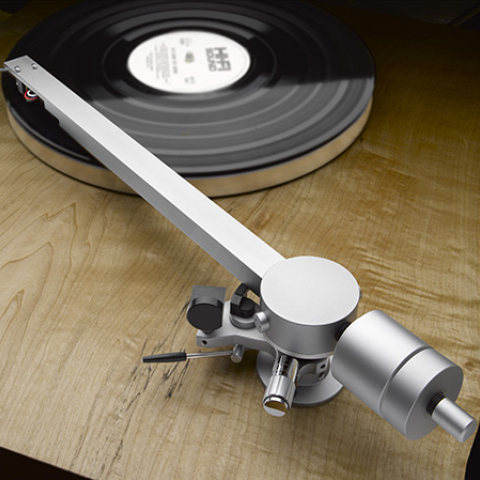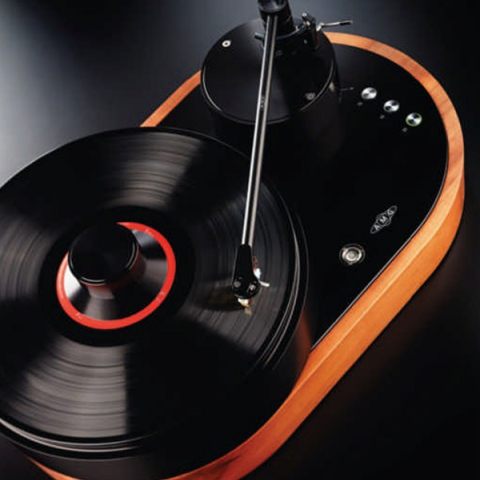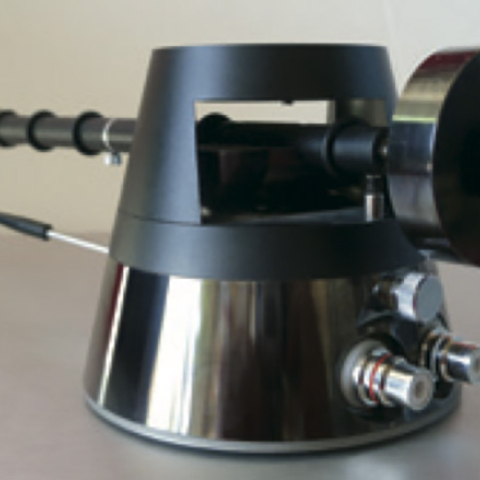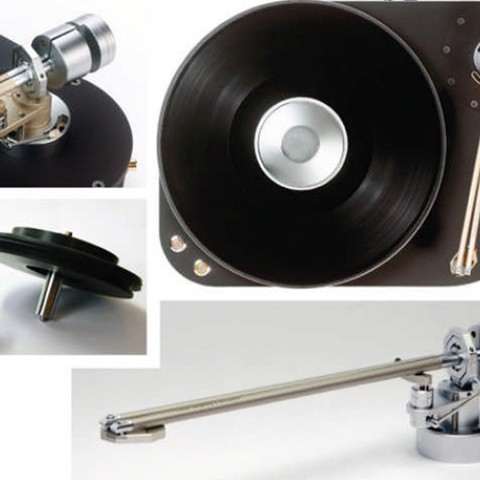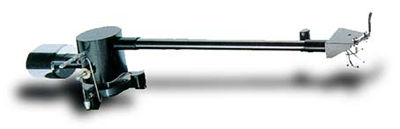
The ARO's handlings of small- and large-scale dynamics were also excellent. On "The Rhythm of the Heat," the first track of Peter Gabriel's 1983 Plays Live (Charisma/Virgin 302 529-420), the sound is faded up with an insistent conga-drum pattern and some friendly applause from the audience, which is glad the concert has finally started. The audience then gets reasonably excited as the rest of the band walks onstage; things slow down a bit, then the audience goes wild as Gabriel himself arrives. With the ARO, I could hear deep into the applause, making out individual handclaps. I also heard subtle variations in the force with which the congas are struck, creating a positive tension to the point where I was almost sorry to have Gabriel start singing so soon. As Gabriel cut in with one of those carefully crafted lyrics which have made him such a hit with students ("oh-uh-oh-ho-ho-uh-oh"), I heard the (probably digital) reverb superimposed on his voice. With the volume well up, I felt a real physical impact, not only from the percussion, but also from that voice—which, since voices usually have a build-up time and don't start at full volume out of nothing, suggests the presence of a noise gate between microphone and tape recorder. And, oh yes, there seems to have been a compressor...or maybe it was just the compression most noise gates inflict on the signal. This detailed breakdown of the sound's constituent parts isn't meant to suggest that the ARO had an analytical sound—far from it. It just serves to show the degree of analysis made possible by the ARO's dynamic (and rhythmic) integrity. There was very little time smear on transients, each transient starting and stopping with startling precision. At least over a very broad midrange, the ARO was quite free from the compression that plagues most other arms. What made these dynamics so wonderful was that they came with timbres left intact. Some arms have a high-frequency resonance which, in highlighting those frequencies, subjectively sharpens initial transients (the Linn Ekos, for example). It certainly makes for an impressive sound, and can liven-up systems which would otherwise sound a little dull. But I find unacceptable the price paid in tonal and pitch accuracy. Play a classical guitar record on the ARO and the upper strings will be made of the same material as the lower. The sound is very coherent overall.
On Illinois Jacquet's The Blues; That's Me! (OJC 614, Prestige 7731), this coherence was illustrated by his (great) version of Monk's "Round Midnight," which he plays on a bassoon. As Jacquet goes up and down the instrument's very large range, one can hear the different radiation patterns of the sound emanating from the instrument's bell, but the tone and woody quality remain unmolested. The bowed bass and the piano, played partly in unison with the bassoon, retain their individualities (provided the cartridge allows it)—a very difficult feat. Noisy records, like Nirvana's Nevermind (Subpop/Geffen GEF-24425) or Neil Young's Weld (Reprise 7599-26671-1), showed off the ARO's superb composure: No matter how much was going on in the groove, the arm remained unflustered. I often had the impression of improved trackability with otherwise critical cartridges. This translated into peace of mind: no subliminal cringing when a "difficult" track came along. As you'd expect from its parent company, the ARO's sense of rhythm and pace was excellent. Be it some jacked-up piece of rap dreck (footnote 9), or the lasciviously slow beat of Yo Yo Honey's Voodoo Soul (Jive HIP 128), the ARO coped. It was a very good arm to dance to, with a high boogie factor; it certainly got that part of the anatomy moving which, in White men, often seems filled with concrete (footnote 10) (or the toes a-tapping, depending on your mood).
Since this is a review for an audiophile magazine, I'll also cover a subject whose importance is vastly overrated: soundstaging. I believe one should pray to God, not to the cathedral. As long as the music is reproduced correctly, I don't really care about pinpoint imaging and spacing. The defense of the soundstage proponents has been that it is a heuristic tool: Not important in itself, soundstaging tells you something about the really relevant criteria. I'm afraid the "soundstage über alles" style of reviewing has given us some of the worst-sounding stuff around: no timbral resolution, no dynamics, no life, but everything securely anchored in a layered space. So for those who care: The ARO's excellent detail and timbral resolution also meant a very good rendition of space—for example, on the Reiner/Chicago Lieutenant Kijé Suite (Chesky RC10) (footnote 11). As regards dimensionality, singers and instruments not only sounded tonally full, but had visually discernible bodies as well. Was the ARO without flaws? Unfortunately, no. (You knew that was a rhetorical question.) Its soundstage is bettered by straight-line trackers, which pay a price in structural rigidity and, thus, freedom from resonance. Of more importance were its limitations at the frequency extremes.
The highest highs sounded a mite shut-in, leading to a very slight lack of air on some recordings. Experimentation with a solid-core alternative showed that this was partly a function of the tonearm cable that comes with the arm. On the other hand, the degree of improvement probably isn't worth the hassle of substituting a different cable. Let me stress again that the lack of air is slight. At the other extreme, in the low bass, the ARO seemed to pay a price for its unipivot construction; some rigid-bearing arms are firmer here. This was, however, only really apparent on non-acoustic instruments (read: synthesizers). For acoustic instruments, the rise time got longer the lower they went in the bass. I learned from a friend who plays church organ that, for the lowest registers, you have to press the pedal quite some time in advance if you want the note to come out when it fits into the music. On a piano or an upright bass, the lower strings are also much heavier and need more time to leave the rest position than do the other strings. The ARO coped happily with these acoustic instruments; only electronically generated bass could catch it out. These minor foibles couldn't detract from the ARO's overall excellence, though. It sounded supremely unmechanical, letting the music flow of its own volition.
Footnote 9: Most rap lyrics turn me off thoroughly; since I'm definitely not one of the prime targets for this kind of music, it's probably only to be expected. I do like some Tribe Called Quest and Arrested Development tracks, though.Footnote 10: The lengths to which we reviewers must go to avoid dirtspeak...Footnote 11: This record could also have been cited for the ARO's handling of dynamics; there's a high startle factor here.
Footnote 9: Most rap lyrics turn me off thoroughly; since I'm definitely not one of the prime targets for this kind of music, it's probably only to be expected. I do like some Tribe Called Quest and Arrested Development tracks, though.Footnote 10: The lengths to which we reviewers must go to avoid dirtspeak...Footnote 11: This record could also have been cited for the ARO's handling of dynamics; there's a high startle factor here.