

Audio & Design M9BA tonearm
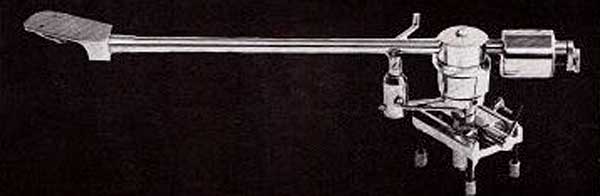
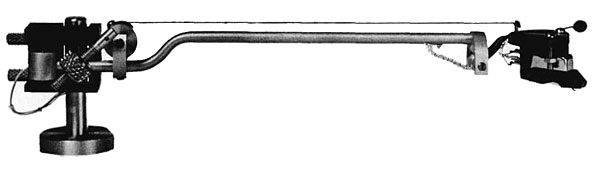
Back in the days of pre-stereo high fidelity, when a 6-gram phono pickup was considered to be "featherweight," the best universal-type tonearm we knew of was a bulky, very professional-looking device made by Gray Labs and designated the Model 108. One unusual thing about it was that, instead of using sleeve or cone-face bearings, it had a single up-ended needlea so-called unipivotfor both the vertical and lateral modes of motion. The other unusual thing about it was that the pivot system was viscous-damped, and it was this, we suspect, that was largely responsible for the arm's ability to make any pickup sound somehow sweeter and cleaner than it did in any other arm.
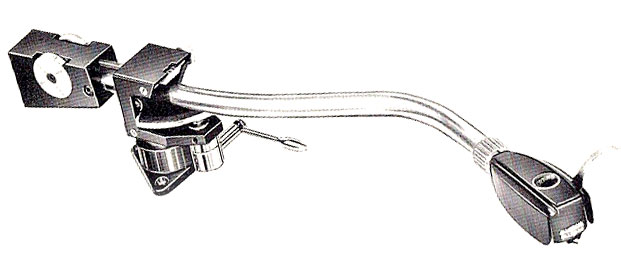
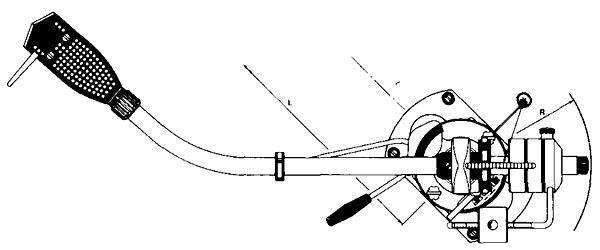
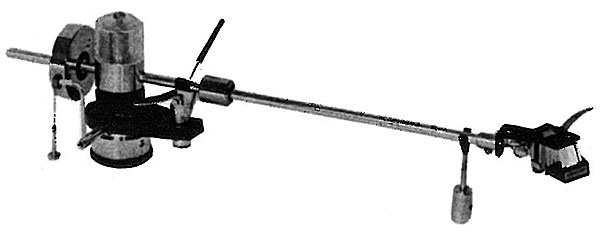
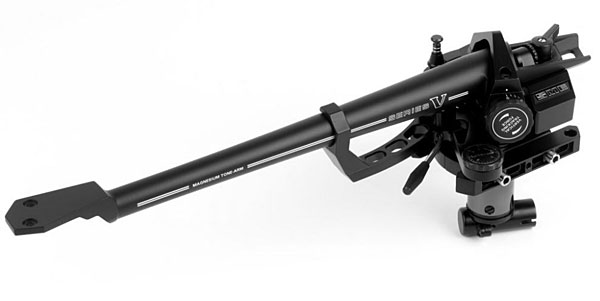
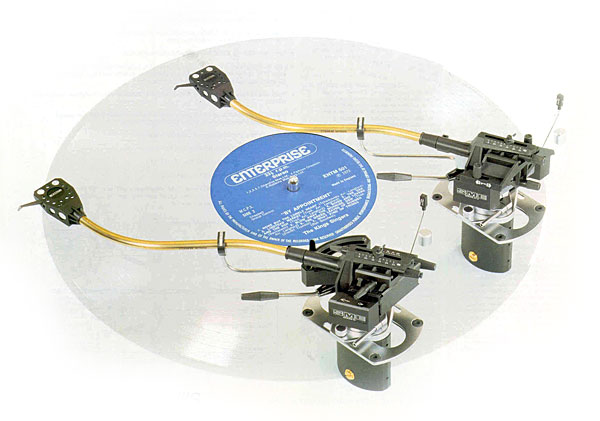
 If analog disc is fading, it is a twilight of the gods. Tonearms, cartridges, and turntables get steadily better; the overall quality of the best analog disc systems today is far better than it was two years ago. Bruce Thigpen and Edison Price's new Eminent Technology Two tonearm is a case in point. It has evolved from a highly specialized product for only the bravest of audiophiles to a reference quality arm that any dealer can install, and any audiophile can safely use. More importantly, it may have no sonic equal at any price.
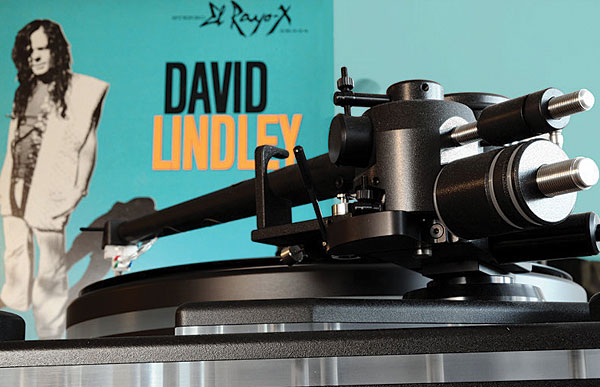
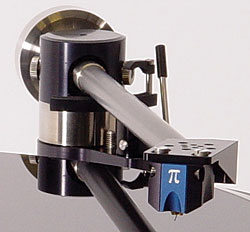 Brinkmann's 9.6 tonearm ($3990) resembles the German company's longer, more expensive 10.5 and 12.1 arms, which in turn resemble the legendary Breuer. The new arm includes the same headshell, armtube, mounting socket, and cueing device used in the other arms. The bearing system differs, though the Swiss-made ball bearings are identical.
While the more expensive arms use traditional fixed-gimbal bearings, the 9.6 has a unipivot-like construction for the horizontal bearing. The weighted arm housing sits on a small ball that rests on a pivot, also as in a typical unipivot design. A second ball at the bottom of the housing prevents "arm lean," but since the arm's weight rests on the top ball, the lower one isn't critical, and I could feel some play when I handled the arm. Vertical arm motion is effected via a second pair of captured bearings. This arrangement allowed the use of less costly parts and kept the price down, Brinkmann says. The arm's effective length is 248mm (231.5 from pivot to spindle, plus 16.5mm of overhang), while its effective mass, referenced to the center position of the headshell slot, is 12gm.
Brinkmann's 9.6 tonearm ($3990) resembles the German company's longer, more expensive 10.5 and 12.1 arms, which in turn resemble the legendary Breuer. The new arm includes the same headshell, armtube, mounting socket, and cueing device used in the other arms. The bearing system differs, though the Swiss-made ball bearings are identical.
While the more expensive arms use traditional fixed-gimbal bearings, the 9.6 has a unipivot-like construction for the horizontal bearing. The weighted arm housing sits on a small ball that rests on a pivot, also as in a typical unipivot design. A second ball at the bottom of the housing prevents "arm lean," but since the arm's weight rests on the top ball, the lower one isn't critical, and I could feel some play when I handled the arm. Vertical arm motion is effected via a second pair of captured bearings. This arrangement allowed the use of less costly parts and kept the price down, Brinkmann says. The arm's effective length is 248mm (231.5 from pivot to spindle, plus 16.5mm of overhang), while its effective mass, referenced to the center position of the headshell slot, is 12gm.