Sidebar 3: Measurements
The NAD M50.2's analog inputs have an impedance of close to 20k ohms, and the analog input signals appear to be converted to 24-bit digital with a sample rate of 48kHz. Playing a 1kHz, –20dBFS tone from Editor's Choice (CD, Stereophile STPH016-2) on my Ayre C-5xeMP player, which has a maximum single-ended output level of 2.1V, resulted in digital data with a maximum level of –21.35dBFS. The gain of the M50.2's analog inputs will work well with sources that don't peak above 2V RMS. The resultant digital-domain spectrum (fig.1) had a clean noise floor, with the second harmonic 86dB lower in level (this spectrum, of course, includes the contribution of the Ayre's output stage).
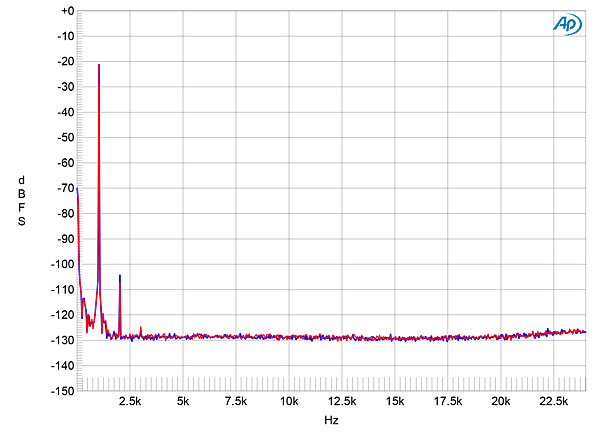
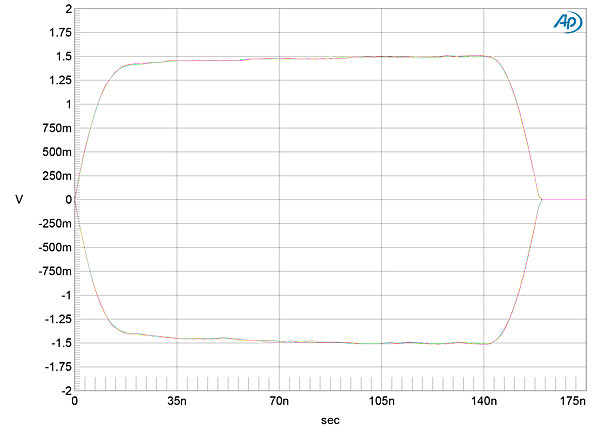
Fig.1 NAD M50, analog input, digital-domain spectrum of 1kHz sinewave, DC–10kHz, at –21.35dBFS. (linear frequency scale).
Jitter on the NAD's digital output was a respectably low 402 picoseconds (average value over a 50Hz–100kHz bandwidth), which is only a little higher than the Audio Precision SYS2722's sensitivity limit. The "eye pattern" of the received datastream (fig.2) was identical to that of the M50 and was impressively open, with no blurring at the beginning or end of the unit interval.—John Atkinson
Fig.2 NAD M50.2, eye pattern of AES/EBU data output carrying 16-bit J-Test signal (±2V vertical scale, 175ns horizontal scale).