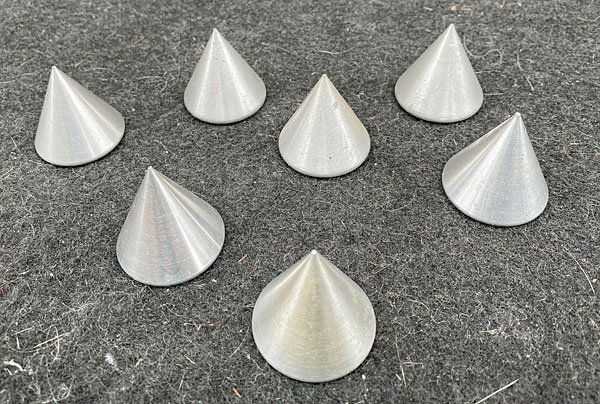
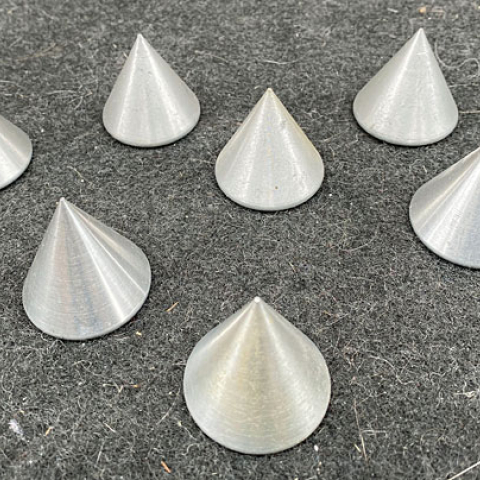
Photo: "Still Life with Tiptoes"—John Atkinson
Memorandum:
To: Steve McCormack, Chief Designer, The Mod Squad (footnote 1)
Dear Steve:
I cannot question the general value of Tiptoes in many specific applications. There are a great many areas where I, many other audiophiles, and a number of leading manufacturers have found that Tiptoes can improve any audio system in which the components are subject to. mechanical or acoustic vibration from speaker sound—that is, virtually any audio system.
While initially skeptical, I now concede that Tiptoes are a worthwhile improvement in each of the following areas:
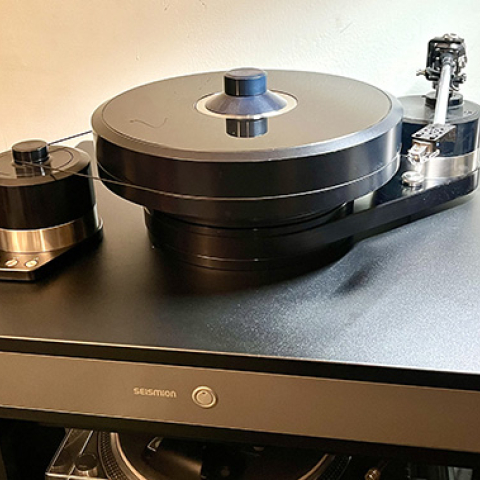
Turntables: the new screw-in Tiptoes help isolate virtually every turntable from vibration from the acoustic furniture they are mounted on, and seem to damp the internal vibration in most turntable mechanisms. They extend the bass in such lighter-framed turntables as the
Oracle, and can be a Godsend for designs like the
Linn Sondek and Pink Triangle, whose inferior suspension techniques require special furniture or extraordinary isolation.
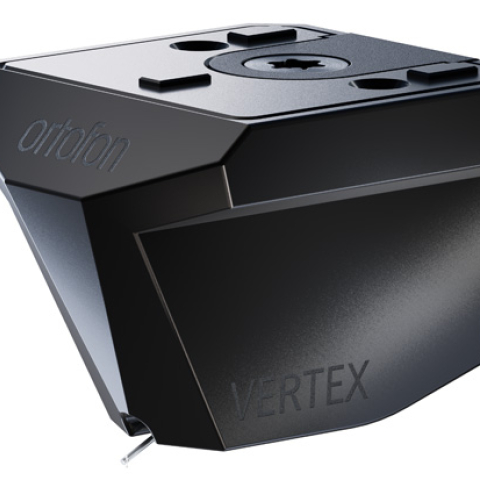
Phono Cartridges: I don't feel the Tiptoes Cartridge Coupler provides as universal an improvement as the Mod Squad literature implies, but it can definitely improve the sound of many cartridges and tonearms. At $15, it's well worth trying.
CD Players: I would agree that putting a CD player on Tiptoes works as well as the Mission Isoplat, or any other acoustic isolation platform I've encountered. I find it absurd, however, that a supposedly purely electronic device should benefit from (a) Tiptoes, on virtually all players; (b) a
VPI Magic Brick atop, on most of the Philips players as well as some others; and (c) placing a second CD on top of the one played, on all players. These "improvements" simply shsould be helped by mechanisms and electronics design, and it is an unpleasant reflection on today's players that they do.
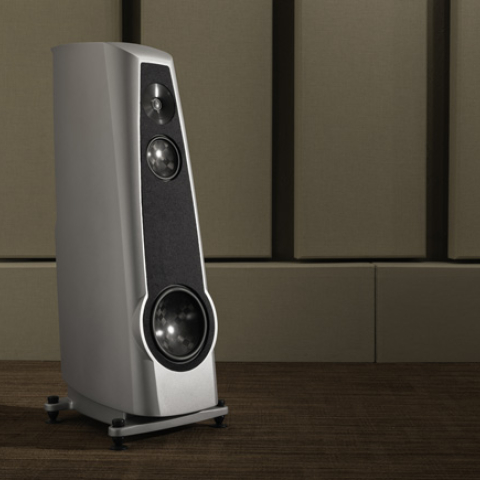
Speakers: There is no question that Tiptoes or spiked feet improve virtually all loudspeakers. Several manufacturers have recently asked me to use them while reviewing, and they help even with the heaviest and most rigid designs. I prefer the threaded, spiked feet or Tiptoes, but I have used the regular Tiptoes with the
Infinity RS-1B with great success. They are a virtual must for any floor-standing speaker
Electronics: I get mixed results from Tiptoes with most electronics, but they do seem to help in installations where the electronics are close to the speakers, or are placed on furniture that vibrates because of acoustic energy. The benefits in this ease have to be determined by experimentation, but they can be significant—particularly with tube gear.
Tiptoes are also reasonably priced by High End standards. The costs of $5 for the short version, $7 for the tall, and $10 for the threaded may not be dirt cheap, but make Tiptoes a cost-effective improvement for virtually every good sound system
However, I must now express my deep reservations about Tiptoes for phono styluses. I can understand the theoretical merits of using "micro" Tiptoes so small that they can help hold the edges of the stylus precisely in the groove. I did not, however, find it easy to use the electron microscope you sent me, or the laser bonder, and I did not appreciate having to get my power company to wire a 400-volt outlet. It took me nearly an hour to precisely mount the 120 Tiptoes required on each side of the stylus, and the sonic benefit was at best subtle. I also found the idea of a $5000 fee for the micro Tiptoes and installation equipment rental to be a bit high.
I therefore can go no further than my previous recommendations. Intelligent use of standard Tiptoes can audibly improve any high end system, but the stylus Tiptoes should be left to the real "tweaks."—
Anthony H. Cordesman Humble Reviewer, Stereophile Magazine
Footnote 1: The Mod Squad is no longer in existence, but 45 years after the publication of this review, cone-shaped supports are ubiquitous. Tiptoe inventor
Steve McCormack now operates SMc Audio, 929 El Pajodo Place, Vista, CA 92084. Tel: (760) 732-0352. Web:
smcaudio.net.—
Ed.