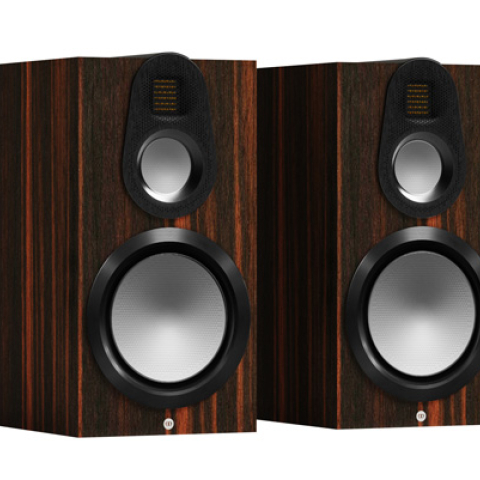
With the LS50s, driven by the Pass Labs XA25 amplifier, I started by listening to Buddy Holly's Down the Line: Rarities (44.1/16 FLAC, Decca/Tidal) and was surprised at how dense and resolved the music sounded. On "Buddy & Maria Elena Talking in Apartment," I was surprised how clear Maria Elena's voice came through: I got that really close in-the-room-with-Buddy feeling. I started thinking, Who could want anything more? Then, without my permission, Tidal's algorithm bot played Chuck Berry's "Promised Land" (single version, 44.1/16 FLAC, Chess/Tidal), and I freaked!
I left my home in Norfolk Virginia
California on my mind
I straddled that Greyhound
And rode him into Raleigh and on across Caroline
I woke up high over Albuquerque
On a jet to the promised land. When the song ended, I was speechless. I could not imagine a million-dollar system playing it any better. Like a child, I played "Promised Land"—America's greatest poem by America's most original poet—over and over, each time louder than the last. Suddenly I wondered: Could the new Maggies play Chuck—loud and with attitude?
Sure as you're born, they bought me a silk suit
Put luggage in my hands The Little Ribbon Speaker played Chuck loud enough for me (88dB average/96dB peak, C-weighted). And Chuck's Chess-era "rock-it" attitude was definitely getting through. But every cell in my body cried out for more wallop and stronger bass. This is when I realized that most rockers would want to use a subwoofer (or two): not big ones, just ones that play hard, tight, and fast. However! When the Tidal bot led me to a fine-sounding remastered version of rock-progenitor Fats Domino singing "I Want to Walk You Home" (from Fats Domino Jukebox: 20 Greatest Hits, 41.1/16 FLAC EMI/Tidal), I forgot all about subwoofers and wallop. Fats' voice (which I deeply love) never before sounded this pure and close-to-the-mike present: I could observe the sound of that voice as if it were a crystal or a coin. The LRS took me inside the recording venue; every trim pot and fader-setting was there to be noticed. As Fats sang, I realized that the KEF LS50 and the Magnepan LRS were showing me two distinctly different views of rock'n'roll recordings. The punchy, deep-voiced KEF was playing fit, well-drawn, mesomorphic rock. The KEF's rock had impact. It inspired action. The LRS version of Fats was more ectomorphic. More detached. Instead of head-bopping and foot-stomping (like the LS50), the Magnepan LRS wove complex webs of high-resolution audiophile sound. It directed me to study how the recording was executed. The LRS employed its extraordinary transparency toward the causes of intimacy, tactility, and reflection. Canine vs feline.
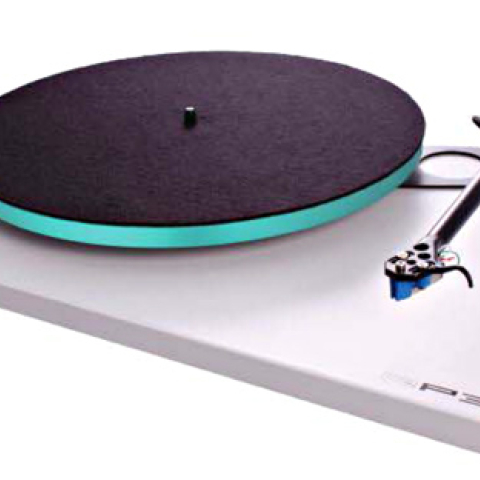
For me, the most important difference between these speakers came down to this: Because the KEF LS50 imparts a slight opacity to everything it plays, it makes recordings sound more similar than they actually are. Not surprisingly, the Magnepan's extreme transparency achieved the opposite: It directed my attention toward how different recordings sounded. The LRS let more of a recording's true sound come through. In this singular regard, the LRS almost equaled my favorite "chameleon" speaker, the $2195/pair Harbeth P3ESR
"Horses for courses," they say—and by that measure, Magnepan's LRS is not the horse I'd want to ride into The Dark Side of the Moon or Led Zeppelin II fantasies. Meanwhile ...
Compared to the Magnepan .7
Pianos are giant percussion instruments, with enormous wooden soundboards that amplify the vibrations of their strong steel strings. Even a small upright piano puts more energy into a room than any domestic-use dynamic loudspeaker. That's why I use piano recordings to get a feel for how an amp-speaker combination pumps energy into my room. A speaker's most important trait is its ability to power a room. This powering is a consequence of driver size and the magnitude of impelling forces.
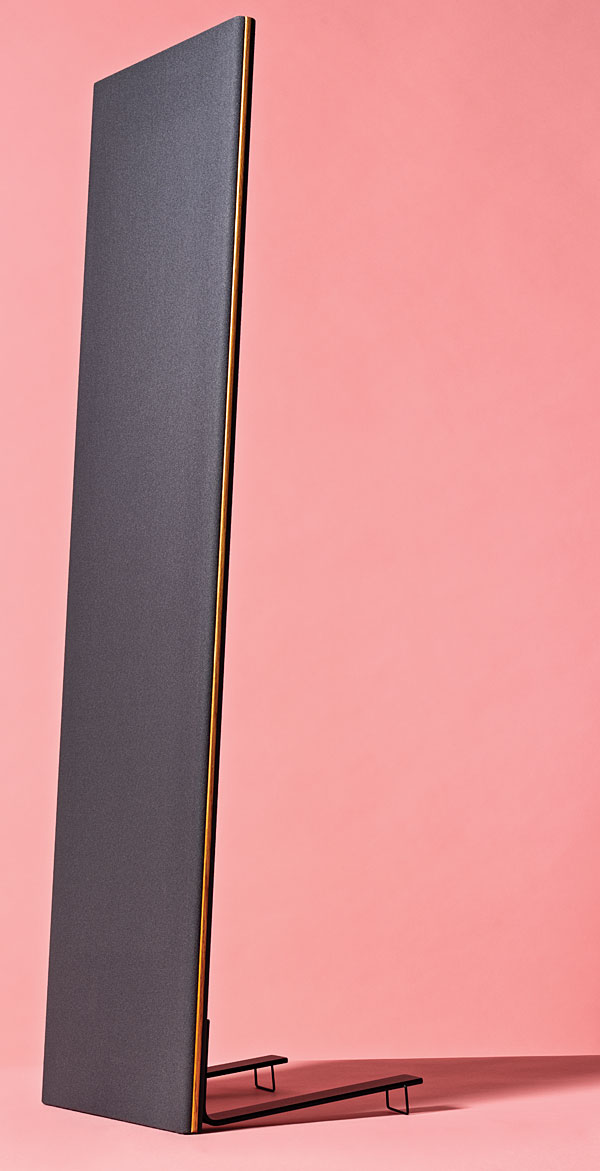 I became very aware of this issue while making a simple comparison between Magnepan's .7 speaker and its ¾-size sibling, the LRS. The .7 has approximately 400 square inches of diaphragm area, and the LRS has 333—just 20% less than the 71. Somewhat surprisingly, the .7s seemed to put a lot more than 20% more energy in my room. They played a lot bigger than the LRS.
I used Claudio Arrau's recording of Liszt's Etudes d'execution transcendante (Philips 2-LP 6747 412) to compare the two Magnepans. The .7s presented Arrau's concert grand as a lot closer to life-size, with more surrounding air: They set that bigger piano in a deeper, more capacious soundstage. The air in the .7's soundstage was denser and moister than the LRS's. And the .7's bass went deeper and seemed more than 20% more powerful.
Lou Reed's voice and guitar on "Sweet Jane," the closing song from the concert film/live album Berlin: Live at St. Ann's Warehouse (24/96 FLAC, Matador/Tidal), was more tangibly there with the .7s—plus the shouting and clapping of the crowd seemed bigger and more real. With the LRS, the crowd shouting and clapping was more microscopically drawn: Hands and flesh were more precisely differentiated. And on this and every other recording I tried, the LRS sounded fresher, with more focus, sparkle, and transparency.
Compared to the Klipsch RP-600M
I became very aware of this issue while making a simple comparison between Magnepan's .7 speaker and its ¾-size sibling, the LRS. The .7 has approximately 400 square inches of diaphragm area, and the LRS has 333—just 20% less than the 71. Somewhat surprisingly, the .7s seemed to put a lot more than 20% more energy in my room. They played a lot bigger than the LRS.
I used Claudio Arrau's recording of Liszt's Etudes d'execution transcendante (Philips 2-LP 6747 412) to compare the two Magnepans. The .7s presented Arrau's concert grand as a lot closer to life-size, with more surrounding air: They set that bigger piano in a deeper, more capacious soundstage. The air in the .7's soundstage was denser and moister than the LRS's. And the .7's bass went deeper and seemed more than 20% more powerful.
Lou Reed's voice and guitar on "Sweet Jane," the closing song from the concert film/live album Berlin: Live at St. Ann's Warehouse (24/96 FLAC, Matador/Tidal), was more tangibly there with the .7s—plus the shouting and clapping of the crowd seemed bigger and more real. With the LRS, the crowd shouting and clapping was more microscopically drawn: Hands and flesh were more precisely differentiated. And on this and every other recording I tried, the LRS sounded fresher, with more focus, sparkle, and transparency.
Compared to the Klipsch RP-600M
They both play recordings at high levels of audiophile descriptiveness. They both require careful positioning. They both generate a bright-sun transparency. They both yearn for subwoofers. And they're similarly priced. But the Klipsch RP-600M ($549/pair) and the Magnepan LRS sound completely different. The Klipsch RP-600M is a moderately sized wood box with a moderately nice fake-wood finish. It requires a precisely located high-quality stand, which is not included, and could possibly double the price. It plays loud, with super dynamics. It puts a satisfyingly solid piano in my room. It can jack up the Ramones and drink cocktails with Dean Martin. But it is not a wine connoisseur's speaker. The Magnepan LRS, on the other hand, is slender and elegantly finished in a timeless, haute couture way that will compete for House & Garden awards with speakers at any price. Unfortunately, it does not play loud, or with super dynamics. The pianos presented by the LRS are altogether more ghostly sounding than the Klipsch's—although LRS pianos are precisely formed (you can see their edges) and feature an engaging left-hand register. Klipsch pianos seemed blurry in comparison.
Compared to the vintage Quad ESL
Magnepan's new Little Ribbon Speaker is one of the lowest distortion, highest musicality loudspeakers I've encountered. It delivers, with Leica-like focus and purity, extraordinarily uncolored sound that reminds me of the original Quad ESL electrostatic. The Quad and the Maggie are both genuine audiophile speakers. Both require precise, out-in-the-room positioning and carefully measured toe-in. Both require the listener to sit in a narrowly designated sweet spot. Both deliver a sense of infinite detail and a mesmerizing transparency unrivaled by most speakers. Both are extraordinary at reproducing the form and idea of music. But they share one inescapable failing: They do not do visceral very well. While both move more air than the average box speaker, neither develops enough low-frequency energy to generate slam or corporeality. Consequently, both might inspire their users to connive for subwoofers. Conclusion
Does Magnepan's new LRS loudspeaker "make everything else sound like it is coming out of a cereal box"? Maybe. It definitely sounds boxless. And surely its levels of microscopic detail, accurate timbre, and pure-water transparency are unprecedented at anywhere near $650/pair. Could the Little Ribbon Speakers become a new classic, like the old Quads or the ageless BBC LS3/5a? Perhaps. It has the right personality. Highly recommended.
California on my mind
I straddled that Greyhound
And rode him into Raleigh and on across Caroline
I woke up high over Albuquerque
On a jet to the promised land. When the song ended, I was speechless. I could not imagine a million-dollar system playing it any better. Like a child, I played "Promised Land"—America's greatest poem by America's most original poet—over and over, each time louder than the last. Suddenly I wondered: Could the new Maggies play Chuck—loud and with attitude?
Put luggage in my hands The Little Ribbon Speaker played Chuck loud enough for me (88dB average/96dB peak, C-weighted). And Chuck's Chess-era "rock-it" attitude was definitely getting through. But every cell in my body cried out for more wallop and stronger bass. This is when I realized that most rockers would want to use a subwoofer (or two): not big ones, just ones that play hard, tight, and fast. However! When the Tidal bot led me to a fine-sounding remastered version of rock-progenitor Fats Domino singing "I Want to Walk You Home" (from Fats Domino Jukebox: 20 Greatest Hits, 41.1/16 FLAC EMI/Tidal), I forgot all about subwoofers and wallop. Fats' voice (which I deeply love) never before sounded this pure and close-to-the-mike present: I could observe the sound of that voice as if it were a crystal or a coin. The LRS took me inside the recording venue; every trim pot and fader-setting was there to be noticed. As Fats sang, I realized that the KEF LS50 and the Magnepan LRS were showing me two distinctly different views of rock'n'roll recordings. The punchy, deep-voiced KEF was playing fit, well-drawn, mesomorphic rock. The KEF's rock had impact. It inspired action. The LRS version of Fats was more ectomorphic. More detached. Instead of head-bopping and foot-stomping (like the LS50), the Magnepan LRS wove complex webs of high-resolution audiophile sound. It directed me to study how the recording was executed. The LRS employed its extraordinary transparency toward the causes of intimacy, tactility, and reflection. Canine vs feline.
Pianos are giant percussion instruments, with enormous wooden soundboards that amplify the vibrations of their strong steel strings. Even a small upright piano puts more energy into a room than any domestic-use dynamic loudspeaker. That's why I use piano recordings to get a feel for how an amp-speaker combination pumps energy into my room. A speaker's most important trait is its ability to power a room. This powering is a consequence of driver size and the magnitude of impelling forces.
I became very aware of this issue while making a simple comparison between Magnepan's .7 speaker and its ¾-size sibling, the LRS. The .7 has approximately 400 square inches of diaphragm area, and the LRS has 333—just 20% less than the 71. Somewhat surprisingly, the .7s seemed to put a lot more than 20% more energy in my room. They played a lot bigger than the LRS.
I used Claudio Arrau's recording of Liszt's Etudes d'execution transcendante (Philips 2-LP 6747 412) to compare the two Magnepans. The .7s presented Arrau's concert grand as a lot closer to life-size, with more surrounding air: They set that bigger piano in a deeper, more capacious soundstage. The air in the .7's soundstage was denser and moister than the LRS's. And the .7's bass went deeper and seemed more than 20% more powerful.
Lou Reed's voice and guitar on "Sweet Jane," the closing song from the concert film/live album Berlin: Live at St. Ann's Warehouse (24/96 FLAC, Matador/Tidal), was more tangibly there with the .7s—plus the shouting and clapping of the crowd seemed bigger and more real. With the LRS, the crowd shouting and clapping was more microscopically drawn: Hands and flesh were more precisely differentiated. And on this and every other recording I tried, the LRS sounded fresher, with more focus, sparkle, and transparency.
They both play recordings at high levels of audiophile descriptiveness. They both require careful positioning. They both generate a bright-sun transparency. They both yearn for subwoofers. And they're similarly priced. But the Klipsch RP-600M ($549/pair) and the Magnepan LRS sound completely different. The Klipsch RP-600M is a moderately sized wood box with a moderately nice fake-wood finish. It requires a precisely located high-quality stand, which is not included, and could possibly double the price. It plays loud, with super dynamics. It puts a satisfyingly solid piano in my room. It can jack up the Ramones and drink cocktails with Dean Martin. But it is not a wine connoisseur's speaker. The Magnepan LRS, on the other hand, is slender and elegantly finished in a timeless, haute couture way that will compete for House & Garden awards with speakers at any price. Unfortunately, it does not play loud, or with super dynamics. The pianos presented by the LRS are altogether more ghostly sounding than the Klipsch's—although LRS pianos are precisely formed (you can see their edges) and feature an engaging left-hand register. Klipsch pianos seemed blurry in comparison.
Magnepan's new Little Ribbon Speaker is one of the lowest distortion, highest musicality loudspeakers I've encountered. It delivers, with Leica-like focus and purity, extraordinarily uncolored sound that reminds me of the original Quad ESL electrostatic. The Quad and the Maggie are both genuine audiophile speakers. Both require precise, out-in-the-room positioning and carefully measured toe-in. Both require the listener to sit in a narrowly designated sweet spot. Both deliver a sense of infinite detail and a mesmerizing transparency unrivaled by most speakers. Both are extraordinary at reproducing the form and idea of music. But they share one inescapable failing: They do not do visceral very well. While both move more air than the average box speaker, neither develops enough low-frequency energy to generate slam or corporeality. Consequently, both might inspire their users to connive for subwoofers. Conclusion
Does Magnepan's new LRS loudspeaker "make everything else sound like it is coming out of a cereal box"? Maybe. It definitely sounds boxless. And surely its levels of microscopic detail, accurate timbre, and pure-water transparency are unprecedented at anywhere near $650/pair. Could the Little Ribbon Speakers become a new classic, like the old Quads or the ageless BBC LS3/5a? Perhaps. It has the right personality. Highly recommended.