"Truth of timbre is the mother's milk of perfectionist audio," Bill Brier used to say. It's a simple fact: the more any hi-fi system makes instruments and voices sound like themselves, the more diverse recordings it will enjoyably reproduce. By that important measure, the Zu speakers are marvels of sonic lactation. The Woo WA5 delivered a full spectrum of saturated natural tones with the Soul Supremes. The ZOTL40 did not.
Driving DeVore Fidelity Orangutan O/93s
My first impressions of the ZOTL40 Mk.II driving DeVore's two-way Orangutan O/93 speakers ($8400/pair) was of tight regulation, and a sense of music being slightly too damped. With a promo pressing of Karl Richter conducting vocal soloists and the Munich Bach Chorus and Orchestra in choruses and arias from J.S. Bach's St. Matthew Passion (mono "tulips" LP, Deutsche Grammophon LPEM 19 233), the imaging and clarity created the impression of low-distortion playback. But the music felt inexplicably and distractingly stiff, the Munich Choirboys bloodless. Hoping for better results, I switched preamps: from the Pass Labs HPA-1 to Linear Tube Audio's own microZOTL2.0. (Note: I am the microZOTL2.0's biggest fan. It costs $1235, and drives both headphones and power amplifiers as if it should cost several times as much.)
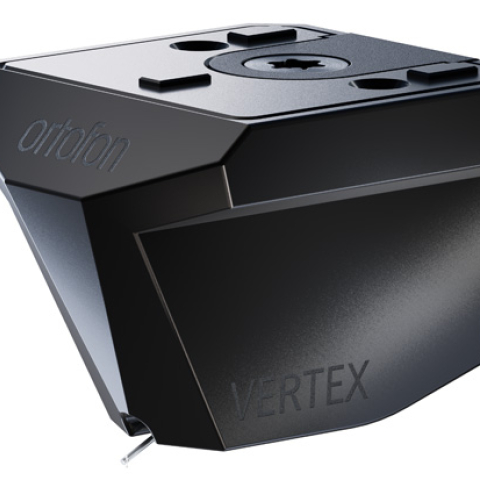
 Tone color and liquidity improved with the synergy between these two LTA products. With this LTA pairing I used AMG's Giro G9 turntable and 9W2 tonearm ($10,000, see "Gramophone Dreams" elsewhere in this issue), and EMT's ISD 75 moving-coil cartridge ($1700). The digital source was my trusty Integra DPS-7.2 DVD player ($799.99 when new in 2001), used as a CD transport with Mytek HiFi's Manhattan II DAC ($5995).
Driving the DeVore Orangutan O/93s, the two ZOTLs sounded ever so slightly wet, moderately colorful, dynamic, and elegantly detailed.
Driving Maggies & Quads
Tone color and liquidity improved with the synergy between these two LTA products. With this LTA pairing I used AMG's Giro G9 turntable and 9W2 tonearm ($10,000, see "Gramophone Dreams" elsewhere in this issue), and EMT's ISD 75 moving-coil cartridge ($1700). The digital source was my trusty Integra DPS-7.2 DVD player ($799.99 when new in 2001), used as a CD transport with Mytek HiFi's Manhattan II DAC ($5995).
Driving the DeVore Orangutan O/93s, the two ZOTLs sounded ever so slightly wet, moderately colorful, dynamic, and elegantly detailed.
Driving Maggies & Quads
As always, the Magnepan .7 ($1400/pair) is my acid test for an amplifier's delivery of current into low impedances—in this case, 2 ohms. To my surprise, the ZOTL40 Mk.II propelled the Maggies' 57" panels with a firm, steady hand. Ito Ema's Steinway didn't sound as big or as weighty or as hyperdetailed through ZOTL40 as through the Bel Canto REF600Ms, but the LTA held its own, sounding clean, smooth, and easy as it produced an engaging facsimile of Ema playing J.S. Bach's Goldberg Variations (CD, MA Recordings M024A). The ZOTL40 reproduced her touch on both halves of the keyboard with equal weight and virtuosity.
Remarkably, the ZOTL40 Mk.II sounded more sweet and feminine driving the Maggies' less sensitive (86dB/2.83V/m at 500Hz), low-impedance load than it did with the easy-to-drive Zu, Falcon, and DeVore speakers. Perhaps this newfound sweetness was caused by a shift in damping factor?
I thought the ZOTL40 Mk.II might make a good partner for Quad's venerable, original ESL speaker (nicknamed the "ESL-57," for the year of its debut), so I took it to a friend's house and installed it between his expensive MSB DAC and restored ESLs. I was surprised. Unlike 98% of the amps I've tried with this beloved but demanding electrostatic speaker—I've owned four pairs—the ZOTL40 Mk.II did not crap out. It actually drove the ESLs pretty well, sounding attractive and easy on the ears, if a bit flat and boring.
Enter Mr. O
First Watt's J2 ($4000), a 25Wpc amplifier designed by Nelson Pass, won't drive the Quad ESLs (I tried it), but the J2 is very difficult to beat when used with sensitive speakers of impedances of 6 ohms or more.
So I wasn't surprised when, into the 10-ohm Orangutan O/93s, the ZOTL40 Mk.II sounded less true of tone than the First Watt, with weaker midrange presence and less palpability of high-frequency detail. The ZOTL40 had slightly tighter bass, but bass sounds were less colorful than the J2's—and less so than real life. The ZOTL40's soundstage felt artificially vacuous. The J2's soundstage was fully oxygenated. Both amplifiers drew very detailed images.
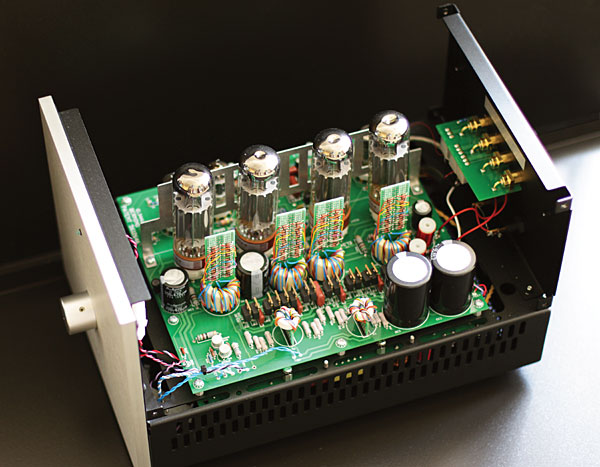 My objectivist friend, Mr. O., sat next to me on the couch as I began comparing the 40Wpc, 9.7lb, $5800 ZOTL40 Mk.II to the 35Wpc, 46.3lb, $2195 PrimaLuna ProLogue Premium. Both amps are all-tube, the PrimaLuna using EL34 output tubes, the ZOTL40 the KT77 equivalents.
For this comparison I used the DeVore Fidelity Orangutan O/93 loudspeakers and, with each power amp, a preamp made by the same company: LTA's microZOTL2.0 ($1100) with the ZOTL40, and PrimaLuna's ProLogue Premium ($2195) with, well, PrimaLuna's ProLogue Premium.
Right away, O. preferred the Linear Tube Audio system. And when I played Ito Ema's Goldberg Variations, he got very enthused. "The LTA gear washes all that fuzzy tube distortion right out of the picture! The ZOTLs make the PrimaLunas sound bloated!"
It was obvious: The ZOTLs played Ema's Bach with more detail, transparency, and force than did the ProLogue Premiums, and the LTAs' bass was tighter. But! the PrimaLunas' superior image density and more realistic tone made the LTAs sound starved and skeletal.
"The ZOTL amp has definition!"
So what? I felt that the PrimaLuna amplification got closer to the sounds of real people playing real musical instruments in real spaces.
You know how a piano sounds when the pianist uses the right pedal? How each note expands, develops its harmonics, then reverberates outward into space? How it combines and mutates with notes played before and/or after it? How so much of Bach's cosmic poetry is created simply by letting his notes hang in air? Unfortunately, those sorts of beauty were missing from the sound of the Linear Tube Audio system. So were Ito Ema's pregnant pauses and enticingly eccentric phrasings, and her Steinway's weight and body. But when the PrimaLunas drove those same DeVore Orangutan O/93s, it all came back.
Recognizing the truth of this, Mr. Objectivity conceded that the LTA gear was losing a noticeable amount of legitimate low-level information.
"Neither amplifier is right!" O. opined.
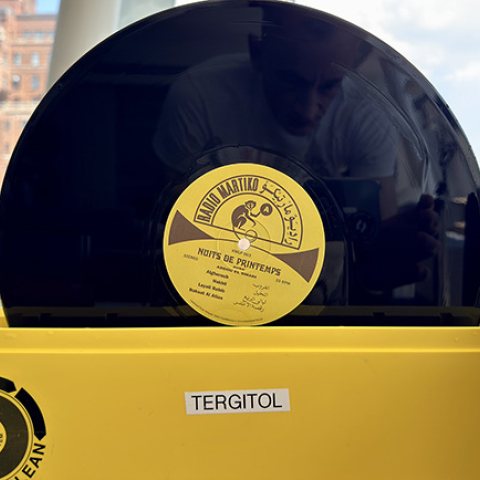
Sitting silently, we played Brigitte Fontaine's Comme à la Radio (LP, Superior Viaduct SV042) all the way through, twice: first through the PrimaLuna system, then with the Linear Tube Audio components. This 1970 studio recording has more than a dollop of added reverb. Through the PrimaLunas, the voices of Fontaine and her collaborator, Areski Belkacem, floated richly over the reverberant drone of sitar and staccato bongos. The PrimaLuna ProLogue Premium components showed me this artificial space, as well as the audio manipulations that generated it. The ZOTLs reduced the scale and presence of these vibrating illusions to unnoticeability, and Fontaine's voice sounded dry and disembodied.
O. started talking—shouting. "They're both wrong! The real truth is somewhere in between!"
"But O.! There are no truths in audio—at least, not whole truths or real truths. There are only components that sound ridiculously different from each other, each showing off its own personal bits of truth."
Audio connoisseurship is the art and practice of deciding which bits of truth suit our personal taste. I preferred the PrimaLunas' more feminine truths of accurate tone and substantial body. Mr. O. preferred Linear Tube Audio's more masculine truths of realistic impact and fine detail. My old friend Bill Brier would have preferred neither. He believed that a good hi-fi should deliver realistic impact and accurate tone.
Expectations
My objectivist friend, Mr. O., sat next to me on the couch as I began comparing the 40Wpc, 9.7lb, $5800 ZOTL40 Mk.II to the 35Wpc, 46.3lb, $2195 PrimaLuna ProLogue Premium. Both amps are all-tube, the PrimaLuna using EL34 output tubes, the ZOTL40 the KT77 equivalents.
For this comparison I used the DeVore Fidelity Orangutan O/93 loudspeakers and, with each power amp, a preamp made by the same company: LTA's microZOTL2.0 ($1100) with the ZOTL40, and PrimaLuna's ProLogue Premium ($2195) with, well, PrimaLuna's ProLogue Premium.
Right away, O. preferred the Linear Tube Audio system. And when I played Ito Ema's Goldberg Variations, he got very enthused. "The LTA gear washes all that fuzzy tube distortion right out of the picture! The ZOTLs make the PrimaLunas sound bloated!"
It was obvious: The ZOTLs played Ema's Bach with more detail, transparency, and force than did the ProLogue Premiums, and the LTAs' bass was tighter. But! the PrimaLunas' superior image density and more realistic tone made the LTAs sound starved and skeletal.
"The ZOTL amp has definition!"
So what? I felt that the PrimaLuna amplification got closer to the sounds of real people playing real musical instruments in real spaces.
You know how a piano sounds when the pianist uses the right pedal? How each note expands, develops its harmonics, then reverberates outward into space? How it combines and mutates with notes played before and/or after it? How so much of Bach's cosmic poetry is created simply by letting his notes hang in air? Unfortunately, those sorts of beauty were missing from the sound of the Linear Tube Audio system. So were Ito Ema's pregnant pauses and enticingly eccentric phrasings, and her Steinway's weight and body. But when the PrimaLunas drove those same DeVore Orangutan O/93s, it all came back.
Recognizing the truth of this, Mr. Objectivity conceded that the LTA gear was losing a noticeable amount of legitimate low-level information.
"Neither amplifier is right!" O. opined.
Sitting silently, we played Brigitte Fontaine's Comme à la Radio (LP, Superior Viaduct SV042) all the way through, twice: first through the PrimaLuna system, then with the Linear Tube Audio components. This 1970 studio recording has more than a dollop of added reverb. Through the PrimaLunas, the voices of Fontaine and her collaborator, Areski Belkacem, floated richly over the reverberant drone of sitar and staccato bongos. The PrimaLuna ProLogue Premium components showed me this artificial space, as well as the audio manipulations that generated it. The ZOTLs reduced the scale and presence of these vibrating illusions to unnoticeability, and Fontaine's voice sounded dry and disembodied.
O. started talking—shouting. "They're both wrong! The real truth is somewhere in between!"
"But O.! There are no truths in audio—at least, not whole truths or real truths. There are only components that sound ridiculously different from each other, each showing off its own personal bits of truth."
Audio connoisseurship is the art and practice of deciding which bits of truth suit our personal taste. I preferred the PrimaLunas' more feminine truths of accurate tone and substantial body. Mr. O. preferred Linear Tube Audio's more masculine truths of realistic impact and fine detail. My old friend Bill Brier would have preferred neither. He believed that a good hi-fi should deliver realistic impact and accurate tone.
Expectations
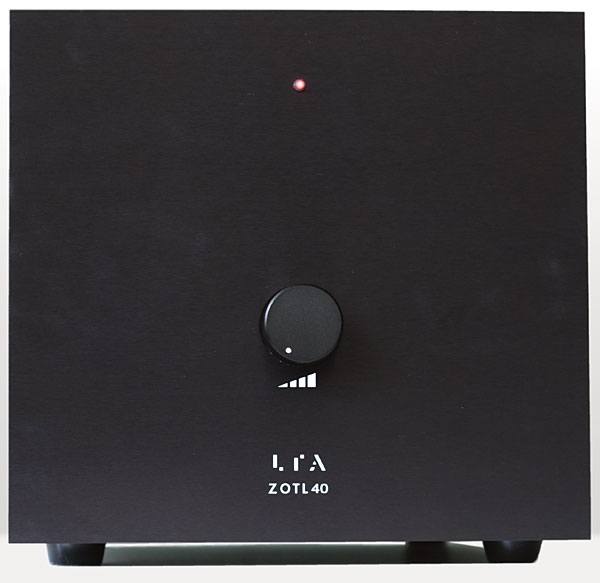
Because of my never-ending love for Linear Tube Audio's microZOTL2.0, I had extremely high expectations for the ZOTL40 Mk.II power amplifier. I imagined that these two David Berning designs would combine perfectly, creating an enjoyably balanced, powerfully spoken tube amplification system at a reasonable price. But after much listening, comparing, and deliberating, I concluded that while the microZOTL40 Mk.II is a strong, remarkably clean-sounding 40Wpc amplifier that could drive a wide range of speaker loads, it makes only modest magic at a somewhat immodest price.
My first impressions of the ZOTL40 Mk.II driving DeVore's two-way Orangutan O/93 speakers ($8400/pair) was of tight regulation, and a sense of music being slightly too damped. With a promo pressing of Karl Richter conducting vocal soloists and the Munich Bach Chorus and Orchestra in choruses and arias from J.S. Bach's St. Matthew Passion (mono "tulips" LP, Deutsche Grammophon LPEM 19 233), the imaging and clarity created the impression of low-distortion playback. But the music felt inexplicably and distractingly stiff, the Munich Choirboys bloodless. Hoping for better results, I switched preamps: from the Pass Labs HPA-1 to Linear Tube Audio's own microZOTL2.0. (Note: I am the microZOTL2.0's biggest fan. It costs $1235, and drives both headphones and power amplifiers as if it should cost several times as much.)
Tone color and liquidity improved with the synergy between these two LTA products. With this LTA pairing I used AMG's Giro G9 turntable and 9W2 tonearm ($10,000, see "Gramophone Dreams" elsewhere in this issue), and EMT's ISD 75 moving-coil cartridge ($1700). The digital source was my trusty Integra DPS-7.2 DVD player ($799.99 when new in 2001), used as a CD transport with Mytek HiFi's Manhattan II DAC ($5995).
Driving the DeVore Orangutan O/93s, the two ZOTLs sounded ever so slightly wet, moderately colorful, dynamic, and elegantly detailed.
Driving Maggies & QuadsAs always, the Magnepan .7 ($1400/pair) is my acid test for an amplifier's delivery of current into low impedances—in this case, 2 ohms. To my surprise, the ZOTL40 Mk.II propelled the Maggies' 57" panels with a firm, steady hand. Ito Ema's Steinway didn't sound as big or as weighty or as hyperdetailed through ZOTL40 as through the Bel Canto REF600Ms, but the LTA held its own, sounding clean, smooth, and easy as it produced an engaging facsimile of Ema playing J.S. Bach's Goldberg Variations (CD, MA Recordings M024A). The ZOTL40 reproduced her touch on both halves of the keyboard with equal weight and virtuosity.
First Watt's J2 ($4000), a 25Wpc amplifier designed by Nelson Pass, won't drive the Quad ESLs (I tried it), but the J2 is very difficult to beat when used with sensitive speakers of impedances of 6 ohms or more.
My objectivist friend, Mr. O., sat next to me on the couch as I began comparing the 40Wpc, 9.7lb, $5800 ZOTL40 Mk.II to the 35Wpc, 46.3lb, $2195 PrimaLuna ProLogue Premium. Both amps are all-tube, the PrimaLuna using EL34 output tubes, the ZOTL40 the KT77 equivalents.
For this comparison I used the DeVore Fidelity Orangutan O/93 loudspeakers and, with each power amp, a preamp made by the same company: LTA's microZOTL2.0 ($1100) with the ZOTL40, and PrimaLuna's ProLogue Premium ($2195) with, well, PrimaLuna's ProLogue Premium.
Because of my never-ending love for Linear Tube Audio's microZOTL2.0, I had extremely high expectations for the ZOTL40 Mk.II power amplifier. I imagined that these two David Berning designs would combine perfectly, creating an enjoyably balanced, powerfully spoken tube amplification system at a reasonable price. But after much listening, comparing, and deliberating, I concluded that while the microZOTL40 Mk.II is a strong, remarkably clean-sounding 40Wpc amplifier that could drive a wide range of speaker loads, it makes only modest magic at a somewhat immodest price.