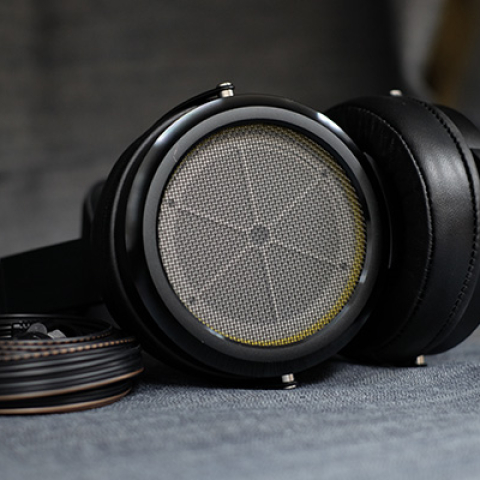
And especially this 70-minute Bach CD. Using the Rogue RH-5 with Schiit Audio's Yggdrasil DAC, I played it all the way through, comparing its sound through the Susvaras to its sound through JPS Labs' Abyss AB-1266 Phis. The Susvaras were a smidgen more relaxed, which made these charming chorales sound slightly more artful and flowing. The music glowed with the Susvaras, but was better sorted and more corporeal through the Abysses. The Susvaras fully captured the atmosphere of the recording space, but the Abysses provided a more direct and intimate perspective that made Bach's counterpoint more coherent.
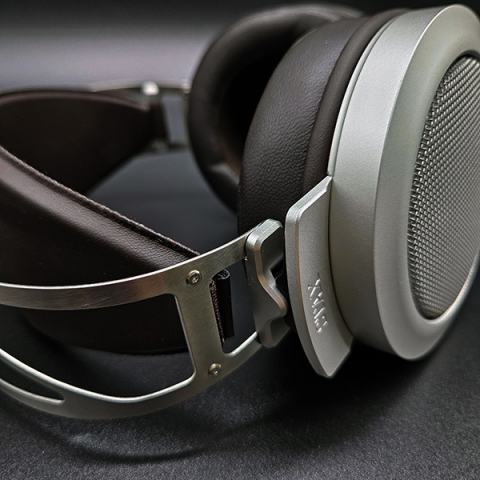
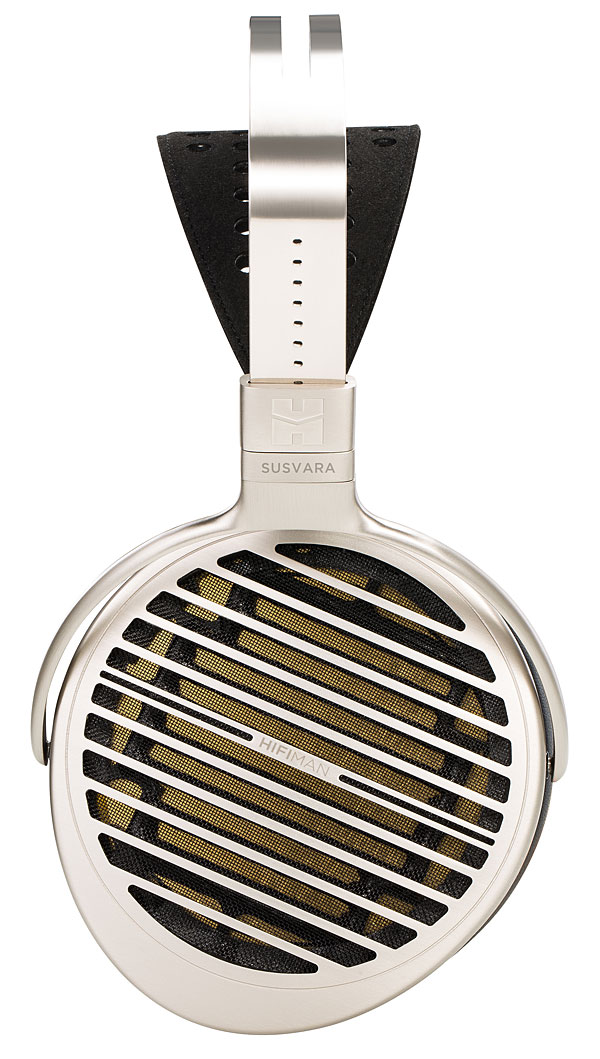 I know that some of you would like me to declare that one of these headphones is better than the other, but as of now, I can't. The Susvaras and Abysses are the two most refined, balanced, and revealing headphones I've heard. Both operate in a rarefied realm I am only just now beginning to comprehend. The Susvaras' exquisite transparency, luster, and rhythmic flow presented me with one vision of Bach's genius. The vivid corporeality of the Abyss AB-1266 Phis revealed another. Together, they surpassed all other headphones I've used at exposing the corporeal and temporal aspects of recorded musical events. And both sound very non–hi-fi. It might take me a while—and even better headphone amplifiers—before I can fully understand what I experienced while listening to the Susvaras for this review.
Speaking of better headphone amps . . .
HiFiMan EF1000 headphone and integrated amplifier
I know that some of you would like me to declare that one of these headphones is better than the other, but as of now, I can't. The Susvaras and Abysses are the two most refined, balanced, and revealing headphones I've heard. Both operate in a rarefied realm I am only just now beginning to comprehend. The Susvaras' exquisite transparency, luster, and rhythmic flow presented me with one vision of Bach's genius. The vivid corporeality of the Abyss AB-1266 Phis revealed another. Together, they surpassed all other headphones I've used at exposing the corporeal and temporal aspects of recorded musical events. And both sound very non–hi-fi. It might take me a while—and even better headphone amplifiers—before I can fully understand what I experienced while listening to the Susvaras for this review.
Speaking of better headphone amps . . .
HiFiMan EF1000 headphone and integrated amplifier
According to the HiFiMan Susvaras' manual, "The Susvara is a low sensitivity headphone meaning it will require more than an average amplifier to drive it properly. Matching the Susvara to a potent amplifier is critical to allowing it to reach its full potential. To aid users in finding a perfectly complementary amplifier we have developed the EF1000." HiFiMan sells the EF1000 amplifier ($15,000) and the Susvara headphones ($6000) together for $18,000. A $3000 saving.
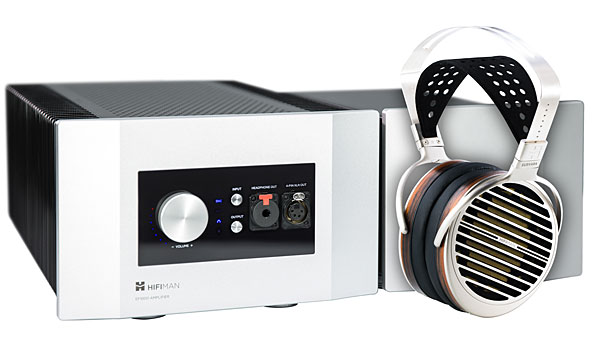 I've probably heard a thousand different audio amplifiers. What I've learned is that designing an amp seems more like cooking than like science or engineering. Most amp designers simply choose an existing circuit topology or a slight variation thereof, some transformers, some active devices (transistors or tubes), some capacitors and resistors, all from an à la carte engineering menu. After a computer designs the chassis and circuit boards, they throw all their decisions into a blender, then pour the result into a fancy case. The finished product comes out neatly boxed, and those boxes are stacked on a skid.
That's how I imagined Dr. Fang Bian's "potent" new headphone amplifier, the HiFiMan EF1000, coming into being. I was wrong.
The author of the HiFiMan EF1000 circuit is not a famous audio chef. He's an old friend of Fang Bian's named Dehua Liu—a talented audio DIY guy from Shandong Province, China. A team of engineers supervised by Bian turned Dehua's amplifier design into a real-world product that appears to be one of the most intelligently engineered and exquisitely executed audio components I have seen or heard.
The EF1000's separate audio-circuitry and power-supply enclosures came packaged in seemingly indestructible Pelican cases and cushioned with lots of foam. Ten Russian Electro Harmonix 6922/E88CC tubes are included (four are spares). The input and voltage amplifier stages use three 6922s per channel in a shunt-regulated, push-pull configuration. Each channel's current output stage uses six pairs of Hitachi MOSFETs biased into class-A. Coupling capacitors are German-made GAD-vivas, and every part, electrical or mechanical, appears to be 100% top quality. The audio case weighs 29.7 lbs, and is connected to the 24.7-lb power supply by two Cinch connectors. Inside the power supply I saw an immense, 19-lb mains transformer and eight 10,000µF ELNA capacitors.
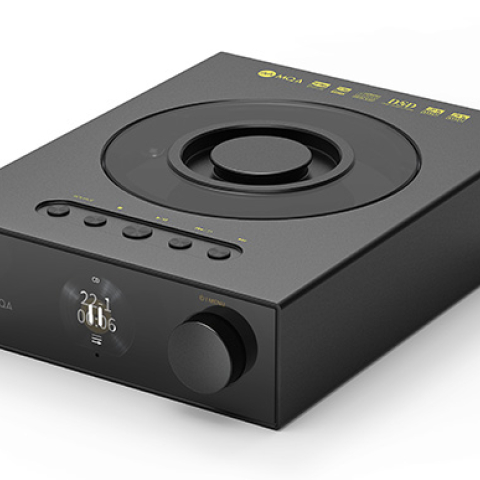
The EF1000 is the most powerful headphone amplifier I know. It outputs up to 20Wpc class-A into a 35-ohm headphone load! The EF1000 is also a full-function integrated amplifier with volume control, offering 50Wpc in class-A or 110Wpc in class-AB into an 8-ohm loudspeaker load. Its three line-level RCA inputs (CD, Aux, DAC) can be selected by pressing a button on the front panel. A second button lets you alternate between headphone and loudspeaker output.
Everyone knows that an acoustic piano or baritone sax can sound rich and powerfully expressive—but what about "Sixteen Chickens and a Tambourine," from Roy Acuff's The King of Country Music (2 CDs, Bear Family BCD 15652 BH)? For me, the best hi-fi system is the one that plays the most records, revealingly and enjoyably, without sonic distraction. And lordy lord, if my system can't deliver pleasurable Roy Acuff—if it can't properly present a kazoo solo, a honky-tonk piano, or a slapped bass—well, it's a crap system.
"As I run across the tater patch / see if my ol' hen had hatched . . ." Roy Acuff, the Schiit Yggdrasil DAC, the HiFiMan EF1000 amp, and the Susvara headphones played "Sixteen Chickens" with a level of insight and natural tonality that let me examine and enjoy every note. Unfortunately, this Roy Acuff collection sounds a little digital-steely; nevertheless, through the EF1000 and Susvaras, harmonica, fiddle, and tambourine had surprisingly natural tone and realistic texture. Details were never overemphasized, they were just very there. I could sense the microphones on the pedal steel and Acuff's voice. The spoons sounded like real spoons as they tapped and scraped the washboard. What I most loved was how this combination made the tonalities of fiddle and voice into something sweet, exciting, and poetically comprehensible. This combination of world-class headphone components made Acuff's musical accomplishments feel important and accessible.
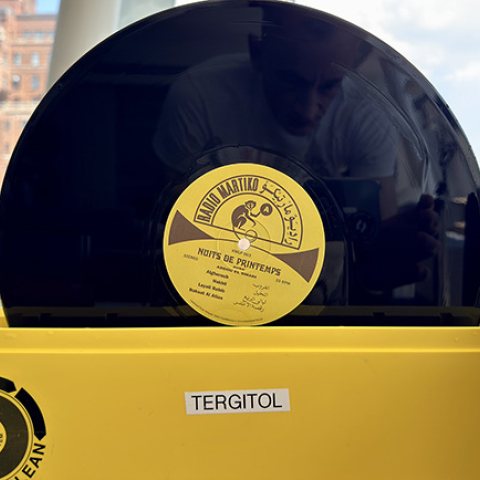
Power and Glory: Unfortunately, I had to return the EF1000 after only a few weeks. But to celebrate the joy it brought me and to mourn its imminent loss, I played one last disc, the best-sounding LP I own: Dom Um Romão's Saudades, produced and engineered by Kavichandran Alexander (LP, Water Lily Acoustics WLA-CS-16). Sonically, this all-tube, all-analog, Blumlein-miked jazz recording has few peers, if any. It delivers an expansive, perfectly recorded space in which the five musicians do not appear as ghosts—I do. As I listened in my dark room, I felt like an invisible intruder at an actual musical event. The clarity was . . . paranormal.
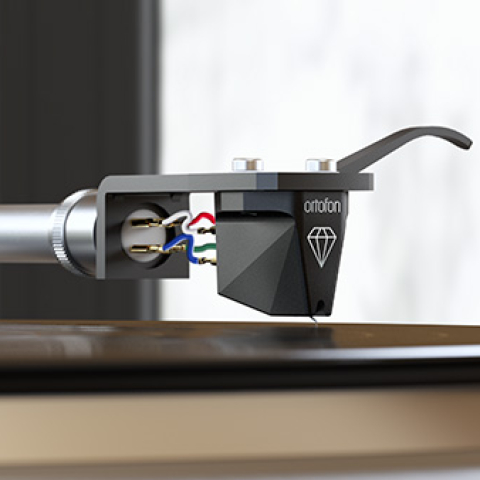
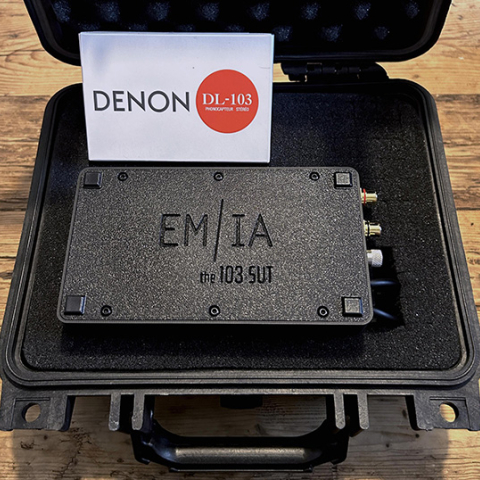
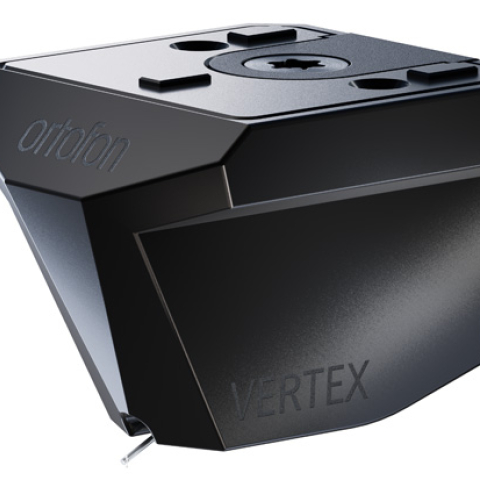
Saudades blends complex Afro-American and Afro-Brazilian elements into new musical forms. The Portuguese word saudades has no precise English equivalent, but is expressive of melancholy, longing, yearning, nostalgia. It suggests spiritual ennui. It is synonymous with the Portuguese musical tradition of fado. I played both sides of this fantastic LP on the AMG Giro G9 turntable-tonearm combination, with an EMT DST 75 cartridge and Auditorium 23 step-up transformer driving the all-tube Tavish Design Adagio RIAA stage, which in turn drove the EF1000's tube input and MOSFET output, which ultimately drove the Susvaras. The result was a hypnotizing, body-shaking musical experience. When it was over, I sat in near silence. The only sound was the stylus clicking in the lead-out groove of side 2.
This gear playing this superbly produced record showed me a level of I-was-there reality that I may never experience from digital or loudspeakers.
Driving Loudspeakers: I used the HiFiMan EF1000 with a variety of speakers, beginning with my reference KEF LS50s ($1499.99/pair). I switch speakers so often that I often forget how all-around well-balanced the LS50 is. The HiFiMan EF1000 made sure I will never forget again.
Romão's Saudades came through the LS50s with striking detail and an attractive, burnished-copper tint. This subtle coppertone sheen was especially apparent with Chico Freeman's saxophone, but it was also noticeable on the top octaves of Izio Gross's piano. But the LS50s' exposed midrange/woofer cones are copper-colored—I had to ask myself, Is what I'm seeing influencing what I'm hearing? Maybe, but . . .
Even through speakers, the incomparable sound spaces recorded on Saudades were described with CNC-type precision. The KEFs had never sounded more detailed, dynamic, or transparent. Best of all, the EF1000 gave the LS50s a sort of locomotive-like vigor that I found extremely appealing.
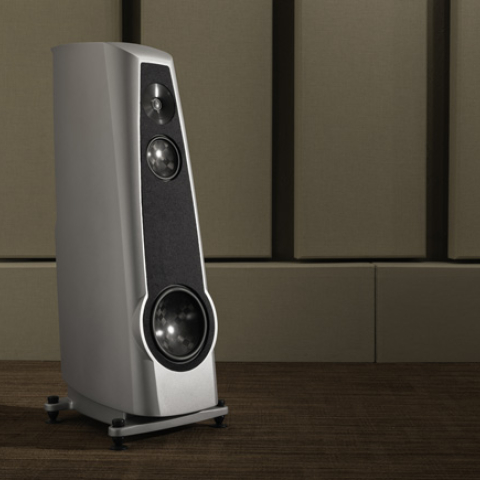
But the speaker the HiFiMan loved most was my newest Brit-fi love: Stirling Broadcast's LS3/5a V2 ($1990/pair). Like all versions of the LS3/5a made over the last four decades, the Stirling is a small speaker with limited bass capabilities, but oh my god—the truth of tone it delivers exceeds that of all speakers I know. To my ears, the Stirling LS3/5a V2 is more musically satisfying than either my 1984 Rogers or 2016 Falcon Acoustics versions of this classic BBC design ($2195/pair) because, through it, voices and instruments sound closer to real life. The Stirling's sound is less tactile and transparent than the Falcon's, but it's richer, more relaxed, more natural sounding.
In fact, the HiFiMan EF1000 driving the Stirling LS3/5a V2s sounded very close to the EF1000 driving the HiFiMan Susvara headphones. I have no higher compliment.
In the end
I've probably heard a thousand different audio amplifiers. What I've learned is that designing an amp seems more like cooking than like science or engineering. Most amp designers simply choose an existing circuit topology or a slight variation thereof, some transformers, some active devices (transistors or tubes), some capacitors and resistors, all from an à la carte engineering menu. After a computer designs the chassis and circuit boards, they throw all their decisions into a blender, then pour the result into a fancy case. The finished product comes out neatly boxed, and those boxes are stacked on a skid.
That's how I imagined Dr. Fang Bian's "potent" new headphone amplifier, the HiFiMan EF1000, coming into being. I was wrong.
The author of the HiFiMan EF1000 circuit is not a famous audio chef. He's an old friend of Fang Bian's named Dehua Liu—a talented audio DIY guy from Shandong Province, China. A team of engineers supervised by Bian turned Dehua's amplifier design into a real-world product that appears to be one of the most intelligently engineered and exquisitely executed audio components I have seen or heard.
The EF1000's separate audio-circuitry and power-supply enclosures came packaged in seemingly indestructible Pelican cases and cushioned with lots of foam. Ten Russian Electro Harmonix 6922/E88CC tubes are included (four are spares). The input and voltage amplifier stages use three 6922s per channel in a shunt-regulated, push-pull configuration. Each channel's current output stage uses six pairs of Hitachi MOSFETs biased into class-A. Coupling capacitors are German-made GAD-vivas, and every part, electrical or mechanical, appears to be 100% top quality. The audio case weighs 29.7 lbs, and is connected to the 24.7-lb power supply by two Cinch connectors. Inside the power supply I saw an immense, 19-lb mains transformer and eight 10,000µF ELNA capacitors.
The EF1000 is the most powerful headphone amplifier I know. It outputs up to 20Wpc class-A into a 35-ohm headphone load! The EF1000 is also a full-function integrated amplifier with volume control, offering 50Wpc in class-A or 110Wpc in class-AB into an 8-ohm loudspeaker load. Its three line-level RCA inputs (CD, Aux, DAC) can be selected by pressing a button on the front panel. A second button lets you alternate between headphone and loudspeaker output.
Everyone knows that an acoustic piano or baritone sax can sound rich and powerfully expressive—but what about "Sixteen Chickens and a Tambourine," from Roy Acuff's The King of Country Music (2 CDs, Bear Family BCD 15652 BH)? For me, the best hi-fi system is the one that plays the most records, revealingly and enjoyably, without sonic distraction. And lordy lord, if my system can't deliver pleasurable Roy Acuff—if it can't properly present a kazoo solo, a honky-tonk piano, or a slapped bass—well, it's a crap system.
"As I run across the tater patch / see if my ol' hen had hatched . . ." Roy Acuff, the Schiit Yggdrasil DAC, the HiFiMan EF1000 amp, and the Susvara headphones played "Sixteen Chickens" with a level of insight and natural tonality that let me examine and enjoy every note. Unfortunately, this Roy Acuff collection sounds a little digital-steely; nevertheless, through the EF1000 and Susvaras, harmonica, fiddle, and tambourine had surprisingly natural tone and realistic texture. Details were never overemphasized, they were just very there. I could sense the microphones on the pedal steel and Acuff's voice. The spoons sounded like real spoons as they tapped and scraped the washboard. What I most loved was how this combination made the tonalities of fiddle and voice into something sweet, exciting, and poetically comprehensible. This combination of world-class headphone components made Acuff's musical accomplishments feel important and accessible.
Power and Glory: Unfortunately, I had to return the EF1000 after only a few weeks. But to celebrate the joy it brought me and to mourn its imminent loss, I played one last disc, the best-sounding LP I own: Dom Um Romão's Saudades, produced and engineered by Kavichandran Alexander (LP, Water Lily Acoustics WLA-CS-16). Sonically, this all-tube, all-analog, Blumlein-miked jazz recording has few peers, if any. It delivers an expansive, perfectly recorded space in which the five musicians do not appear as ghosts—I do. As I listened in my dark room, I felt like an invisible intruder at an actual musical event. The clarity was . . . paranormal.
Saudades blends complex Afro-American and Afro-Brazilian elements into new musical forms. The Portuguese word saudades has no precise English equivalent, but is expressive of melancholy, longing, yearning, nostalgia. It suggests spiritual ennui. It is synonymous with the Portuguese musical tradition of fado. I played both sides of this fantastic LP on the AMG Giro G9 turntable-tonearm combination, with an EMT DST 75 cartridge and Auditorium 23 step-up transformer driving the all-tube Tavish Design Adagio RIAA stage, which in turn drove the EF1000's tube input and MOSFET output, which ultimately drove the Susvaras. The result was a hypnotizing, body-shaking musical experience. When it was over, I sat in near silence. The only sound was the stylus clicking in the lead-out groove of side 2.
This gear playing this superbly produced record showed me a level of I-was-there reality that I may never experience from digital or loudspeakers.
Driving Loudspeakers: I used the HiFiMan EF1000 with a variety of speakers, beginning with my reference KEF LS50s ($1499.99/pair). I switch speakers so often that I often forget how all-around well-balanced the LS50 is. The HiFiMan EF1000 made sure I will never forget again.
Romão's Saudades came through the LS50s with striking detail and an attractive, burnished-copper tint. This subtle coppertone sheen was especially apparent with Chico Freeman's saxophone, but it was also noticeable on the top octaves of Izio Gross's piano. But the LS50s' exposed midrange/woofer cones are copper-colored—I had to ask myself, Is what I'm seeing influencing what I'm hearing? Maybe, but . . .
Even through speakers, the incomparable sound spaces recorded on Saudades were described with CNC-type precision. The KEFs had never sounded more detailed, dynamic, or transparent. Best of all, the EF1000 gave the LS50s a sort of locomotive-like vigor that I found extremely appealing.
But the speaker the HiFiMan loved most was my newest Brit-fi love: Stirling Broadcast's LS3/5a V2 ($1990/pair). Like all versions of the LS3/5a made over the last four decades, the Stirling is a small speaker with limited bass capabilities, but oh my god—the truth of tone it delivers exceeds that of all speakers I know. To my ears, the Stirling LS3/5a V2 is more musically satisfying than either my 1984 Rogers or 2016 Falcon Acoustics versions of this classic BBC design ($2195/pair) because, through it, voices and instruments sound closer to real life. The Stirling's sound is less tactile and transparent than the Falcon's, but it's richer, more relaxed, more natural sounding.
In fact, the HiFiMan EF1000 driving the Stirling LS3/5a V2s sounded very close to the EF1000 driving the HiFiMan Susvara headphones. I have no higher compliment.
In the end
I am no avatar of conspicuous consumption. I prefer a faded '64 Chevy pickup to a glossy new Porsche. That's why I mostly review affordable gear. Don't laugh. I think that expensive headphones—especially ones like the Abyss AB-1266 Phis and the HiFiMan Susvaras—are actually high-value high-fidelity products. They give me more of what I desire from recorded music. They unmask more of what's hidden on recordings than do loudspeakers costing five or even ten times as much. To my knowledge and taste, HiFiMan's Susvara planar-magnetic headphones and companion EF1000 amplifier are at the leading edge of what is possible in two-channel audio.
Footnote 1: HiFiMan, 2602 Beltagh Avenue, Bellmore, NY 11710. Tel: (201) 443-4626. Web: www.hifiman.com.
I know that some of you would like me to declare that one of these headphones is better than the other, but as of now, I can't. The Susvaras and Abysses are the two most refined, balanced, and revealing headphones I've heard. Both operate in a rarefied realm I am only just now beginning to comprehend. The Susvaras' exquisite transparency, luster, and rhythmic flow presented me with one vision of Bach's genius. The vivid corporeality of the Abyss AB-1266 Phis revealed another. Together, they surpassed all other headphones I've used at exposing the corporeal and temporal aspects of recorded musical events. And both sound very non–hi-fi. It might take me a while—and even better headphone amplifiers—before I can fully understand what I experienced while listening to the Susvaras for this review.
Speaking of better headphone amps . . .
HiFiMan EF1000 headphone and integrated amplifierAccording to the HiFiMan Susvaras' manual, "The Susvara is a low sensitivity headphone meaning it will require more than an average amplifier to drive it properly. Matching the Susvara to a potent amplifier is critical to allowing it to reach its full potential. To aid users in finding a perfectly complementary amplifier we have developed the EF1000." HiFiMan sells the EF1000 amplifier ($15,000) and the Susvara headphones ($6000) together for $18,000. A $3000 saving.
I've probably heard a thousand different audio amplifiers. What I've learned is that designing an amp seems more like cooking than like science or engineering. Most amp designers simply choose an existing circuit topology or a slight variation thereof, some transformers, some active devices (transistors or tubes), some capacitors and resistors, all from an à la carte engineering menu. After a computer designs the chassis and circuit boards, they throw all their decisions into a blender, then pour the result into a fancy case. The finished product comes out neatly boxed, and those boxes are stacked on a skid.
That's how I imagined Dr. Fang Bian's "potent" new headphone amplifier, the HiFiMan EF1000, coming into being. I was wrong.
The author of the HiFiMan EF1000 circuit is not a famous audio chef. He's an old friend of Fang Bian's named Dehua Liu—a talented audio DIY guy from Shandong Province, China. A team of engineers supervised by Bian turned Dehua's amplifier design into a real-world product that appears to be one of the most intelligently engineered and exquisitely executed audio components I have seen or heard.
I am no avatar of conspicuous consumption. I prefer a faded '64 Chevy pickup to a glossy new Porsche. That's why I mostly review affordable gear. Don't laugh. I think that expensive headphones—especially ones like the Abyss AB-1266 Phis and the HiFiMan Susvaras—are actually high-value high-fidelity products. They give me more of what I desire from recorded music. They unmask more of what's hidden on recordings than do loudspeakers costing five or even ten times as much. To my knowledge and taste, HiFiMan's Susvara planar-magnetic headphones and companion EF1000 amplifier are at the leading edge of what is possible in two-channel audio.
Footnote 1: HiFiMan, 2602 Beltagh Avenue, Bellmore, NY 11710. Tel: (201) 443-4626. Web: www.hifiman.com.