All "serious" music fans know pop music is kid's stuff: too simple, too accessible, the embodiment of that cringeworthy moniker "disposable." But pop music is also what keeps the lights on in the music business, selling gobs of streams, merchandise, and concert tickets.
And hasn't that always been the case? In 1956, during the first wave of rock'n'roll as well as the bebop revolution in jazz, four of the top 10 singles were pop records by Nelson Riddle, Les Baxter, Doris Day, and Kay Starr. Perry Como, the bête noir of rock'n'roll, grabbed the 16th spot that same year with "Hot Diggity (Dog Ziggity Boom)." Today, pop music is even more dominant, as the major Grammy Award winners in 2026—Bad Bunny, Billie Eilish, Lady Gaga, Jelly Roll—all are unquestionably pop.
Whether they will admit it or not, audiophiles, especially those who pride themselves on knowing not only good gear but also good music, have their own guilty musical pleasures. I have always held that anyone who doesn't love something sweet and irresistible isn't really listening. Asked to name his favorite single, my dear friend, the immensely serious Michael Metzger—formerly of Stereophile Guide to Home Theater magazine and later Goldmine—would without hesitation growl "Sugar, Sugar" by The Archies. Another friend, deeply into opera, sheepishly stashes his Beatles albums under his couch. A free-jazz aficionado friend in my neighborhood finds Bruno Mars intriguing. I suspect if I took a poll, I'd find that more than a few hi-fi devotees either stream or own physical media by Taylor Swift.
A longtime guilty pleasure of mine, music I first responded to as a kid, is Three Dog Night.
In February 1971, after making the singles chart in 1969 with covers of Laura Nyro's "Eli's Coming" (#10 on Billboard's Hot 100) and "Easy to be Hard" from the musical Hair (#4), and the Randy Newman–penned "Mama Told Me (Not to Come)" in 1970, Three Dog Night unleashed a take-no-prisoners single version of Hoyt Axton's "Joy to the World." Axton's "Never Been to Spain" was also a hit for the band; by summer, that euphoric delight was everywhere. With its silly children's book opening lines, "Jeremiah was a bullfrog / He was good friend of mine," the band almost passed on recording "Joy to the World," thinking it too childish. They finally acquiesced to working up a take at the insistence of one of the band's trio of singers, Chuck Negron, the latest '70s rock musician to pass; Negron died at 83 on February 2, 2026.
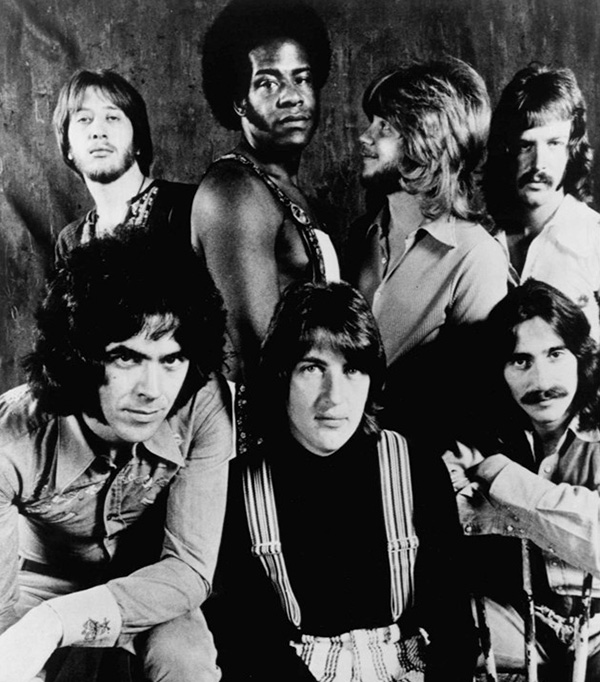
Three Dog Night's three singing front men, Negron, Cory Wells, and Danny Hutton, who generously traded leads throughout their career, all had legit vocal chops. Backed by Jimmy Greenspoon (keyboards), Floyd Sneed (drums), Michael Allsup (guitar), and Joe Schermie (bass), TDN were famously hated by Jann Wenner of Rolling Stone magazine and The Rock & Roll Hall of Fame, who made sure they were never nominated.
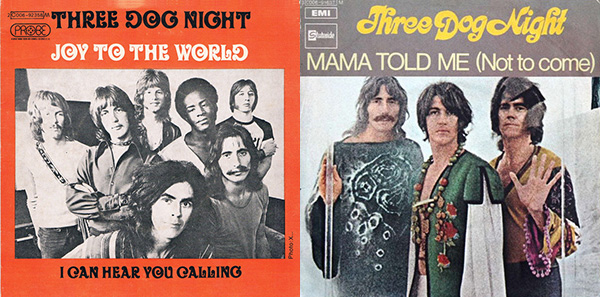 Rather than tell a coherent story, TDN's albums, with the possible exceptions of Naturally (1970) and Seven Separate Fools (1972), followed the time-honored 1960s formula of surrounding hit singles with filler. Yet for a brief period, between 1969 and 1975, the band became a Top-40 hit machine. Twenty-two of their singles landed on the Billboard Top 100. Three made it to Number 1. That successful burst makes their 2004 greatest hits compilation, The Complete Hit Singles, their most essential album.
Castigated by some for the post-Beatles sin of not writing their own material, they quickly evolved into song stylists who excelled as early popularizers of heretofore lesser-known songwriting talents including Randy Newman, Paul Williams, and Harry Nilsson as well as such well-known writers as Elton John/Bernie Taupin, Allen Toussaint, Traffic, The Band, and John Hiatt. TDN did production work early on with Brian Wilson and were planning to sign with his Brothers Records label, but the deal foundered when Wilson had to return his focus on The Beach Boys after Smiley Smile. TDN remains ubiquitous in American culture and has rarely slipped from view, thanks largely to "Joy to the World." Kept alive since 1971 in innumerable television commercials, the song has also been part of the TV show soundtracks of Friends, Sex and the City, and the animated version of Guardians of the Galaxy. Idiosyncratic indie-rock singer-songwriter Daniel Johnston made the character of Jeremiah the Bullfrog a constant presence in his drawings and recordings.
Speaking of sound: Three Dog Night's catalog of recordings, the sonics of which are acceptable but hardly pristine, have stayed alive only thanks to original vinyl, dodgy out-of-print CD transfers, and streaming. The band's catalog is long overdue for remastering and reissue—if not full-on remix. It is puzzling that today, in an age when labels large and small are in a fury to reissue everything on pricey vinyl, it has not happened.
If a long-held rumor is true, that absence is due to a decision by ABC/Dunhill executives to discard their multitrack tapes and metal parts to reduce storage costs. Record labels destroying, or in some cases reusing, magnetic tape is an old story. Sun, RCA, Columbia, and others have all done it, particularly during the rush to digitize tape libraries in the 1980s and 1990s. Incidents like the 1987 tape dump at London's Olympic Studios, in which horrified fans rescued discarded multitracks of recordings by The Who, The Rolling Stones, and Led Zeppelin, are legendary.
In the wake of Negron's passing, a listen to the band's music reveals yet again what a user-friendly, congenial, melodious musical salmagundi they were—always anxious to please and oh, so easy to love.
Rather than tell a coherent story, TDN's albums, with the possible exceptions of Naturally (1970) and Seven Separate Fools (1972), followed the time-honored 1960s formula of surrounding hit singles with filler. Yet for a brief period, between 1969 and 1975, the band became a Top-40 hit machine. Twenty-two of their singles landed on the Billboard Top 100. Three made it to Number 1. That successful burst makes their 2004 greatest hits compilation, The Complete Hit Singles, their most essential album.
Castigated by some for the post-Beatles sin of not writing their own material, they quickly evolved into song stylists who excelled as early popularizers of heretofore lesser-known songwriting talents including Randy Newman, Paul Williams, and Harry Nilsson as well as such well-known writers as Elton John/Bernie Taupin, Allen Toussaint, Traffic, The Band, and John Hiatt. TDN did production work early on with Brian Wilson and were planning to sign with his Brothers Records label, but the deal foundered when Wilson had to return his focus on The Beach Boys after Smiley Smile. TDN remains ubiquitous in American culture and has rarely slipped from view, thanks largely to "Joy to the World." Kept alive since 1971 in innumerable television commercials, the song has also been part of the TV show soundtracks of Friends, Sex and the City, and the animated version of Guardians of the Galaxy. Idiosyncratic indie-rock singer-songwriter Daniel Johnston made the character of Jeremiah the Bullfrog a constant presence in his drawings and recordings.
Speaking of sound: Three Dog Night's catalog of recordings, the sonics of which are acceptable but hardly pristine, have stayed alive only thanks to original vinyl, dodgy out-of-print CD transfers, and streaming. The band's catalog is long overdue for remastering and reissue—if not full-on remix. It is puzzling that today, in an age when labels large and small are in a fury to reissue everything on pricey vinyl, it has not happened.
If a long-held rumor is true, that absence is due to a decision by ABC/Dunhill executives to discard their multitrack tapes and metal parts to reduce storage costs. Record labels destroying, or in some cases reusing, magnetic tape is an old story. Sun, RCA, Columbia, and others have all done it, particularly during the rush to digitize tape libraries in the 1980s and 1990s. Incidents like the 1987 tape dump at London's Olympic Studios, in which horrified fans rescued discarded multitracks of recordings by The Who, The Rolling Stones, and Led Zeppelin, are legendary.
In the wake of Negron's passing, a listen to the band's music reveals yet again what a user-friendly, congenial, melodious musical salmagundi they were—always anxious to please and oh, so easy to love.
Rather than tell a coherent story, TDN's albums, with the possible exceptions of Naturally (1970) and Seven Separate Fools (1972), followed the time-honored 1960s formula of surrounding hit singles with filler. Yet for a brief period, between 1969 and 1975, the band became a Top-40 hit machine. Twenty-two of their singles landed on the Billboard Top 100. Three made it to Number 1. That successful burst makes their 2004 greatest hits compilation, The Complete Hit Singles, their most essential album.
Castigated by some for the post-Beatles sin of not writing their own material, they quickly evolved into song stylists who excelled as early popularizers of heretofore lesser-known songwriting talents including Randy Newman, Paul Williams, and Harry Nilsson as well as such well-known writers as Elton John/Bernie Taupin, Allen Toussaint, Traffic, The Band, and John Hiatt. TDN did production work early on with Brian Wilson and were planning to sign with his Brothers Records label, but the deal foundered when Wilson had to return his focus on The Beach Boys after Smiley Smile. TDN remains ubiquitous in American culture and has rarely slipped from view, thanks largely to "Joy to the World." Kept alive since 1971 in innumerable television commercials, the song has also been part of the TV show soundtracks of Friends, Sex and the City, and the animated version of Guardians of the Galaxy. Idiosyncratic indie-rock singer-songwriter Daniel Johnston made the character of Jeremiah the Bullfrog a constant presence in his drawings and recordings.
Speaking of sound: Three Dog Night's catalog of recordings, the sonics of which are acceptable but hardly pristine, have stayed alive only thanks to original vinyl, dodgy out-of-print CD transfers, and streaming. The band's catalog is long overdue for remastering and reissue—if not full-on remix. It is puzzling that today, in an age when labels large and small are in a fury to reissue everything on pricey vinyl, it has not happened.