 Nobody knows the trouble I've seen
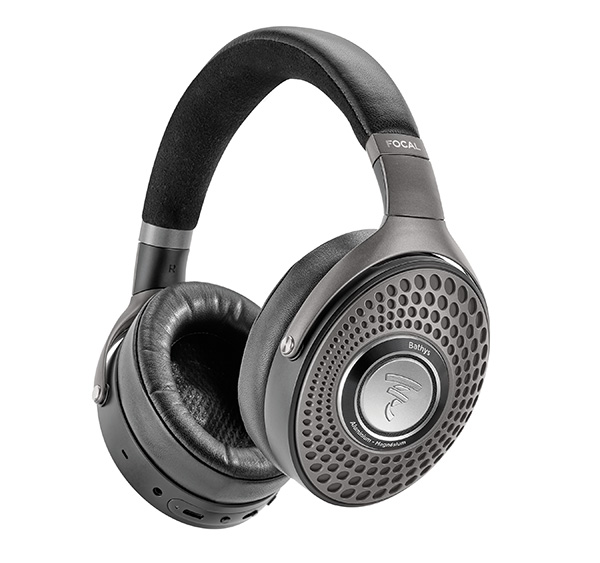
When people talk of the "Apple tax," they mean the priciness of Apple's products—a negative that for many of us is offset by how well the company's devices usually work, separately and together. Apple, though, has rarely emphasized interoperability with non-Apple devices, and the Bathys is no exception. Focal includes only a minijack cable and a USB-C–to–USB-C cord in the box; to use the built-in DAC, I had to go rummaging through drawers for a USB-C– to-Lightning adapter. The good news: I found two. The bad news: Neither worked. Even after much online troubleshooting and a few calls with Focal, the cable connection between the headphones and my iPhone 14 Pro Max produced only silence. Ever hopeful, I plugged the Bathys into my wife's and daughters' iPhones, too. Still no dice. It was the same story with my (admittedly aging) iPad Pro. But Focal's headset worked flawlessly when I used the same USB-C cable with my Android phones—an LG V30 and a Samsung Galaxy S10e, both of which I use as music players only, and to test certain apps and devices. My USB-C–equipped MacBook Pro also had no issues with the supplied cord. I had to be missing something; the Bathys retail box proudly states that the product was "made for iPhone/iPad." After I contacted the kind folks at AudioQuest and told them of my troubles, they sent me their $230 USB-C–to-Lightning Carbon cable. Sweet—but another strikeout.
My sonic preferences—biases?—may work both for and against Focal. It hurt a little when, 18 months ago, I slapped down my credit card to buy my new reference speakers, the glorious Focal Utopia Scala Evos, but I haven't regretted the purchase for a minute. I reviewed the Scalas' bigger brothers, the Maestros, in Stereophile's November 2023 issue, sparing no superlatives. Sopras, Kantas, Choras—I don't think I've heard a Focal speaker I didn't fancy. But the handful of Focal headphones I've auditioned—I haven't heard the Utopia—never quite hit the spot for me. I found they had too much top-end energy for my tastes—a little bit of a zingy character. So the fact that I liked the Bathys as much as I did came as a bit of a surprise. In Bluetooth mode, even without EQ or Mimi, I found it impactful, punchy, and convincing. Its treble seemed better controlled this time—or at least, better tuned to my liking. I've heard Emmylou Harris's Wrecking Ball destroyed by hot treble and excessive sibilance, but the Bathys reproduced the album with poise and sangfroid. No aggressive sss sounds or overly wet chs and ts.
 And when I listened in DAC mode, with the standard cable and the aftermarket adapters, I had to raise a second thumb. The timbre of all kinds of instruments, from cellos to guitars to snare drums, was attractively rendered. Avishai Cohen's moody jazz reinvention (footnote 6) of Beethoven's "Moonlight Sonata," from Big Vicious (24/88.2 FLAC ECM/Qobuz), proved a joy through the Bathys. His horn pierced the soul, not the ears. On this and other tracks, detail retrieval was especially excellent on acoustic instruments and vocals. Male voices sounded natural and not overly chesty (more so after Mimi did her thing), making the Fairfield Four's Standing in the Safety Zone (16/44.1 FLAC, Word Records/Qobuz) sound as good as I've heard that album on a sub-$1500 headset. To test for the reproduction of transients, I played a recent favorite: the Anthony Fiumara composition "Chorale," performed by Dutch percussion group Slagwerk Den Haag (16/44.1 FLAC, Orange Mountain Music/Tidal). The leading edges of each strike had primo immediacy. In other words, transients through the Bathys are extraordinary for 'phones with dynamic drivers, if not as stellar as what I hear from the (admittedly much pricier) planar or electrostatic headphones I generally favor.
Closing time
And when I listened in DAC mode, with the standard cable and the aftermarket adapters, I had to raise a second thumb. The timbre of all kinds of instruments, from cellos to guitars to snare drums, was attractively rendered. Avishai Cohen's moody jazz reinvention (footnote 6) of Beethoven's "Moonlight Sonata," from Big Vicious (24/88.2 FLAC ECM/Qobuz), proved a joy through the Bathys. His horn pierced the soul, not the ears. On this and other tracks, detail retrieval was especially excellent on acoustic instruments and vocals. Male voices sounded natural and not overly chesty (more so after Mimi did her thing), making the Fairfield Four's Standing in the Safety Zone (16/44.1 FLAC, Word Records/Qobuz) sound as good as I've heard that album on a sub-$1500 headset. To test for the reproduction of transients, I played a recent favorite: the Anthony Fiumara composition "Chorale," performed by Dutch percussion group Slagwerk Den Haag (16/44.1 FLAC, Orange Mountain Music/Tidal). The leading edges of each strike had primo immediacy. In other words, transients through the Bathys are extraordinary for 'phones with dynamic drivers, if not as stellar as what I hear from the (admittedly much pricier) planar or electrostatic headphones I generally favor.
Closing timeI like the Bathys the way I liked my two huskies, now (dog)gone to the great kennel in the sky. Despite our best precautions, those dogs got out and ran away so often that the local cops knew them by name. They ate anything they could get their mouths on (the dogs I mean, though I have my suspicions about the cops). In short, our furry companions were challenging—and yet, at their badass core, loveable and wonderful. So it was with the Focal cans. True: connecting the Bathys via Bluetooth was a cinch across all six smartphones I tested. And there should be no problems with the USB-C cable if you want to listen in DAC mode and you have an Android or an iPhone 15. Other iPhone users though? They may have to procure the aforementioned Apple dongle and Basesailor adapter to get it all to work.
If I were a betting man, I'd wager that a new generation of wireless headphones is going to make us reach into our wallets again, and soon. Remember the Edifier S3 I mentioned earlier—and the fact that it offers Bluetooth and hi-rez audio simultaneously, without cables or adapters? That's the way (uh, huh )I like it! Within a couple of years, either the future Bluetooth 5.4 will be compatible with native lossless streaming, or headphone companies will go the Edifier route and use chips that enable lossless music via the current Bluetooth 5.3 standard. I can hardly wait to see—and hear—what the likes of Apple and Focal will come up with next.
Footnote 4: See apple.com/shop/product/MD821AM/A/lightning-to-usb-camera-adapter. Footnote 5: See amazon.com/gp/product/B07N47QRCY—although any properly designed USB-C to USB-A adapter should work; the missing element here was the camera adapter. Footnote 6: The trumpeter, not the bassist of the same name.