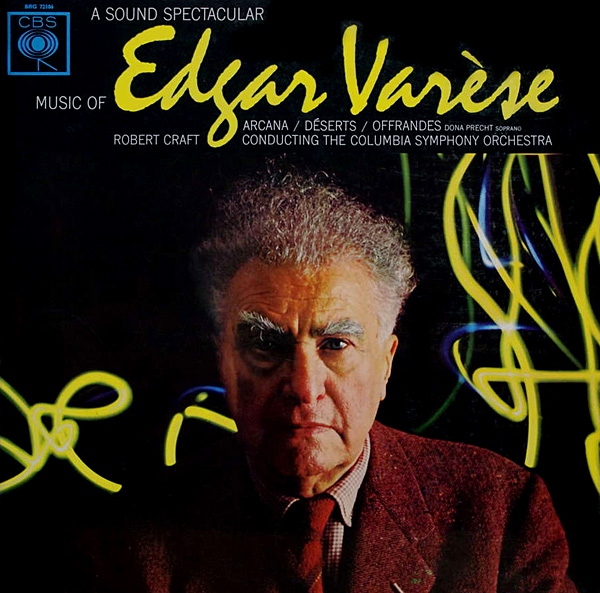
 Oh, the sound!
 When the time finally came to write this section—the part of the review that, if you're like me, you may have eagerly jumped to after the introduction—I looked at my notes and was a bit aghast. How was it possible that after weeks of listening in both the UK and at home, I only had two pages of notes? Only once before had I experienced something like this. In 2024, shortly before the start of High End Munich, I sat in row 6 of Vienna's acoustically fabled Musikverein as Riccardo Muti conducted the Vienna Philharmonic in the 200th anniversary performance of Beethoven's Ninth Symphony. Even though I had been assigned a review, I was so mesmerized by the sound of Vienna's violin section that I could not focus on Muti's interpretation. Over and over, the only thought that circulated through my brain was, "I have never heard anything like this before, either live or on recording. The violins are silken smooth; there is absolutely no edge, no buzz, no sense of anyone sawing away. It's the most beautiful sound of massed violins I've ever heard." My encounter with dCS Varèse was no less riveting. Perhaps I do my reputation no favors by confessing that as I listened with eyes wide open, I forgot about note taking as my critical faculties ceded to a sense of wonder. Weeks later, that same sense of wonder remains.
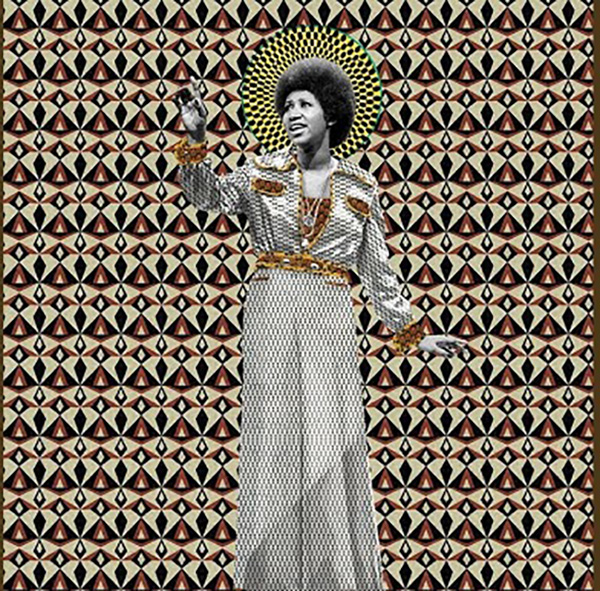 I also returned to a recording on Tom's list that initially blew away some of the members of the Off-Islanders Audio Society during their visit, the "Long Version" of Aretha's "Bridge Over Troubled Water," remastered in 2021 (24/96 FLAC, Rhino Atlantic/Qobuz). Since there are multiple remasterings of this track, each of different lengths, levels, and degrees of success (footnote 13), look for the "Long Version" on the high-rez transfer of three-CD compilation ARETHA.
In Tom's private commentary to Stereophile staff, he wrote, "Listen to the bass played through a big-ass amp, likely an Ampeg, in the left channel." Listen I did. That bass is deep, strong, and fabulous. "Bridge Over Troubled Water" may not be a shake-your-booty song, but Aretha's multi-octave spiritual take, recorded in her glorious prime, remains the tried-and-true antidote to countless saccharine versions that have followed in Simon & Garfunkel's wake.
You've got to hear this song through the dCS Varèse. The multitracked recording may put a bit of edge on Aretha's God-given instrument, but it allows the unique colors of her voice, backup chorus, Hammond organ, and other instruments to come through in all their glory. I expect few will not bow before the altar of Aretha upon hearing this song through dCS's five-box flagship DAC.
I also returned to a recording on Tom's list that initially blew away some of the members of the Off-Islanders Audio Society during their visit, the "Long Version" of Aretha's "Bridge Over Troubled Water," remastered in 2021 (24/96 FLAC, Rhino Atlantic/Qobuz). Since there are multiple remasterings of this track, each of different lengths, levels, and degrees of success (footnote 13), look for the "Long Version" on the high-rez transfer of three-CD compilation ARETHA.
In Tom's private commentary to Stereophile staff, he wrote, "Listen to the bass played through a big-ass amp, likely an Ampeg, in the left channel." Listen I did. That bass is deep, strong, and fabulous. "Bridge Over Troubled Water" may not be a shake-your-booty song, but Aretha's multi-octave spiritual take, recorded in her glorious prime, remains the tried-and-true antidote to countless saccharine versions that have followed in Simon & Garfunkel's wake.
You've got to hear this song through the dCS Varèse. The multitracked recording may put a bit of edge on Aretha's God-given instrument, but it allows the unique colors of her voice, backup chorus, Hammond organ, and other instruments to come through in all their glory. I expect few will not bow before the altar of Aretha upon hearing this song through dCS's five-box flagship DAC.
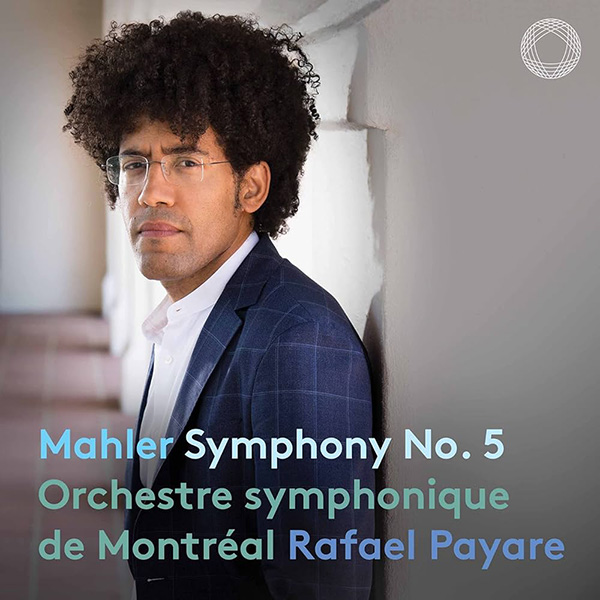 Time and again, I've asked audio show exhibitors to play complex music that shows everything their gear can do, only to be served up a jazz trio playing a slow ballad. If I'm handed an iPad and given free rein to cue up whatever I wish, I often play the first movement of Rafael Payare's recording of Mahler Symphony No.5 (24/96 FLAC, Pentatone/Qobuz). After noting bass response, timbre, color contrasts, and dynamics, I hang on until, maybe four minutes in, every instrument and its distant relation sounds off at once.
As noted earlier, I compared the sound of the Innuos PhoenixNet/Statement NG streaming music with the Innuos Sense 3.2.0 to the Varèse system streaming music with dCS Mosaic ACTUS. After going back and forth numerous times, I concluded that the Innuos combo and its software seemed to bring an even wider and more enveloping soundstage to the Varèse experience. However, because I have only so many aftermarket power cables, I was unable to eliminate the sonic effects of different cabling on my assessment. In other words, your results may vary. When I streamed directly to the Varèse Core and switched between Mosaic ACTUS and Roon software, the former yielded marginally more transparent and color-saturated sound. Roon's superior feature set cannot be denied, but Mosaic ACTUS and Innuos Sense brought me a bit closer to the music and artistry that are the Varèse's raison d'être. We performed all Vivaldi APEX/Varèse comparisons at dCS headquarters in Cambridge without an external preamp. Had I not known, from prior experience with Vivaldi, that a high-quality preamp can further improve sound, I would have been convinced that I'd heard all the Varèse music system can deliver.
 Nonpareil
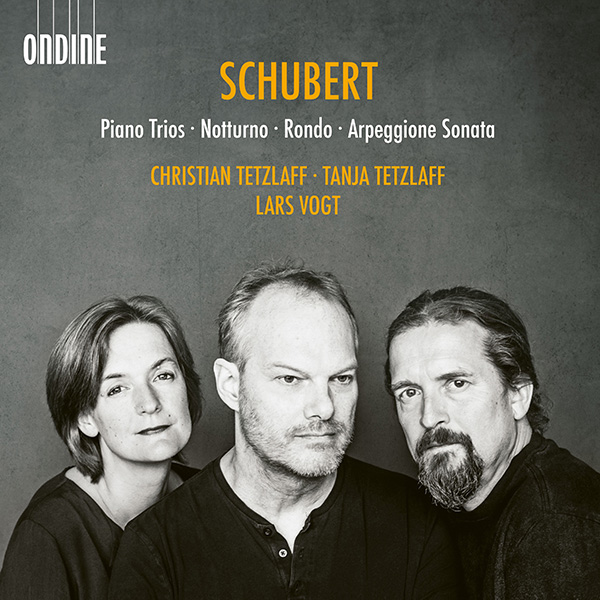
Whenever I want to see how far a component can take me emotionally, I cue up the second movement of Franz Schubert's Piano Trio No. 2 in E flat major, D. 929 (Op.100), marvelously felt by violinist Christian Tetzlaff, cellist Tanja Tetzlaff, and pianist Lars Vogt on their 2-CD recording, Schubert Chamber Works (24/96 WAV download, Ondine). Schubert's mixture of sadness and joy in music written one year before his early death, from syphilis, at age 31, seems as honest and potent today as it was at the time of its conception 198 years ago. During the recording session, Vogt was in terrible pain from the cancer that would soon take his life. As a result, Schubert's pain became the musicians' own as they played with consummate poignancy and grace. Through Varèse, Christian Tetzlaff 's violin emitted the most delicate sliver of sound I've ever heard through my system. Even when everyone rapidly transitioned to full volume, the individual timbres of their instruments remained intact, and acoustic space and distance between musicians remained uncannily real. No matter how emphatically everyone played, nothing sounded congested or distorted. I am fully convinced that everything Schubert, Tetzlaff, Tetzlaff, Vogt, and producer/engineer Christoph Franke put into this music was there to savor in all its open-hearted glory. I ended my listening with music of maximal contrast. Using Mosaic ACTUS software, I journeyed from the Los Angeles Philharmonic and the Los Angeles Percussion Ensemble's classic performance of Varèse's short and wild Ionisation, conducted by Zubin Mehta (16/44.1 FLAC, Decca/Qobuz)—its triple forte percussive assault superbly captured by Decca's engineering masters—to soprano Arleen Auger's 1978 live Salzburg performance of Schubert's lovely little song "Heidenröslein," accompanied by Erik Werba on Hammerklavier (16/44.1 FLAC, Orfeo/Qobuz). A component that can journey with consummate grace from the maximal impact of an all-out percussive assault to the subtle artistry of German art song is quite the component in my book.
Footnote 12: See open.qobuz.com/playlist/21395182. Footnote 13: My guess is that multiple engineers tackled it, each adding their own sensibilities to their remastering. This one, at 4:24, is artistically tighter than longer versions whose "filler" dissipates musical tension. Footnote 14: See open.qobuz.com/playlist/28885587. Ignore the "LP Version" of the Aretha track.