Sidebar 1: Lewis Lipnick's System
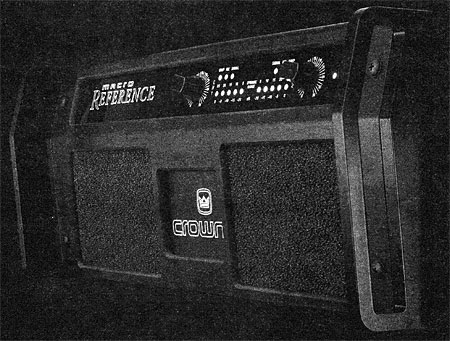
I received three Macro Reference amplifiers: one Studio and two Esoterics (for dual-mono application). Since I could detect no sonic difference between the Studio and Esoteric, I decided to stick with the latter, principally because it had four binding posts per channel; this made connecting my quad-wired B&W 800 speakers much easier. The rest of the system consisted of a Yamaha Pro DAT, Theta Data Generation II CD transport, Theta DS Pro Gen.III D/A processor, Krell PSB-32X D/A processor, Mark Levinson No.26S, Audio Research LS2B, and Krell KRC line-stage preamplifiers, Cello Audio Palette equalizer/line-stage, and Krell mono LF equalizers (for the B&W 800s). Acrotec, Monster, Cello, and AudioQuest interconnects were used during the six months it took to complete the review, plus AudioQuest speaker cables. A Krell KSA-250 (which was recently updated by the manufacturer and has been my reference since I sold my Mark Levinson No.23.5), an Audio Research D-400, and a pair of Boulder 500AE monoblock power amplifiers were regularly substituted for the Macro Reference for purposes of comparison.
Crown says that, in the dual-mono configuration, the parallel-mono mode should be used with speakers with less than 4 ohms and the bridged-mono mode with loads of 4 ohms or greater. I tried both, and found that the parallel-mono sounded marginally better with the B&W 800s, which present the amplifier with a nominal impedance of just over 4 ohms.—Lewis Lipnick