If you like 1970s rock music, particularly hard rock music, something you love was recorded or mixed in a Record Plant studio. If you have a favorite live album from the '70s or '80s, it was likely recorded by a Record Plant Mobile truck.
And if you've imagined a wild-and-crazy recording-studio scene from the '70s and '80s, the scene was all that and then some, a cocaine-fueled never-ending party/orgy with some great music made along the way. The gloriously depraved center of that universe was the Record Plant empire, with recording studios in New York, Los Angeles, and Sausalito, California, plus a fleet of recording trucks. The emperor of this music-making bacchanal was Gary Kellgren, one of the most talented and influential recording engineers who ever lived. His business partner, Chris Stone, was the empire's foundation, keeping it all afloat with clever wheeling and dealing while collecting millions of dollars from record companies to fund the endless hit-parade party.
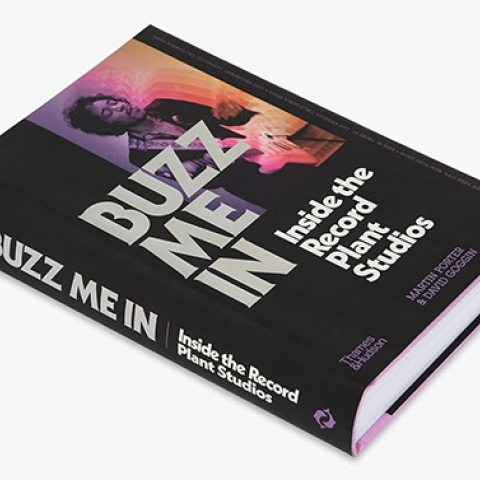
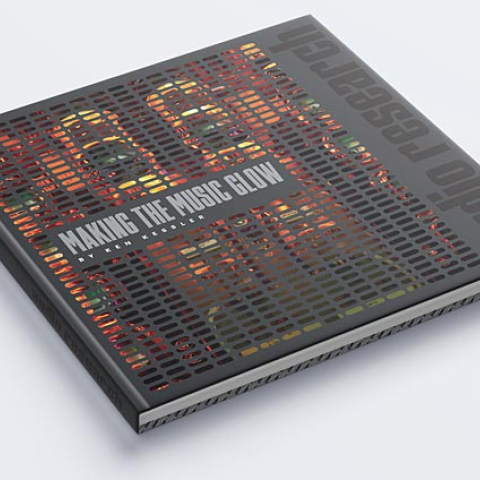
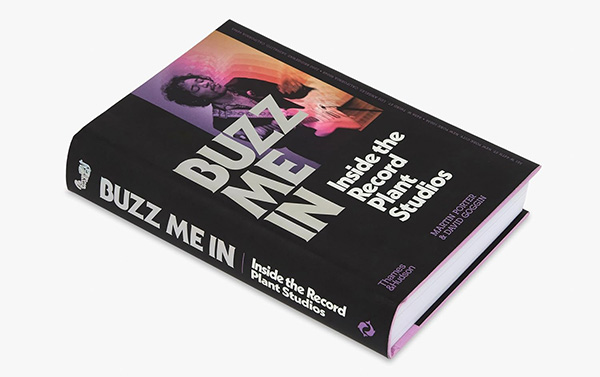
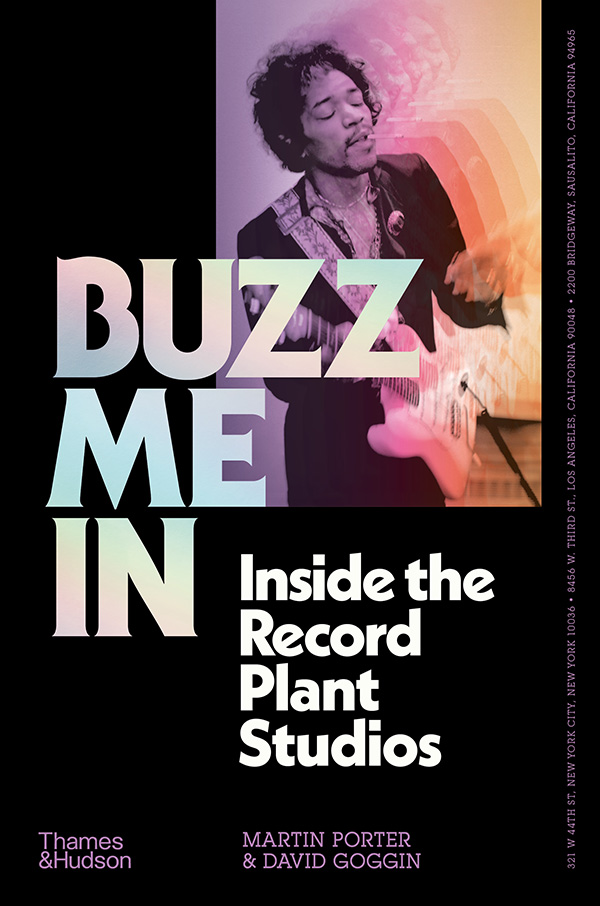
Buzz Me In, a new book by Martin Porter and David Goggin, documents the birth, rise, and fall of the Record Plant Studios empire, detailing and celebrating the drugs, sex, and rock'n'roll, for better or worse. Porter and Goggin's well-researched book is part informative music/recording history and part lurid scandal sheet, mixed in the perfect ratio with zippy text and smart organization. The book grew out of their website, Record Plant Diaries, which since 2015 has collected dozens of first-person recollections and photos.
The book is divided into chapters called "Tapes," with a list of albums and songs discussed at the top; corresponding Spotify playlists offer readers appropriate background listening (footnote 1). Reading Buzz Me In's 368 pages was like listening to a good rock album: It took just enough time to feel satisfied without getting bored. At the back of the book are nearly 20 pages of tiny-print footnotes and an index. Some solid research and fact-checking went into this, no doubt at least partly to fend off latent ire (and lawsuits) over the tales of excess and debauchery included.
To quote the book's prologue, "It began with Jimi." Hendrix's 1968 album Electric Ladyland was mostly recorded at Record Plant NY. These were the studio's first sessions, and they put it on the music-business map in a big way.
A few months before, Stone had met Kellgren, quit his marketing job at Revlon, borrowed $100,000 from the ex-wife of Revlon's founder (who was also an investor in the hit musical Hair), and funded construction of Kellgren and Hendrix's dream studio, which seemed as much musicians' hangout as professional recording environment. In fact it was a state-of-the-art facility, with a Scully 12-track tape machine and solid state console (footnote 2).
Kellgren and Stone opened Record Plant L.A. in December 1969. They fell in love with the West Coast music scene, and by 1972, Stone had arranged a deal whereby Record Plant NY was acquired by its chief engineer, Ray Cicala. Free from a bicoastal life, he and Kellgren built the Record Plant Sausalito in northern California.
The California Record Plants were designed as "residential studios." They included "motel rooms" for artists to write music, chill out, party, go on a bender, have sex, or crash. The L.A. studio had three themed bedrooms, rented at $50/hour: the Rack Room (suggestive of a S&M torture chamber); the Sissy Room (sky-blue walls with images of clouds and a skylight over the canopy bed); and the Boat Room (nautical themed with porthole windows). Each studio had on speed dial reliably solicitous drug dealers with reliably good stuff. The idea, paraphrasing the Eagles' "Hotel California," was to put musicians in a position to check in and never leave (footnote 3).
All the time musicians spent within the empire's domains was billable, and Stone collected piles and piles of money during the record biz's phat times. Kellgren spent it just as fast.
 The concept bore abundant creative fruit. For a time in 1977, Record Plant studios were involved in recording and/or overdubbing and/or mixing and/or mastering the majority of Billboard Top 200 songs. Here's a partial list of artists who made hits at Record Plant studios: Hendrix, Sly and the Family Stone, Stevie Wonder, John Lennon, Aerosmith, Alice Cooper, Bruce Springsteen, Fleetwood Mac, Eagles, Frank Zappa, Kiss, Blondie, Eminem, and Lady Gaga. Included in the book are color photos of many hit albums made at the studios—pages and pages of them.
The excesses eventually caught up with the Record Plant world. Kellgren died in 1977, accidentally drowned in his Hollywood mansion's swimming pool. The relentless economics of Manhattan real estate did in the NYC facility; it closed in 1987, though parts of it survive within Sony's Battery Studios mastering complex. Chris Stone sold Record Plant L.A. in 1989; it survived as a recording facility until 2024. Stone died in 2016. Record Plant Sausalito had a series of owners including the US government, which seized it when the then-owner was convicted of drug trafficking. It is now called 2200 Studios (footnote 4) and has "many of its original design details intact."
Like the Record Plant empire it chronicles, Buzz Me In balances fun and debauchery with solid factual knowledge and well-rendered art. It was a great read for this music fan, because it was well written and provides a wealth of music-related information amid the blow-by-blow (literally) accounts of those hepped-up wild days, now long past.
The concept bore abundant creative fruit. For a time in 1977, Record Plant studios were involved in recording and/or overdubbing and/or mixing and/or mastering the majority of Billboard Top 200 songs. Here's a partial list of artists who made hits at Record Plant studios: Hendrix, Sly and the Family Stone, Stevie Wonder, John Lennon, Aerosmith, Alice Cooper, Bruce Springsteen, Fleetwood Mac, Eagles, Frank Zappa, Kiss, Blondie, Eminem, and Lady Gaga. Included in the book are color photos of many hit albums made at the studios—pages and pages of them.
The excesses eventually caught up with the Record Plant world. Kellgren died in 1977, accidentally drowned in his Hollywood mansion's swimming pool. The relentless economics of Manhattan real estate did in the NYC facility; it closed in 1987, though parts of it survive within Sony's Battery Studios mastering complex. Chris Stone sold Record Plant L.A. in 1989; it survived as a recording facility until 2024. Stone died in 2016. Record Plant Sausalito had a series of owners including the US government, which seized it when the then-owner was convicted of drug trafficking. It is now called 2200 Studios (footnote 4) and has "many of its original design details intact."
Like the Record Plant empire it chronicles, Buzz Me In balances fun and debauchery with solid factual knowledge and well-rendered art. It was a great read for this music fan, because it was well written and provides a wealth of music-related information amid the blow-by-blow (literally) accounts of those hepped-up wild days, now long past.
Footnote 1: See open.spotify.com/user/31a2tp6pw7dbebarjey53jva umeu. Footnote 2: Hendrix dreamed of having his own studio, which led to the creation of New York's legendary Electric Lady Studios, which is still in business. Footnote 3: A widely circulated legend has it that the L.A. Record Plant is the model for the Eagles' "Hotel California"; the topic is addressed on page 303 of Buzz Me In. There's a notorious New Times Magazine portrait of Kellgren solidifying the mythology at luciantruscott.substack.com/p/inside-the-hotel-california. Footnote 4: See 2200studios.com.
The concept bore abundant creative fruit. For a time in 1977, Record Plant studios were involved in recording and/or overdubbing and/or mixing and/or mastering the majority of Billboard Top 200 songs. Here's a partial list of artists who made hits at Record Plant studios: Hendrix, Sly and the Family Stone, Stevie Wonder, John Lennon, Aerosmith, Alice Cooper, Bruce Springsteen, Fleetwood Mac, Eagles, Frank Zappa, Kiss, Blondie, Eminem, and Lady Gaga. Included in the book are color photos of many hit albums made at the studios—pages and pages of them.
The excesses eventually caught up with the Record Plant world. Kellgren died in 1977, accidentally drowned in his Hollywood mansion's swimming pool. The relentless economics of Manhattan real estate did in the NYC facility; it closed in 1987, though parts of it survive within Sony's Battery Studios mastering complex. Chris Stone sold Record Plant L.A. in 1989; it survived as a recording facility until 2024. Stone died in 2016. Record Plant Sausalito had a series of owners including the US government, which seized it when the then-owner was convicted of drug trafficking. It is now called 2200 Studios (footnote 4) and has "many of its original design details intact."
Like the Record Plant empire it chronicles, Buzz Me In balances fun and debauchery with solid factual knowledge and well-rendered art. It was a great read for this music fan, because it was well written and provides a wealth of music-related information amid the blow-by-blow (literally) accounts of those hepped-up wild days, now long past.
Footnote 1: See open.spotify.com/user/31a2tp6pw7dbebarjey53jva umeu. Footnote 2: Hendrix dreamed of having his own studio, which led to the creation of New York's legendary Electric Lady Studios, which is still in business. Footnote 3: A widely circulated legend has it that the L.A. Record Plant is the model for the Eagles' "Hotel California"; the topic is addressed on page 303 of Buzz Me In. There's a notorious New Times Magazine portrait of Kellgren solidifying the mythology at luciantruscott.substack.com/p/inside-the-hotel-california. Footnote 4: See 2200studios.com.