Miscellaneous

Sort By:  Post Date TitlePublish Date

Nordost QNet network switch & QSource linear power supply
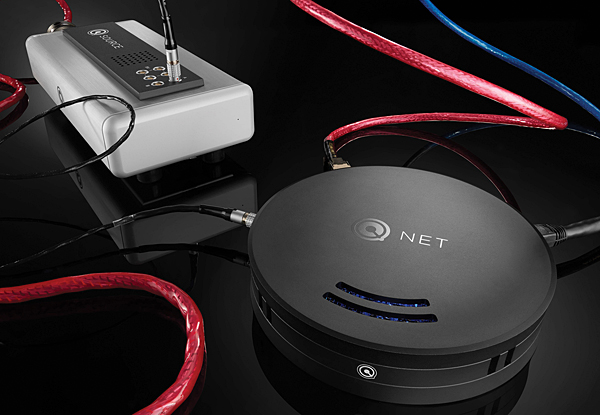
"A switch? Why do I need a switch?" That was my response to Meredith Gabor, head of marketing and PR for cable and accessories manufacturer Nordost, after she dropped the news. She had just arranged with Jim Austin for me to write a shorter, "ancillary" review of the new Nordost QNet Network Switch ($3199.99) with its optional QSource linear power supply ($2749.99) and premium QSource DC umbilical interface cables ($339.99 for 1m). Why did I need an expensive QNet switch when my router was functioning reliably? Good question.

The Mod Squad Tiptoes

Photo: "Still Life with Tiptoes"—John Atkinson

Memorandum:
To: Steve McCormack, Chief Designer, The Mod Squad

Dear Steve:

I cannot question the general value of Tiptoes in many specific applications. There are a great many areas where I, many other audiophiles, and a number of leading manufacturers have found that Tiptoes can improve any audio system in which the components are subject to. mechanical or acoustic vibration from speaker sound—that is, virtually any audio system.

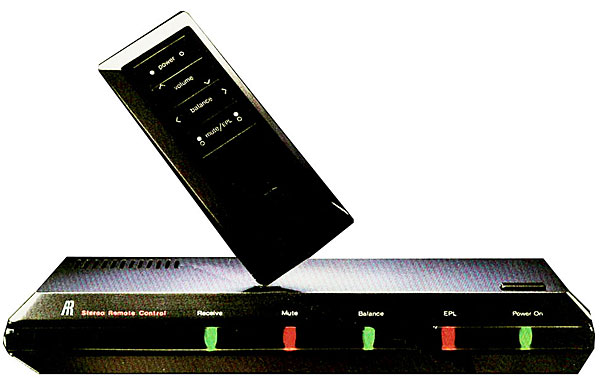
Acoustic Research Stereo Remote Control

Prologue: The context for this review is that back in the 1980s, preamplifiers and integrated amplifiers with remote controls didn't exist. In early 1985 I borrowed a sample of Acoustic Research's Stereo Remote Control, which I believe was designed by Ken Kantor (later to find fame with NHT) and set it up in my bedroom. It drove a pair of powered loudspeakers with auto turn-on, and I very quickly grew to appreciate, not just the sound quality, but the convenience of being able to control the system from the comfort of my bed. So what did JGH think of the SRC?—John Atkinson

Book Review: Chairman at the Board

Chairman at the Board: Recording the Soundtrack of a Generation, by Bill Schnee. Backbeat Books, 2021. 219pp. $24.49, hard cover; $21.49, Kindle e-book.

It was September 2012, and Sasha Matson and I were in Los Angeles to record the singers for his jazz opera, Cooperstown. We had already recorded the instrumental backing with engineer Mike Marciano at Brooklyn's Systems Two studio, and the venue for the vocal tracking sessions was Bill Schnee's studio in North Hollywood.

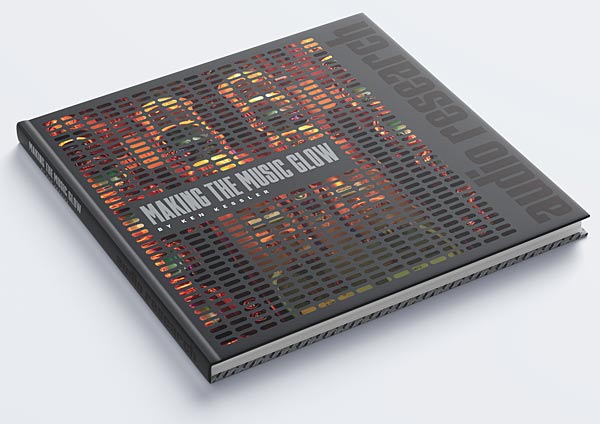
Book Review: Audio Research: Making the Music Glow

Book Review: Audio Research: Making the Music Glow
Written by Ken Kessler, designed by Henry Nolan. 220pp. $150. Available at Audio Research dealers and online at audioresearch.com.

I never met Audio Research Corporation founder William Zane Johnson, who died in 2011. But when he founded his now-legendary company in 1970, I and my ragged troupe of Dynaco modifiers were in the trenches, fighting the sand-warrior hordes during the first transistor onslaught.

FollowUp RoundUp

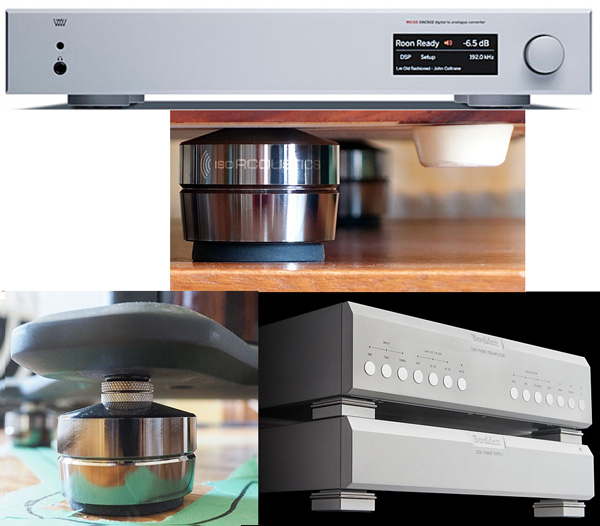
When Stereophile publishes followup reviews of various kinds in the print magazine, we add the followup as a "child page" to the full review. That means that they don't appear on the website's home page and might get missed. The October 2020 issue included three followups: of the Boulder 2108 phono preamplifier, the Weiss DAC502 D/A processor, and the IsoAcoustics Gaia loudspeaker isolation feet.

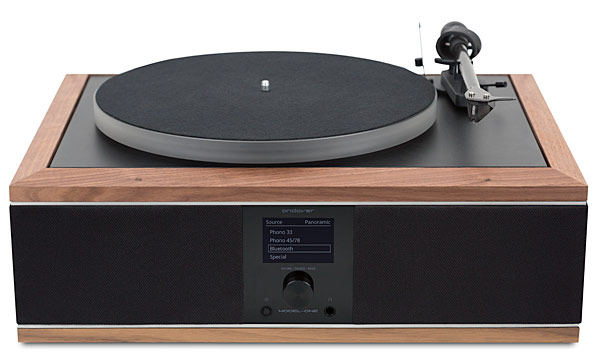
Andover Model-One turntable music system

Apart from the Beatles and Hendrix I heard in my audiophile father's basement, one of my earliest rock'n'roll memories involved a multipurpose record player at school. In third grade, six of us were moved as a separate group to a round table to watch a filmstrip in a darker part of a large, open-plan classroom. A clunky old record player in a self-contained carrying case with a half-dozen headphone jacks sat on the table.

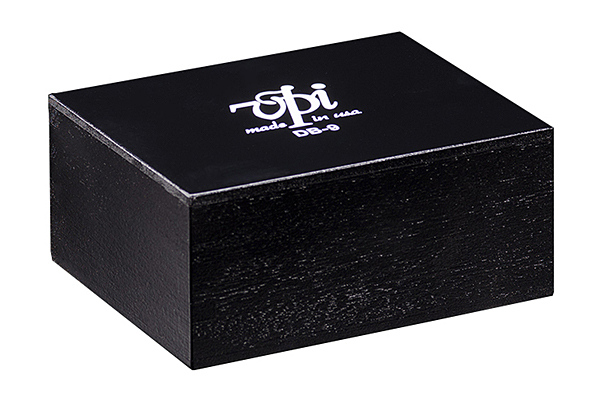
VPI Magic Brick

The VPI Magic Brick is an 8lb block of steel laminations, about 5" by 3" by 2", encased in a nicely-finished oak box for aesthetic appeal and for protecting whatever the brick is sitting on from scratches. Placing the Brick over the power transformer of a piece of electronic gear is supposed to improve the sound of your stereo system.

Book Review: Hi-Fi: The History of High-End Audio Design

Hi-Fi: The History of High-End Audio Design, by Gideon Schwartz, Phaidon Press, 2019. 272pp. $84.97, hard cover.

The ongoing evolution of hi-fi can be measured in any number of ways. Most obviously, we see that evolution in the technologies associated with our industry: in big breakthroughs—mono to stereo, tubes to transistors, analog to digital—as well as incremental improvements in materials and manufacturing techniques.

Advertisement
Advertisement
Advertisement