LATEST ADDITIONS

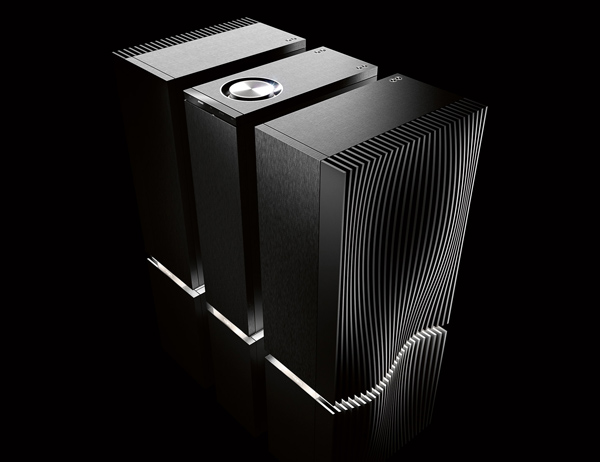
Krell Solo 575 monoblock power amplifier

Class-A amplifiers have a well-deserved reputation for being power guzzlers that run hot enough to burn fingers. They're inherently inefficient because their output devices conduct full current at all times, and much of that current is dissipated as heat—requiring, in the case of class-A solid-state amplifiers, massive heatsinks. This is why class-A amps tend to produce relatively low power, and tend to be heavy and expensive to buy and run. And these days, energy inefficiency is out of fashion.
Continue Reading »

Antipodes DX Reference music server

Perhaps because I grew up in post-WWII England, with austerity and food rationing the norm, I learned at an early age the value of frugality. It was a financial stretch for me to buy, in the late 1960s, my first real audio system: Garrard SP25 turntable with Audio-Technica cartridge, Kenwood integrated amplifier, Wharfedale Super Linton speakers. Even when I could afford to upgrade the system, other than replacing the Garrard with a Thorens TD 150 and the Audio-Technica with a Shure, I went the DIY route. Back then, in the early '70s, I assumed that the advent of op-amp chips like the Fairchild Semiconductor µA741 would make it possible for me to design and make, for example, a good-sounding preamplifier for a lot less than it cost to buy one from an established manufacturer. That assumption turned out to be wrong, of course, but frugality was, by then, a habit: too ingrained for me to shake entirely.
Continue Reading »

Roon Labs Roon v.1.0 music-playback app

There are dozens of music-playback programs for computers, touchpads, and smartphones, ranging from Amarra, Audirvana, JRiver, Pure Music, and VLC, which manage libraries or work with library software, to programs that are integrated with a specific distribution service: Pandora, Spotify, Tidal, and, of course, iTunes. Still others, such as Sonos, are integrated with a dedicated hardware product.
Continue Reading »

Dave Brubeck, Jazz Goes to College on vinyl

Here comes another audiophile vinyl-reissue house, this one a bit of a head-scratcher. Analog Spark, the creation of Marc Piro (and a successor to his Razor & Tie label), debuted a few months back with The Sound of Music (missed it) and will soon come out with Glenn Gould's renditions of Bach's Goldberg Variations (the 1955 and 1981 versions), then a slew of Broadway cast albums (West Side Story, My Fair Lady, and A Chorus Line, among others). And, for now, it has a jazz album: Dave Brubeck's 1954 Jazz Goes to College.
Continue Reading »

The Next Wave

I began working as a salesman of high-end audio gear in 1978. I was 29, and, as I recall, a healthy percentage of my customers were about my age. Most of the top high-end designers and entrepreneurs, too, were young: John Curl, Dan D'Agostino, Jon Dahlquist, Ray Kimber, Mark Levinson, Bill Low, Mike Moffat, Nelson Pass, Peter Snell, Bob Stuart, Jim Thiel, Ivor Tiefenbrun, A.J. van den Hul, Richard Vandersteen, Harry Weisfeld, David Wilson. The fact is, high-end audio's Golden Age—the late 1970s to the mid-1980s—was largely fueled by the under-40 set, and most high-end journalists were fellow baby boomers. Now we're all oldsters, with just a smattering of under-fortysomethings. That's about to change.
Continue Reading »

Recording of October 2015: Time Present and Time Past

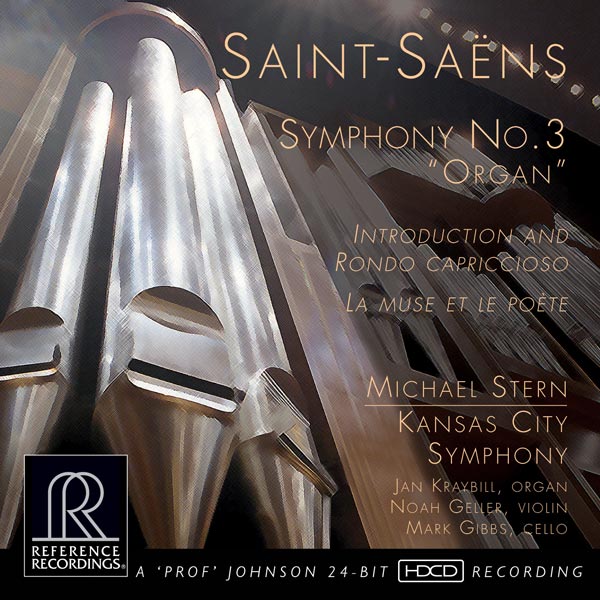
Mahan Esfahani: Time Present and Time Past C.P.E. Bach: 12 Variations on "Les Folies d'Espagne." J.S. Bach: Harpsichord Concerto in d, BWV 1052. Geminiani: Concerto Grosso in d (after Corelli). Górecki: Harpsichord Concerto. Reich: Piano Phase for Two Pianos (harpsichord version: Esfahani). A. Scarlatti: Variations on "La Folia."
Mahan Esfahani, harpsichord; Concerto Köln
Archiv Produktion 4794481 (CD). 2015. Christoph Classen, prod.; Michael Morawietz, eng. DDD. TT: 73:45
Performance ****½
Sonics *****

This razzle-dazzle release is remarkable on several levels, and I wouldn't be surprised if it converted harpsichord haters to harpsichord hipsters. Iranian-American harpsichordist Mahan Esfahani, stealing a quote from T.S. Eliot about the relevance—or irrelevance—of time and (while he's at it) the harpsichord, here presents the instrument in works written for it in the 17th and 18th centuries, interspersed with pieces by two 20th-century composers. (The album's title references these lines from Eliot's Four Quartets: "Time present and time past / Are both perhaps present in time future, / And time future contained in time past.") Esfahani's argument holds water: bringing an "olde" instrument into the present with unflinchingly contemporary music turns this debut solo-recital disc into a splendid event—and, yes, proves that baroque music, with its repeating patterns, can make a fine pairing with minimalism. It's all far less jarring than you might think, and does provoke thoughts about the slippage of time.

Continue Reading »
Advertisement
Advertisement
Advertisement