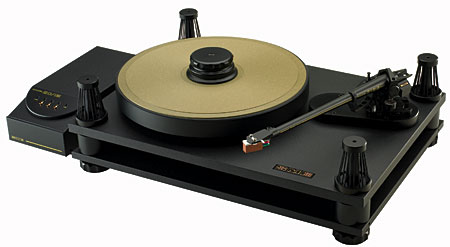
VPI Classic 3 turntable & Classic-JMW tonearm
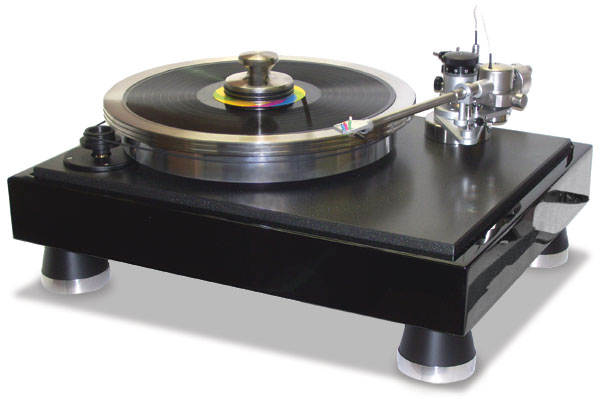
Trends in turntable design shift back and forth over time, each "advance" turning out to be a mostly sideways move. Over its long history, VPI's founder and designer, Harry Weisfeld, has moved the analog goalposts back and forth as he's refined his thinking. His early turntables were mostly standard spring-suspension designs of normal size. By the time Weisfeld produced his fully tricked-out TNT model, which was originally designed to stably hold the heavy moving mass of Eminent Technology's ET2 air-bearing arm, he'd moved to a massive, oversized, sandwiched plinth with isolating feet at the corners. He first used springs and, later, air bladders originally designed to cushion a tractor-trailer's load, and which he'd found in a trucker's supply catalog. Via an O-ring, the TNT's outboard motor drove one of three pulleys that protruded from holes in the plinth, and attached to a T-shaped subchassis that, in turn, drove the other two pulleys via two additional O-rings.
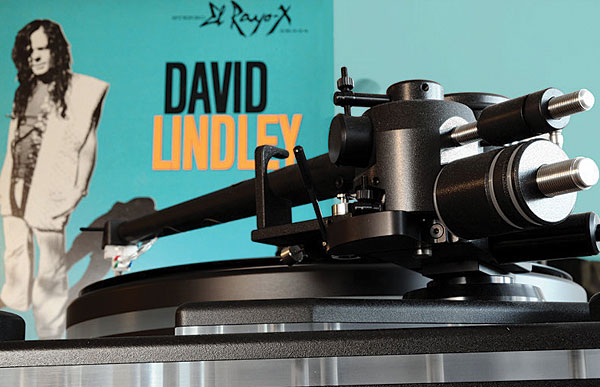
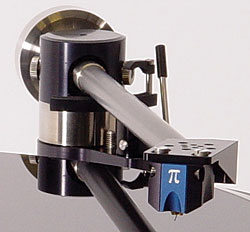 Brinkmann's 9.6 tonearm ($3990) resembles the German company's longer, more expensive 10.5 and 12.1 arms, which in turn resemble the legendary Breuer. The new arm includes the same headshell, armtube, mounting socket, and cueing device used in the other arms. The bearing system differs, though the Swiss-made ball bearings are identical.