Tonearm Reviews

Sort By: Post DateTitle Publish Date

Spin Doctor #26: The Sorane TA-1 tonearm and the Ortofon MC 90X phono cartridge


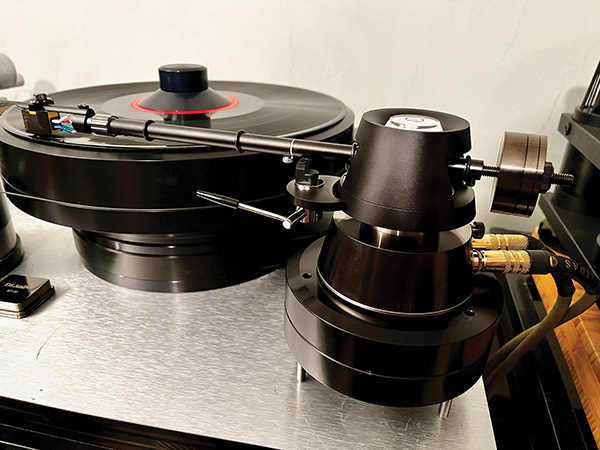
A friend who sells high-end audio gear once pointed out that people who shop for separate tonearms are very different from those interested in phono cartridges or turntables in general. If you think about it, this makes sense. Almost everyone buying a new turntable needs a cartridge to go with it, and most turntables come equipped with a tonearm. Tonearm shoppers are more avid enthusiasts than general consumers.


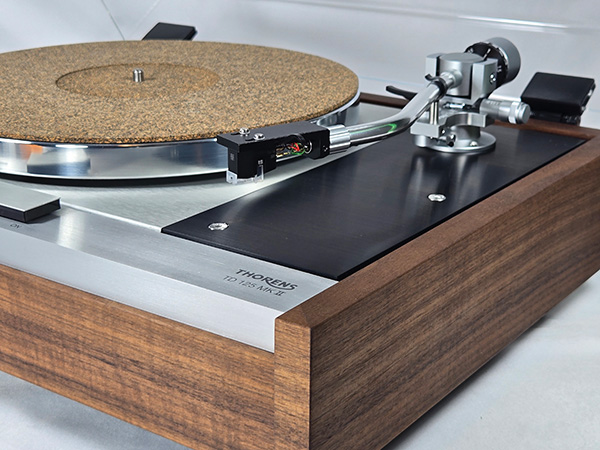
It wasn't always that way. In earlier days of high fidelity, 60 or more years ago, people putting together a cutting-edge phono playback system would typically buy what was known as a motor unit: a Thorens TD 124, Garrard 301, or a few years later the Garrard 401 or Technics SP-10. They would match it up with a tonearm from a company like SME or Ortofon.
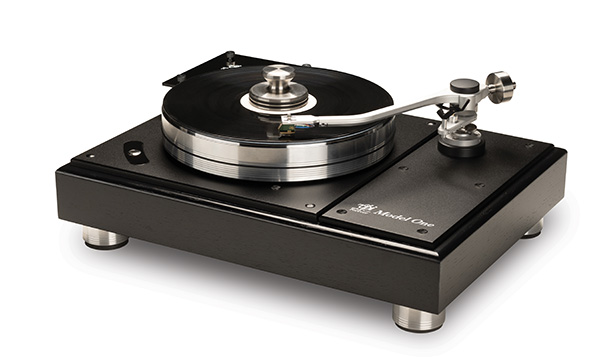
VPI Forever Model One Record Player

The first commandment for a Stereophile reporter is to remain neutral about any product under review. But when a company has a history of making things you like, that isn't always easy to do.


Reviewing the VPI Avenger Direct turntable with its 12" FatBoy tonearm, I concluded, "The Avenger Direct recasts records I thought I knew well, revealing secrets and expressing a purer sense of each one's interior life." Covering the VPI Scout 21 for Stereophile's sister website, AnalogPlanet in October 2024, I wrote, "this $3300 table seriously swung and played it all warm and toasty, displaying a big heart. I would even say it displayed an inherent love of music, reflected in its wide rhythmic gait and warmhearted embrace of the LPs I spun on it. The 21 'table is quite the fine fit in the VPI sound family."


Despite my scarcely contained enthusiasm for these previous VPI products, I promise an unvarnished take on the Forever Model One turntable ($5250), which builds on one of the company's long-ago bestsellers, the HW-19, which was first produced in the early 1980s.

J.Sikora Standard Max Supreme turntable, KV9 Max Zirconium tonearm

In his review of the J.Sikora Initial turntable, Stereophile's resident artist/sage Herb Reichert wrote, "Extended bathing, lighting candles, making tea, and preparing food are ritual work forms that prepare my senses to accept both pleasure and illumination."


When it comes to playing records, I too have a ritual. It involves carefully cleaning the vinyl, first on a Pro-Ject VC-33, followed by immersion in a HumminGuru Ultrasonic vinyl cleaner. Before and after, I inspect the record's grooves with a pricey VisibleDust Quasar R magnifier. Only then—black coffee hot, glasses cleaned, stylus brushed free of contaminants, notepad at hand—am I ready to receive the messages ingrained in a shiny black vinyl disc.

Spin Doctor #21: the Kuzma Safir 9 tonearm

The British audio scene from the late 1970s through the mid-1980s was pretty strange. Audio as a hobby was a big deal, with widespread appeal to a much younger crowd than today. Audiophiles were guided by a flurry of what my friends called "hi-fi pornos," audio magazines that filled the racks at the newsagents.


Far more than you see today, there was a strong nationalist bent, with some writers displaying an open bias against anything that wasn't British. Magazines' editorial departments presented readers with a clear, specific doctrine of how a system should be built and what components readers should acquire.


As a schoolboy with no system of my own, I lapped up these suggestions, and when I returned to the US in 1980 to attend university, I was finally able to start building a system that conformed to the system-building rules that had been drilled into me.

MoFi Electronics MasterDeck turntable

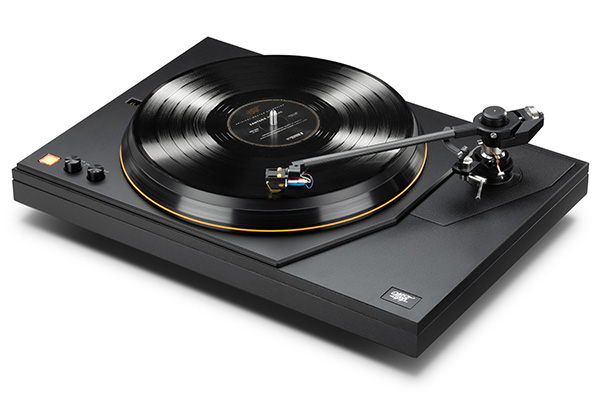
Perhaps the most intriguing aspect of the MoFi Electronics MasterDeck turntable ($5995), as the brainchild of Allen Perkins in his role as MoFi's Chief Analog Designer, lies in the question of how his background as a jazz drummer has shaped his approach to turn table design. How does the rhythmic sensibility of a percussionist translate into the meticulous engineering of a turntable?


"It's a little complicated," Perkins wrote over email. "Being a drummer, I am sensitive to timing in music, so it makes me sensitive to problems. However, it does not provide any direction for solutions. It could be seen as an annoying awareness as a listener, like perfect pitch. In my case, it is an advantage because I love to solve problems, in general, so I persevere and have a built-in sense to assess what I've done."

Gramophone Dreams #92: Technics SL-1300G record player

Like romance or car racing, the act of playing records is tactile by design. Like drifting through curves or making out, spinning vinyl is a learned skill that requires users to touch everything with practiced assurance.


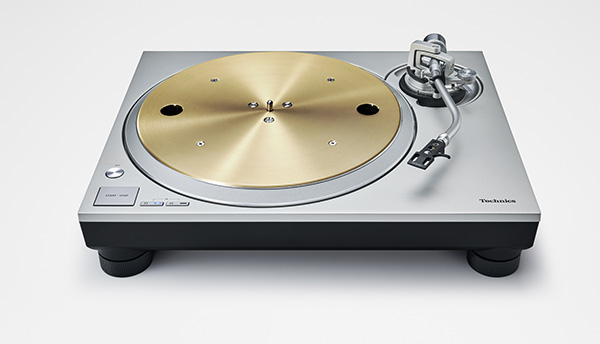
To play a disc with Technics' new SL-1300G record player means pushing its round On button, then touching one or more of its rectangular speed selector buttons, then pushing the big square [Start:Stop] button, then unclamping the tonearm and using its cue lever to raise it up.


Next comes the part where my heart beats a little faster: using the headshell's fingerlift to position the arm over the disc and lower it into a groove.


When the needle contacts the groove, the whole system kicks in and sound comes out.

Clearaudio Signature turntable & Tracer tonearm

In midsummer 2022, I reviewed the German-made Clearaudio Reference Jubilee turntable, a $30,000 vinyl virtuoso that played music with clear-headed realism, brain-opening transparency, and lifelike speed and dynamics. Its performance was nothing short of exhilarating. It was one of the top three turntables I had ever laid my ears upon.


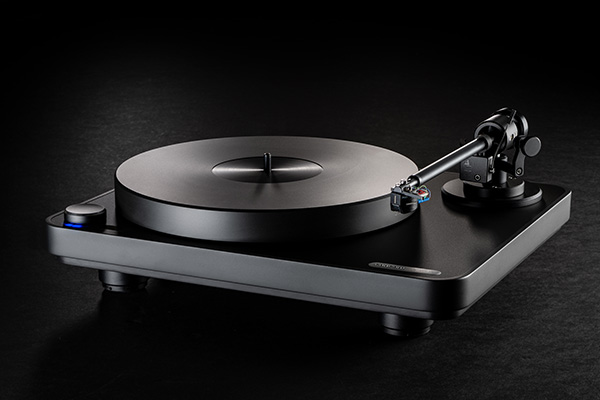
Clearaudio's house sound, whether from the affordable to the mortgage-busting, is one of refinement, lucidity, clarity, precision, and quietness. Which brings us to the Clearaudio Signature turntable, a joint offering from Clearaudio GmbH and its US distributor, Musical Surroundings.

Spin Doctor #17: Paging Dr. Löfgren, ViV Laboratory's Rigid Float 9ha tonearm

It started one evening when I was killing time watching YouTube videos and stumbled across a 2017 talk given by Jonathan Carr, Lyra's brilliant cartridge designer (footnote 1). After discussing his design and Lyra's manufacturing processes for about 18 minutes, Carr opens the floor to questions. Someone asks which of the many cartridge setup parameters he feels is the most important. I was floored when the first thing Carr said was that "horizontal tracking error is not very important at all." What? I couldn't believe I was hearing this from the guy who writes owner's manuals with super-specific specifications, like tracking force measured to a 100th of a gram and loading recommendations with wide but oddly specific ranges like 97.6 to 806 ohms. Did he really believe that the tonearm geometry calculations of Löfgren, Stevenson, et al, weren't such a big deal?


For decades I have painstakingly used the best tools available to perfect these settings with every cartridge I install; now a guy whose opinion I respect deeply is saying it's not very important.

EMT 928 II record player

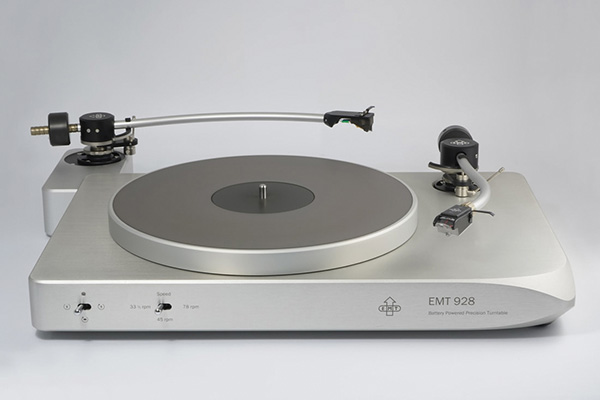
Modern turntables are a paradox. The ever-evolving technology beneath their sleek exteriors fascinates me. The high-end turntable market these days can feel less like a haven for music lovers and more like a brutalist arms race in pursuit of maximum audio extraction.


Yet, it's not all about performance. Many new 'tables are adorned with outlandish, purely cosmetic flourishes that cause me to chuckle. Some super-bling record players, with their jutting angles and industrial menace, evoke the chrome carcass of the Battlestar Galactica, a testament to mechanical might. Others are even more menacing, channeling the mirror-finish abyss of Darth Vader's helmet, gleaming with a promise of sonic domination—but is that an invitation or a threat?


Setting aside those cosmetic affectations, it's a war, and the enemy—well, the main enemy anyway—is vibrations, which may seem strange considering that vibrations are the whole point of the endeavor.

Spin Doctor #13: Acoustic Signature Verona NEO turntable, TA-5000 NEO, TA-7000 NEO tonearms, Ultra Carbon TC-40 record weight

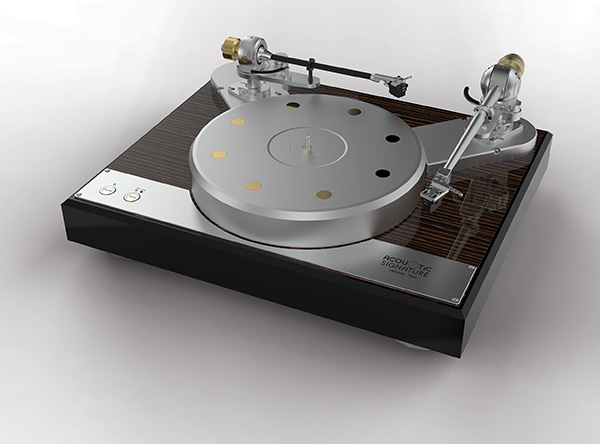
I sometimes joke about how audio designers create products that resemble themselves, not just in how they look, but also in the design approach used, and especially the way they sound. So, we have tall, cool, pragmatic Scandinavians making gear like the lean, elegant Børresen loudspeakers, while the Italians build luscious curvy equipment endowed with natural wood and leather, like Sonus Faber speakers and Unison Research amplifiers. Continuing this blatant stereotyping, we have Acoustic Signature founder Gunther Frohnhöfer, a stout German known for creating precision-built turntables that are as solid-looking as he is.


When I visited the Acoustic Signature factory in 2023, I watched as they hewed massive slabs of aluminum into beautiful, heavyweight turntables. This approach is the opposite of the lightweight-but-rigid philosophy embraced by Rega, and while the resulting performance has different strengths, I would argue that it is at least equally valid. As with Rega, Acoustic Signature products have a purposeful simplicity, in a way that would allow a nonaudiophile to instantly recognize what their function is.

Advertisement
Advertisement
Advertisement