Tonearm Reviews

Sort By: Post DateTitle Publish Date

Listening #151

Before hitting the Refresh key on last month's column, which was dedicated to the challenges one encounters when evaluating audio cables and other accessories, I'd like to share with you a true story: a cautionary tale, as it were, about the hazards of writing reviews for a living.


Seven or eight years ago, just as spring was returning to upstate New York, I made my annual trek to Montreal for Salon Son et Image: one of my favorite audio shows for a number of reasons, not the least being the fact that I can travel there by train.
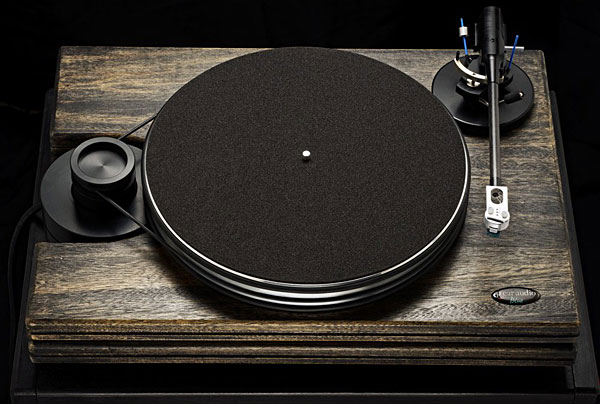
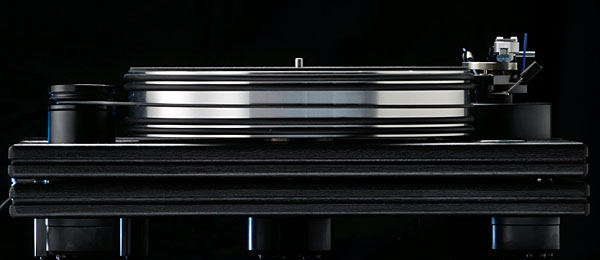
Pear Audio Blue Kid Howard turntable & Cornet 2 tonearm

There's nothing new under the sun, or so we are told. Nevertheless, in the early 1990s, a British designer named Tom Fletcher upset the audio status quo with a turntable that combined otherwise-familiar elements in a manner that was, at the very least, new with a lower-case n. Fletcher's product, the Space Deck, was perhaps the first original design in British phonography since the Roksan Xerxes of 1985; and his company, Nottingham Analogue, went from nothing to something in no time at all.

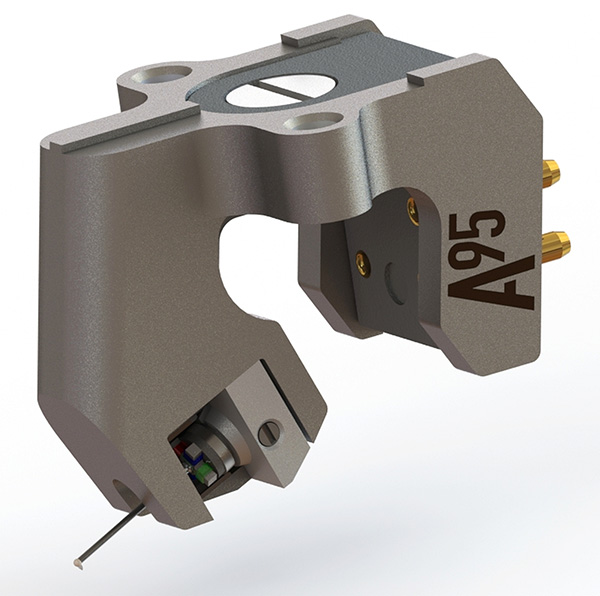
Analog Corner #237: Ortofon MC A95 phono cartridge, Brinkmann Audio Spyder turntable and 12.1 tonearm

It's difficult to believe that more than five years have passed since Ortofon introduced its ground-breaking MC A90 moving-coil cartridge ($4200 when last available). The limited-edition MC A90, with its radically shaped body made of powdered stainless steel Selective Laser Melting (SLM), celebrated Ortofon's 90th year in business. The MC A95 ($6500), celebrating their 95th year, retains the A90's seductive shape, but the new body is built of powdered titanium, and thus is even more effectively self-damped.

Listening #145

Kids, you tried your best and you failed miserably. The lesson is: Never try.—Homer Simpson


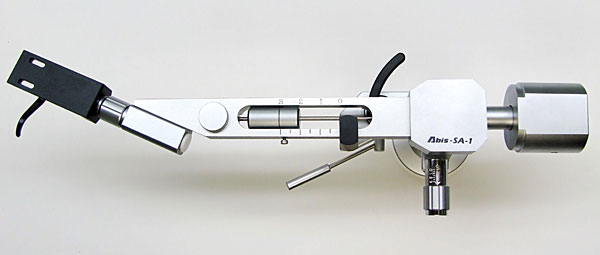
Months ago, as we put together the most recent installment of "Recommended Components," Phillip Holmes, of Mockingbird Distribution, got in touch and asked if we would please remove from our list the Abis SA-1 tonearm, which Mockingbird distributes (and which I first wrote about in our March 2014 issue, footnote 1). As it turns out, Abis is making some changes to the arm, and Holmes didn't think it would be right to let the recommendation endure until we'd had a chance to try the new one.

Analog Corner #233: Pear Audio Blue Kid Thomas turntable & Cornet 2 tonearm

Pear Audio Analogue's Peter Mezek can keep you up all night spinning fascinating turntable tales. Had my mind not been numbed by Sunday evening, October 12, the last day of the 2014 Rocky Mountain Audio Fest, I might have insisted that he do just that.


Over dinner that evening he regaled Pear Audio's North American importer, Michael Vamos of Audio Skies, and me with turntable stories dating back to the late 1970s and the Linn Sondek LP12, which, until the early '80s, he distributed in Czechoslovakia. In the mid-'80s, Mezek was involved in the development and distribution of the Rational Audio turntable, designed for Mezek by Jirí Janda (pronounced Yeerzhee Yahnda), who died in 2000. For those of you old enough to remember, Janda, a founder of NAD, designed that company's 5120 turntable; among other features, it had a flat, flexible, plug-in tonearm that you could easily swap out, much as you can with VPI's current models.

Analog Corner #232: HiFiction Simplicity II tonearm, Miyajima Labs Madake phono cartridge, Rogers High Fidelity PA-1A phono preamplifier

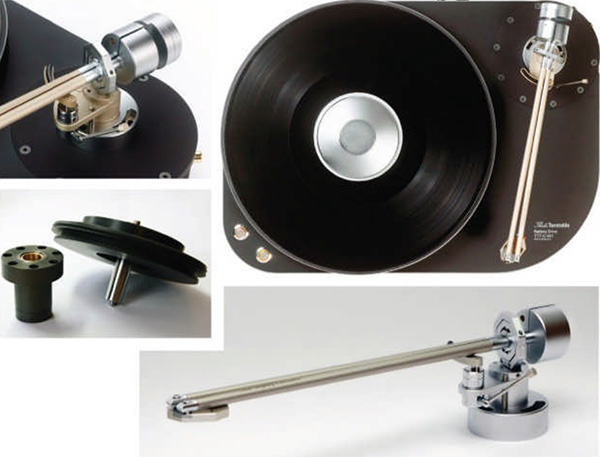
In my January 2014 column, I reviewed HiFiction's Thales TTT-Compact turntable and Simplicity tangential-tracking pivoted tonearm, an intriguing combo from Micha Huber, a talented Swiss watchmaker turned turntable designer.


The TTT-Compact's particulars, including its battery-powered motor and exceptional ease of setup, are described in detail in that review, which includes a link to a useful animation that shows how the design, as Huber says, "reduces the perfectly tangential tracking to pivot points, while the pick-up cartridge is taken and aligned on the Thales' Circle."


Suffice it to say that while the HiFiction tonearm is named Simplicity, its design is anything but.

Analog Corner #231: Palmer Audio 2.5 turntable & Audio Origami PU7 tonearm

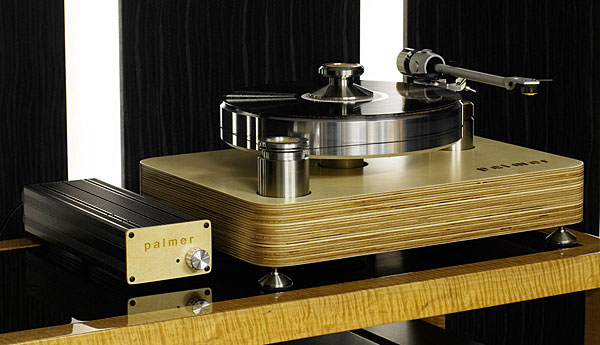
Palmer Audio's 2.5 turntable, with its laminated plinth of Baltic birch and metallic features, looks Scandinavian but is made in the UK. It shares a few conceptual similarities with the turntables made by Nottingham Analogue, another British brand. The review sample had the optional side panels of cherrywood veneer.

Listening #142

". . . with faithfully replicated artwork."


That's how a press release, dated June 16 of this year, described the manner in which the next wave of Beatles LPs—mono releases claimed to be mastered direct from the original analog mixdown tapes, and not the 44.1kHz digital files that Apple Records and Universal Music Enterprises (which now owns EMI) considered good enough for their last wave of Beatles LPs—are being packaged for sale. Hope, as Emily Dickinson once observed, is that thing with the feathers. Which, as we all know, evolved from the dinosaurs.

Analog Corner #228: A Challenge to Dogma, the ViV Laboratory Rigid Float tonearm

At the 2013 High End Show, in Munich, a tonearm designer displayed a pivoting tangential tracker. A nearly invisible length of monofilament wrapped around the arm's perimeter controlled the pivoting headshell of the box-girder–like arm.


It may very well have worked as promised, but was it practical? And with so many tiny moving parts, would it sound any good? I don't know—it was a silent display—and inquisitive attendees kept bumping the difficult-to-see monofilament, dislodging it from its track.


The odds weren't good that this contraption, however well intended, would ever get past the prototype stage, though I was going to look for it at the 2014 Munich show, in May. Sometimes, designers obsessed with one particular performance parameter lose sight of the forest for the trees.


The designer of ViV Lab's Rigid Float tonearm, Koichiro Akimoto, also had in mind an unusual design goal, based on his belief that the geometry of pivoted tonearms, as we know it, is wrong.

Analog Corner #227: VPI JMW Classic 3D 12" tonearm

In 1995, Harry Weisfeld's son Jonathan was killed in an automobile accident. Jonathan was a charismatic young man whom I had come to know—a genuinely gifted artist and musician who, at the time of his death, was helping his father develop the tonearm that would be named for him: the JMW Memorial Arm. The design of the original JMW Memorial Arm focused on providing easily adjustable and repeatable VTA and SRA via a massive threaded tower that bolted to the plinth. The bearing point, on the other hand, sat near the end of a relatively long and not particularly rigid metal platform cantilevered off the VTA/SRA tower.
Advertisement
Advertisement
Advertisement