Tonearm Reviews

Sort By: Post DateTitle Publish Date

Analog Corner #314: OMA K3 turntable & Schröder tonearm
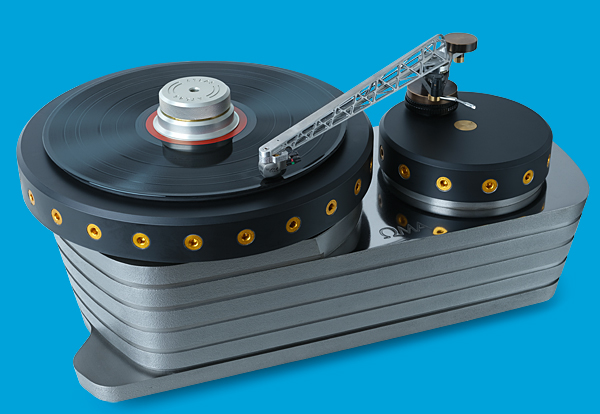
If you're going to spend a year-plus in COVID lockdown, it doesn't hurt to have a million dollars' worth of turntables keeping you company, right? That's been my good fortune. Sounds like a roomful, but it's only three: the SAT XD1, the TechDAS Air Force Zero, and the OMA K3 ($360,000, footnote 1).


You'll find this issue's cover girl either strikingly beautiful or homely. Visitor reactions fall strongly into one of those two camps, with nothing in between. I love the looks. Whatever your opinion, the K3's visual distinctiveness cannot be denied. The innards are equally unique.
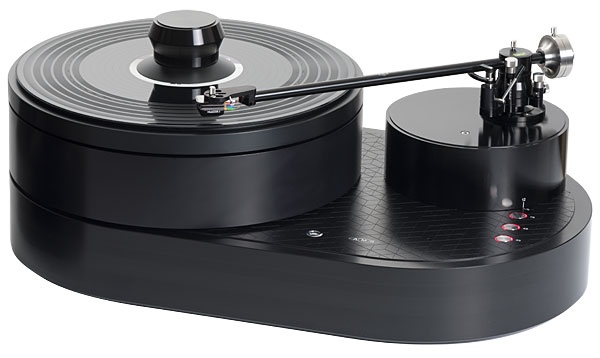
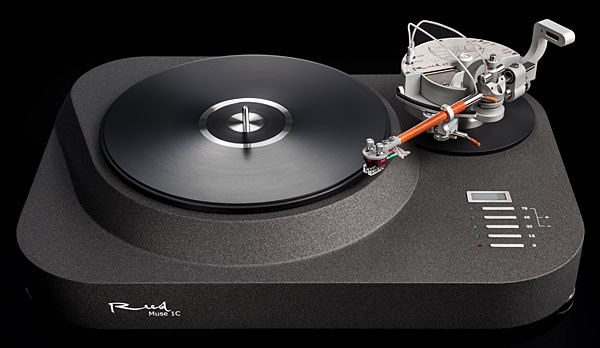
AMG Viella Forte turntable and 12JT tonearm

German engineering acumen and machining excellence—acknowledged and admired worldwide—are nowhere to be seen on AMG's flagship Viella Forte turntable and new 12JT tonearm. That's because, while what's on the surface is cosmetically and mechanically well-turned, the design features and precision engineering that set AMG's turntables and tonearms apart are inside and hidden from view.

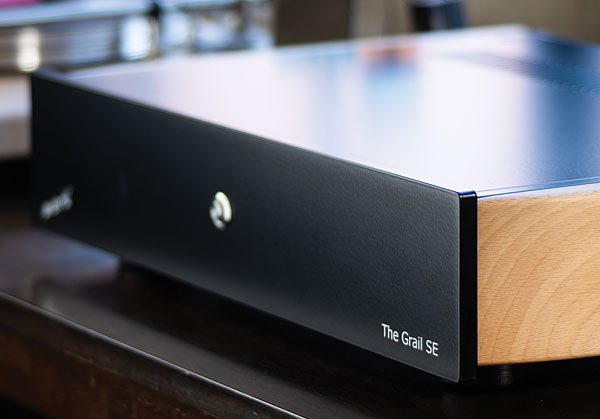
Analog Corner #297: van den Hul The Grail SE+ phono preamplifier & SAEC WE-4700 tonearm

The catastrophic February 6 fire at the factory where Apollo Masters produced LP-mastering lacquers—flat aluminum discs covered with nitrocellulose lacquer—will be old news by the time this column gets to you, but the repercussions of the loss will be ongoing for at least the next year and probably beyond.

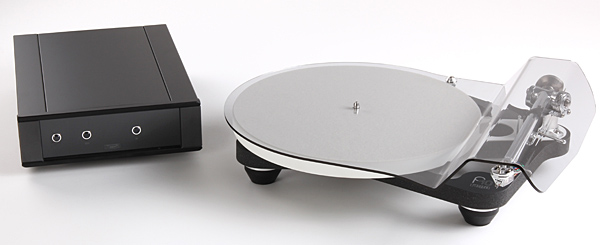
Analog Corner #295: Rega Planar 10 turntable, RB3000 tonearm, Apheta 3 phono cartridge

Lately it seems that the more Rega charges for one of its turntables, the less you get—and from Rega's performance perspective that's a good thing.


While some turntable designs pile on the mass, hoping to tame resonances and better isolate the record from the outside world, Rega has long advocated ultralow-mass designs. What's up with that?

Analog Corner #294: TechDAS Air Force One Premium turntable & Graham Engineering Elite tonearm

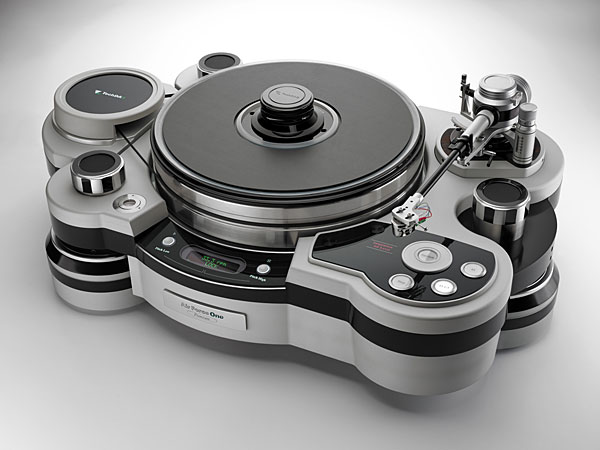
In 2013, when I first wrote about it (footnote 1), the TechDAS Air Force One ($105,000) was that company's best and most expensive turntable; it joined the handful of products that have earned an A+ in our semiannual Recommended Components feature—a rating that remained in place for six years. But too much time has passed since the Air Force One was auditioned by a Stereophile writer, so it has now fallen from that list.

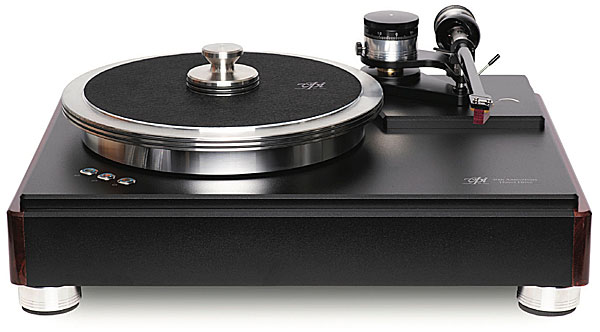
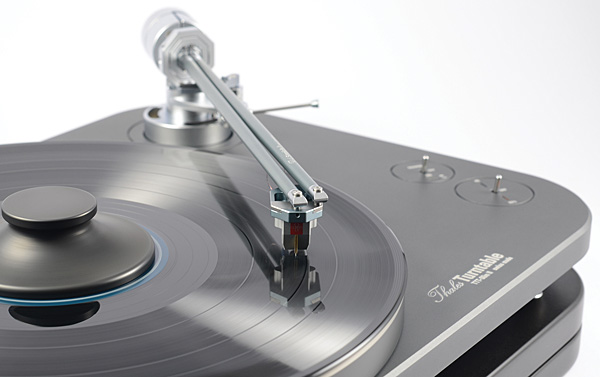
HiFiction Thales TTT-Slim II turntable & Simplicity II tonearm

Money, that unreliable buyer of happiness, has at times proven effective at delivering good sound. It can buy other things, as well: Audiophiles can swap cash for products that function as objets d'art, as status symbols, or even as canny investments.


But—do you think money can buy peace of mind for the audio enthusiast who frets over binding voice-coils, leaking capacitors, drifting resistor values, oxidizing connectors, aging or incorrectly biased tubes, and that most pernicious worry of all, distortion and premature record wear from incorrectly aligned phono cartridges? Sadly, most of those neuroses, some quite reasonable, remain unaddressed by cash almighty.

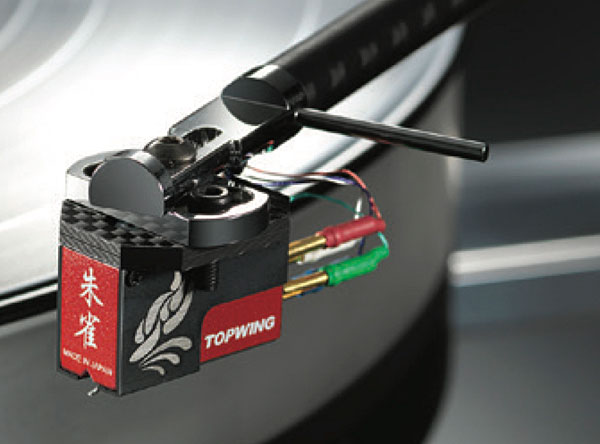
Analog Corner #285: Top Wing Suzaku, HiFiction Thales, Analysis Plus

For a phono cartridge to generate current and voltage, something must move: a coil of wire (as in a moving-coil cartridge), or a magnet (as in a moving-magnet type), or a tiny piece of iron (a moving-iron type). In those rare cartridges that depart from the electricity-generating principle of the ones described above, it can be a displacement-measuring device in which a moving shutter modulates a light source to vary a supplied voltage (as in an optical cartridge), or one in which voltage is modulated when a tiny chip of silicon crystal is squeezed by a moving element, which varies the chip's electrical resistance (as in a strain-gauge cartridge). But regardless of what it is that moves in a cartridge, something has to.

Listening #197: Simon Brown & The Wand tonearm

There's a noise I make when I'm having trouble with something inanimate: a deep, growly huff that starts in my diaphragm and comes out in one or two quick, staccato bursts. I huff this huff when I drop a tool or can't budge a seized bolt or the bottom falls out of a trash bag. It annoys my family and scares my dog.


I made that noise at least a half-dozen times while installing and setting up the Wand, a unipivot tonearm designed and manufactured by Design Build Listen Ltd., in Dunedin, New Zealand.

Advertisement
Advertisement
Advertisement