Turntable Reviews

Sort By: Post DateTitle Publish Date

Analog Corner #240: Sperling-Audio L-1 turntable and TA-1 tonearm
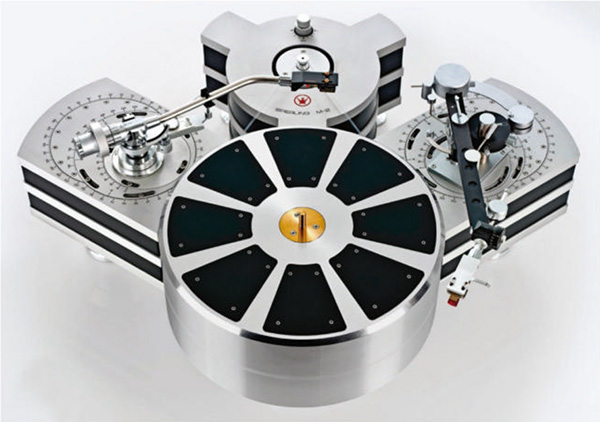
Photo: Echopark


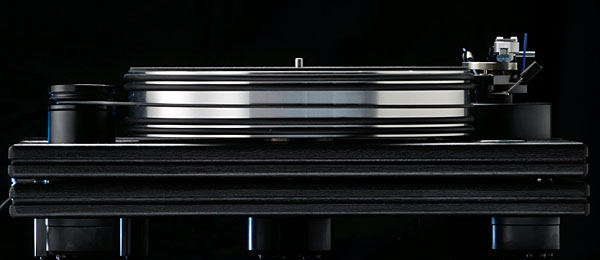
With its swept-wing shape and platter-forward design, Sperling-Audio's L-1 turntable ($35,950, without tonearm) stands out in a crowd. This high-mass design from Germany is the result of a collaboration between Ansgar Sperling and Michael Bönninghoff, two fiftysomething engineers who began working together in recording studio construction.


Both also bring to the L-1's design and construction years of experience in signal processing. For years, Bönninghoff was the chief developer at Brauner microphones, and today is the technical director of the German pro-audio company S.E.A. Sperling worked in radio and signal processing, and has a strong interest in tubed electronics.
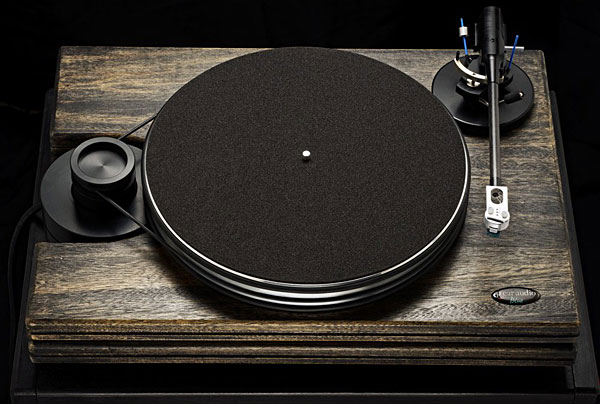
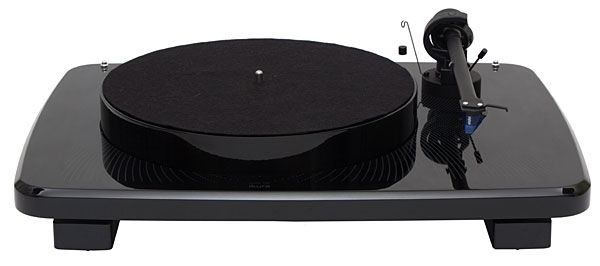
Pear Audio Blue Kid Howard turntable & Cornet 2 tonearm

There's nothing new under the sun, or so we are told. Nevertheless, in the early 1990s, a British designer named Tom Fletcher upset the audio status quo with a turntable that combined otherwise-familiar elements in a manner that was, at the very least, new with a lower-case n. Fletcher's product, the Space Deck, was perhaps the first original design in British phonography since the Roksan Xerxes of 1985; and his company, Nottingham Analogue, went from nothing to something in no time at all.

Analog Corner #237: Ortofon MC A95 phono cartridge, Brinkmann Audio Spyder turntable and 12.1 tonearm

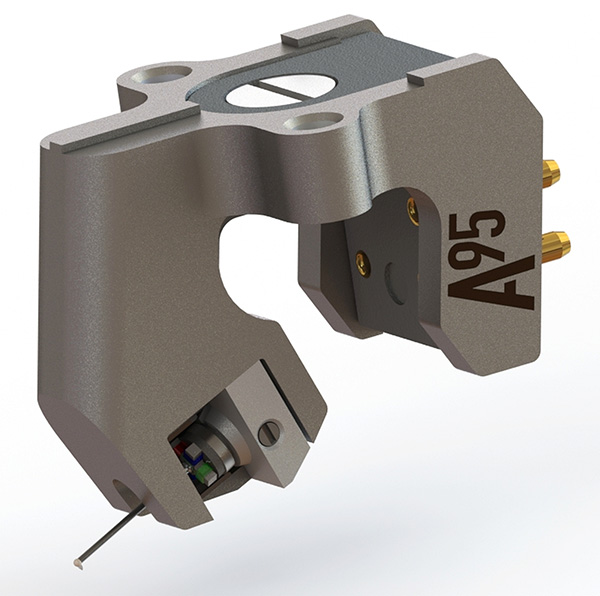
It's difficult to believe that more than five years have passed since Ortofon introduced its ground-breaking MC A90 moving-coil cartridge ($4200 when last available). The limited-edition MC A90, with its radically shaped body made of powdered stainless steel Selective Laser Melting (SLM), celebrated Ortofon's 90th year in business. The MC A95 ($6500), celebrating their 95th year, retains the A90's seductive shape, but the new body is built of powdered titanium, and thus is even more effectively self-damped.

Gramophone Dreams #3

Before I moved to the boat, I lived in a big old firehouse with a shiny brass pole and a red door. The fire engines were gone but it was still a boy-toy pilgrimage site. The first thing one noticed on entering was a red 356 Porsche coupe. Behind it was a black '32 Ford hot rod with a flat-head V8 and triple Strombergs. Behind that was a 1939 Lincoln convertible from some Godfather movie. On the second floor . . .

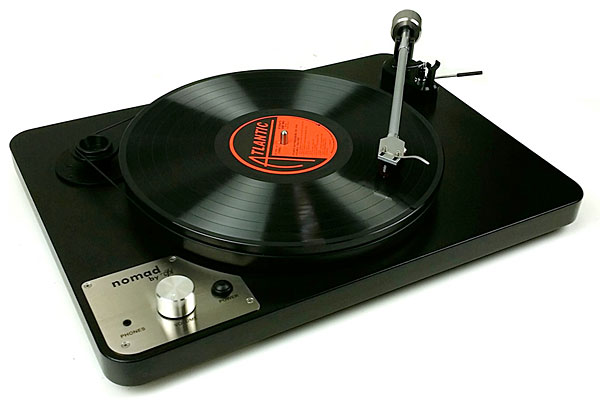
VPI Nomad LP player

I wish I'd had a VPI Nomad when I was in college. I was in a fraternity, and for most of my time there I had to rely on others' sound systems to play my music. My sophomore and junior years, some freshmen were rotated through my room, and several of them had nice sound systems and were accommodating about letting me play my music. When I wanted to really crank it up, I visited the stoners, who had the best systems and were happy to spin my collections of King Crimson and ELP, assuming I could get them to stop listening to Jefferson Starship for five minutes (footnote 1).

Analog Corner #233: Pear Audio Blue Kid Thomas turntable & Cornet 2 tonearm

Pear Audio Analogue's Peter Mezek can keep you up all night spinning fascinating turntable tales. Had my mind not been numbed by Sunday evening, October 12, the last day of the 2014 Rocky Mountain Audio Fest, I might have insisted that he do just that.


Over dinner that evening he regaled Pear Audio's North American importer, Michael Vamos of Audio Skies, and me with turntable stories dating back to the late 1970s and the Linn Sondek LP12, which, until the early '80s, he distributed in Czechoslovakia. In the mid-'80s, Mezek was involved in the development and distribution of the Rational Audio turntable, designed for Mezek by Jirí Janda (pronounced Yeerzhee Yahnda), who died in 2000. For those of you old enough to remember, Janda, a founder of NAD, designed that company's 5120 turntable; among other features, it had a flat, flexible, plug-in tonearm that you could easily swap out, much as you can with VPI's current models.

Music Hall Ikura LP player & Ortofon 2M Blue phono cartridge

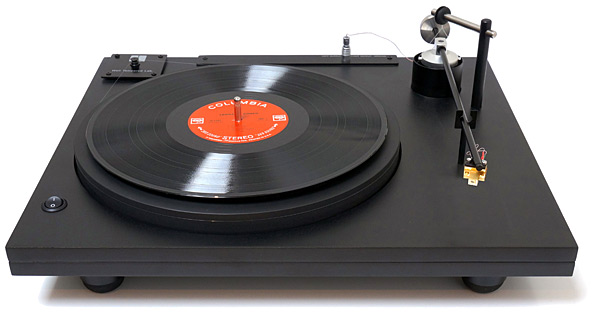
The call I received from Music Hall's Leland Leard surprised me: "Hey, Bob, I think you'd be the perfect guy to review our new Ikura turntable!"


Hmm. It had been four years since I'd reviewed a record player: Pro-Ject's Debut III, in the February 2010 issue. And with the surging popularity of vinyl—hell, Rough Trade NYC's enormous new record store, in the Williamsburg section of Brooklyn, even sells turntables—the thought of a plug-and-play turntable-tonearm-cartridge combination for $1200 intrigued me. Sure, Leland—send it on.

Analog Corner #231: Palmer Audio 2.5 turntable & Audio Origami PU7 tonearm

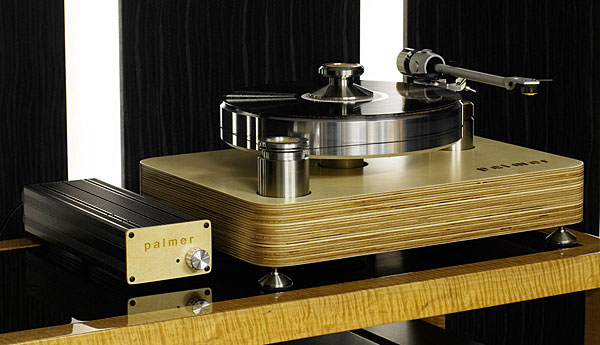
Palmer Audio's 2.5 turntable, with its laminated plinth of Baltic birch and metallic features, looks Scandinavian but is made in the UK. It shares a few conceptual similarities with the turntables made by Nottingham Analogue, another British brand. The review sample had the optional side panels of cherrywood veneer.

Listening #140

Has it really been 30 years since an engineer named William H. Firebaugh unleashed on the audio world his radical and decidedly affordable Well Tempered Arm? (footnote 1) Indeed it has—and today, at 82, Bill Firebaugh seems busier than ever, with so many irons in the fire that he's been forced to give up the noble game of golf—an irony, as you'll see in a moment.

Analog Corner #226: VPI Classic Direct Drive Signature turntable

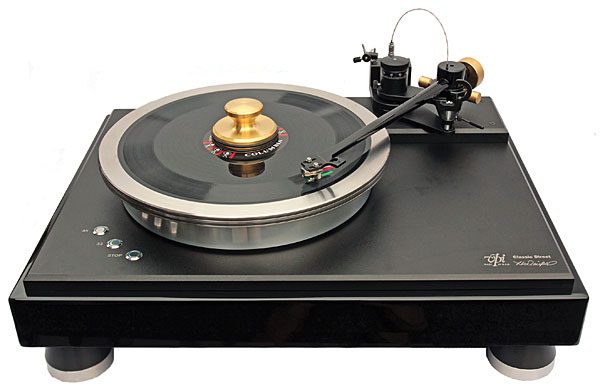
VPI Industries' Harry Weisfeld has tried, built, and marketed almost every known way of spinning a platter. He began in the early 1980s, before many recent turntable enthusiasts were born, with the belt-driven HW-19, and since then has produced rim-driven models, and 'tables with motors outboard or inboard, one or three pulleys, one or three belts, and platters of acrylic or aluminum alloy. But while Weisfeld has owned quite a few direct-drive 'tables, he'd never come up with his own—until now.
Advertisement
Advertisement
Advertisement