Turntable Reviews

Sort By: Post DateTitle Publish Date

Analog Corner #248: Mørch DP-8, Reed 3P tonearms, TechDAS Air Force One turntable
"HOW MEASUREMENT FAILS DOCTORS AND TEACHERS" was the headline of a story in a recent issue of the New York Times's "Sunday Review" section (formerly called "News of the Week in Review," now rendered obsolete by the 24/7 news cycle created by and for the terminally self-absorbed). The writer, Robert M. Wachter, a professor and interim chairman of UC San Francisco's department of medicine and author of the book The Digital Doctor: Hope, Hype, and Harm at the Dawn of Medicine's Computer Age, said that healthcare and education "have become increasingly subjected to metrics and measurements," and that the focus on them has "gone too far."


To me, that headline screamed "Audio!" And the book that needs to be written is The Digital Recording Revolution: Hope, Hype, and Harm at the Dawn of Audio's Computer Age.
Gramophone Dreams #9

"Hail, Neophyte!"


That's what members of the Smoky Basement Secret Audio Society would exclaim in unison at the end of each ceremony admitting a new devotee. It was called the Smoky Basement Society not because everyone smoked (though they did), but because its members believed that whenever an audio designer finally got a design dialed in just right, he or she had metaphorically "let the smoke out." They exclaimed, "Hail, Neophyte!" because they believed that the most important aspect of being an audio engineer was to have a fully open "beginner's mind." In Zen practice, this is called Shoshin, or beginner's heart.

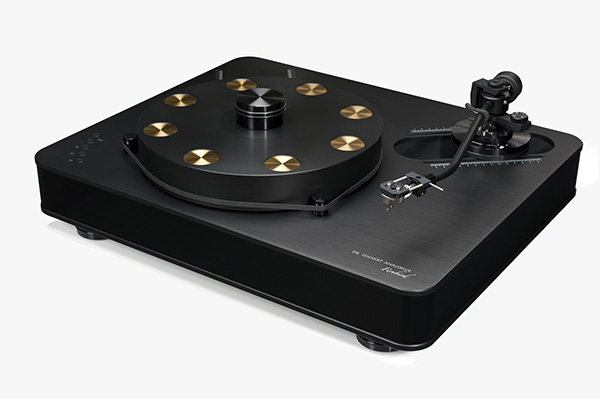
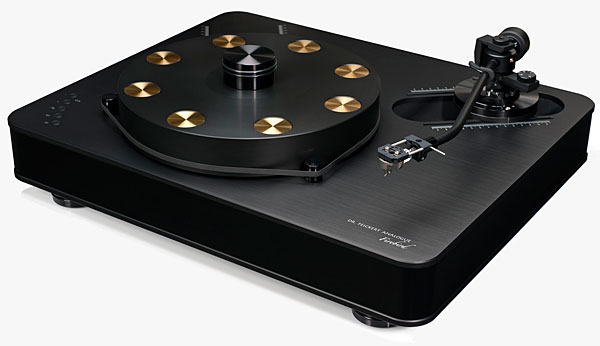
Dr. Feickert Analogue Firebird turntable

Dr. Feickert Analogue's top-of-the line turntable, the Firebird ($12,500), is a generously sized record player designed to easily accommodate two 12" tonearms. Its three brushless, three-phase DC motors, arranged around the platter in an equilateral triangle, are connected to a proprietary controller in a phase-locked loop (PLL); according to the Firebird's designer, Dr. Christian Feickert, a reference signal from just one of the motors drives all three—thus one motor is the master while the other two are slaves. (Man, today that is politically incorrect, however descriptively accurate.) Feickert says that the key to this drive system is the motor design, which was done in close consultation with its manufacturer, Pabst. The result is a feedback-based system in which the controller produces the very low jitter levels claimed by Feickert.

Analog Corner # 247: Dr. Feickert Firebird turntable, Viva Fono MC phono preamplifier, AcroLink and Fono Acustica interconnects

Dr. Feickert Analogue's top-of-the line turntable, the Firebird ($12,500), is a generously sized record player designed to easily accommodate two 12" tonearms. Its three brushless, three-phase DC motors, arranged around the platter in an equilateral triangle, are connected to a proprietary controller in a phase-locked loop (PLL); according to the Firebird's designer, Dr. Christian Feickert, a reference signal from just one of the motors drives all three—thus one motor is the master while the other two are slaves. (Man, today that is politically incorrect, however descriptively accurate.)

Gramophone Dreams #8

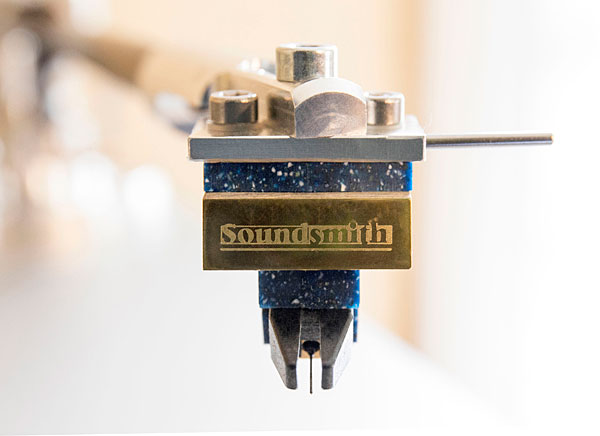
Everyone in the room can hear the difference when I swap one phono cartridge for another. Same thing happens with loudspeakers. This is because both of these magnet-based transducer technologies are electromechanical devices, traditionally made of paper, wood, iron, and copper. (Nowadays, polymers, aluminum, and carbon composites are more typical.) Both are motor-generator mechanisms that either convert mechanical energy into electrical energy (cartridges) or vice versa (speakers). As audio devices, they are spool-and-wire simple, but even tiny changes in the materials and/or how those materials are configured can cause easily audible differences in how they transmit or present recordings of music. Why? Because every gross fragment and subatomic particle of these electromechanical contraptions is moving and shaking—shaking everything from the tiny jumping electrons to the wood, metal, and/or plastic containers that fix and locate these motor generators in space.

Robert Deutsch Upgrades His Record Player

For some time now, I've been thinking that my record player was due for an upgrade. My Linn LP12 turntable and Ittok LVII tonearm are about 25 years old, and my AudioQuest AQ7000nsx cartridge is going on 15. During that time, my listening has become increasingly dominated by CDs, but I am not yet ready to give up on LPs. Updating my LP12—for which I have Linn's Lingo power supply but no other upgrades—would involve installing the Keel subchassis, for $3250—for which price I could get another maker's new, current-design turntable and still have the LP12 to sell. The Linn Ittok can't be upgraded, and its replacement, the Ekos SE, costs $4950—out of my range. AudioQuest no longer makes cartridges. Examining my AQ7000nsx's stylus under a microscope showed no visible wear, and there was no obvious audible problem that could be traced to the cartridge's suspension, but age must be having some sort of effect. Taking all these factors into account, I decided to replace my entire phono front end.

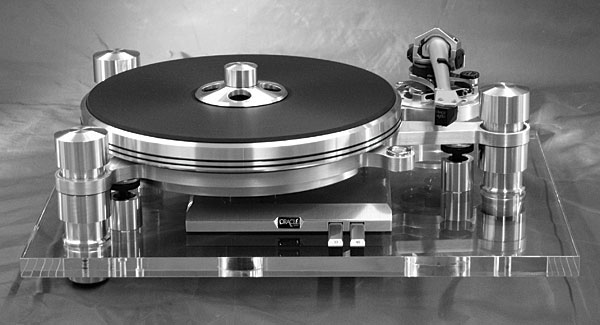
Oracle Delphi Mk.VI Second Generation turntable

The stats are impressive: Quebec's Oracle Audio Technologies, formerly Trans Audio (footnote 1), has been in business for 37 years, during which they've sold nearly 11,000 Oracle Delphi turntables. That's not bad for a perfectionist turntable—and especially not bad for a perfectionist turntable whose first and most estimable competitor, the Linn Sondek LP12, was well established by the time of the Delphi's debut, in 1979.

Analog Corner #245: SME Model 15 turntable, SME 309 SPD tonearm

In the April 2000 issue of Stereophile, I reviewed SME's Model 10, which was an attempt by that storied company to produce an "affordable" turntable. I described the Model 10's $5500 turntable-only price—about $7600 in today's dollars—as "stiff." (At the time, the Model 10 cost $5995 with SME's M10 arm, or $8250 with their IV.Vi arm.) But 16 years later, the same Model 10 costs only $5000 ($7000 with the more recent Model 10 arm, which is superior to the M10).

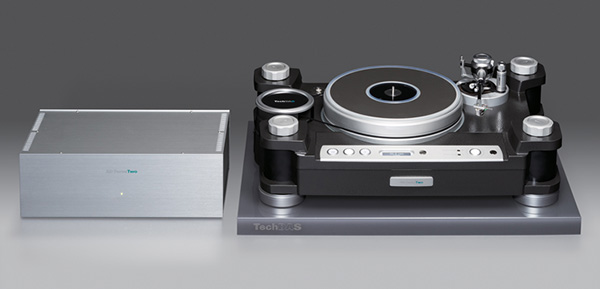
Analog Corner #243: TechDAS Air Force Two turntable, Graham Phantom Elite tonearm

How big is the performance gap between TechDAS's new Air Force Two ($52,000) and original Air Force One ($105,000) turntables? How do you halve the price without also sacrificing the build quality and features of the flagship model that defines the brand? Even $52,000 is more than most people pay for an automobile, not to mention a turntable. Still, TechDAS's assertion on their website that the price of their new model price is "reasonably improved" over the old strikes me as an understatement.

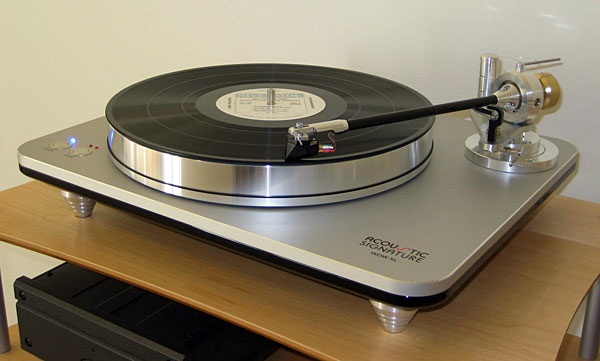
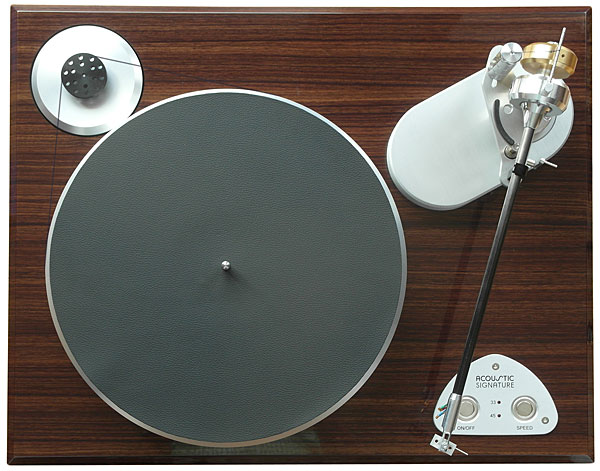
Acoustic Signature Triple X turntable & TA-1000 tonearm

In a bizarre but happy turn of events, recent consumer trends have given even the most socially awkward audiophile something to talk about at cocktail parties and family gatherings at which normal people predominate: the PonoPlayer and vinyl. These are hot topics; each is among the best-sounding music sources available, and both offer hope for our hobby, if not for music lovers in general. But vinyl has the advantage of appealing to a much wider range of budgets. LPs can be had from anywhere to "We'll pay you to haul these away" to "Your loan officer is on line one." Likewise, vinyl playback hardware is available in virtually every price range, from a second-hand Dual 1229 ($50 and up) to the highly praised Continuum Audio Labs Caliburn ($200,000 and down).
Advertisement
Advertisement
Advertisement