Audacious Audio

Sort By: Post DateTitle Publish Date

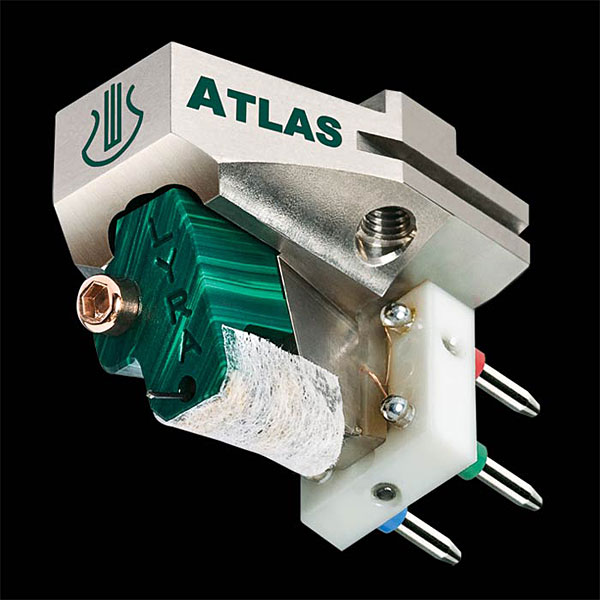
Lyra Atlas MC phono cartridge

At the 2012 Consumer Electronics Show, I spoke with Lyra's Jonathan Carr about the Atlas. He told me that, rather than having started as a blank sheet of paper, the Atlas is an outgrowth of the Kleos ($2995), which I reviewed in January 2011, when I thought it Carr's best balanced design yet, even if it didn't have quite the resolution of the Titan i. Like the lower-priced Delos ($1650, reviewed in August 2010), the Kleos included Carr's New Angle technology, which mechanically aligns the coils to be perfectly positioned relative to the front and rear magnets when the stylus is in the groove.

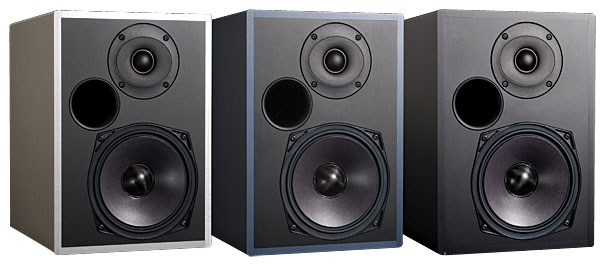
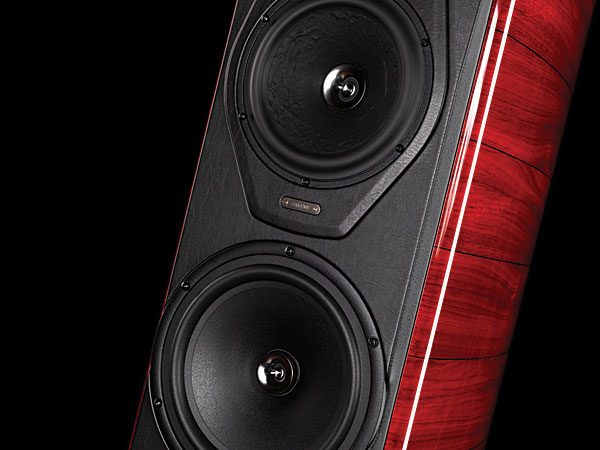
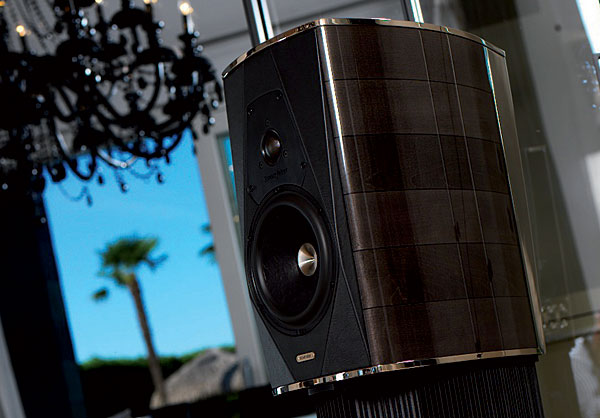
Stenheim Alumine loudspeaker

The sound of the Stenheim Alumine loudspeaker—its openness, transparency, and freedom from temporal distortions, not to mention its good bass extension for such a small enclosure—reminded me at once of my favorite small loudspeaker from the late 1980s, the Acoustic Energy AE1. On reflection, the comparison is extraordinary: The two products are as different as night and day, the AE1 being a wooden loudspeaker with a metal-cone woofer, the Alumine a metal loudspeaker with a pulp-cone woofer. I suppose one can skin a catfish by moving the knife or by moving the fish.

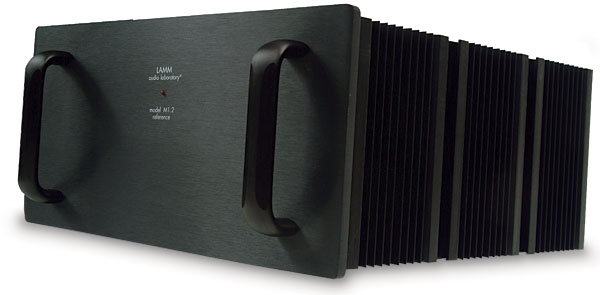
Lamm M1.2 Reference monoblock power amplifier

There is always a conflict between the needs of reviewers and the realities of the marketplace. Once a reviewer has invested his time and energy in a review, he would like that product to remain in production for all time, which would allow it to be used as a reliable recommendation forever. But whatever the product and whatever the category, sales of a product almost always follow the same triangular curve: a sharp rise at the product's introduction, a maximum reached sometime thereafter, and then a steady decline to a sustained but low plateau. Marketing-minded manufacturers therefore introduce a new model every three or four years, in hopes of turning that single triangle into a continuous sawtooth wave.

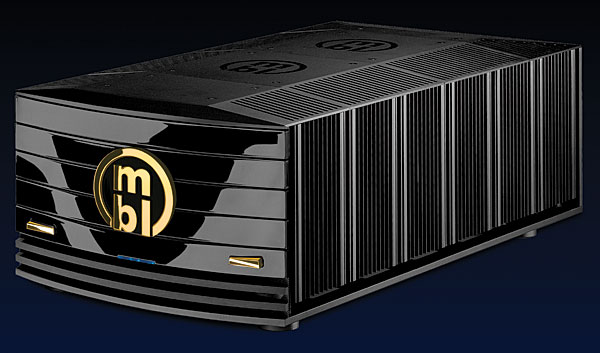
MBL Radialstrahler 101E Mk.II loudspeaker

Take a casual look at the Mk.II edition of MBL's Reference 101E Radialstrahler loudspeaker, and you won't immediately see what's new compared with the original version, which I reviewed in October 2004. But the Mk.II has a shorter, sleeker bass cabinet, designed to, among other things, slightly lower the stack of omnidirectional drivers it supports. While the many other major revisions to this familiar and fascinating loudspeaker can't be seen, it's fair to say that, from the ground up, the Reference 101E Mk.II is a new loudspeaker in design, if not in concept.

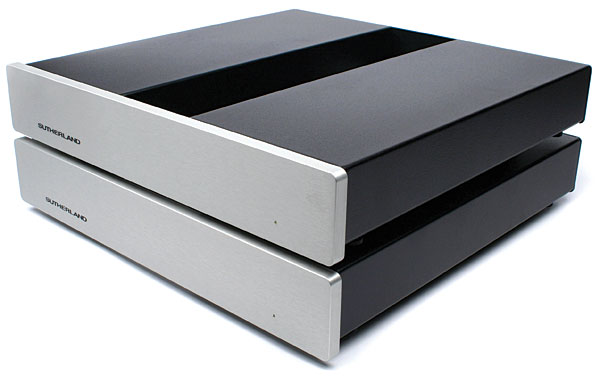
Sutherland Engineering Phono Block monoblock phono preamplifier

Saying that Sutherland Engineering builds a nice line of phono stages is like saying that the Porsche 911 Carrera is a nice line of sports car. The Sutherlands all share common design philosophies, features, and sonic attributes—but just as ramping up from Porsche's classic Carrera Coupe ($78,000) to the GT3 ($115,000) or the Turbo S Cabriolet ($172,000) increases the level of performance and distills the Porsche experience down to its essence, ascending the Sutherland line from the PH3D ($1000) to the 20/20 ($2200) to the Hubble ($3800) buys more of what Ron Sutherland is all about.

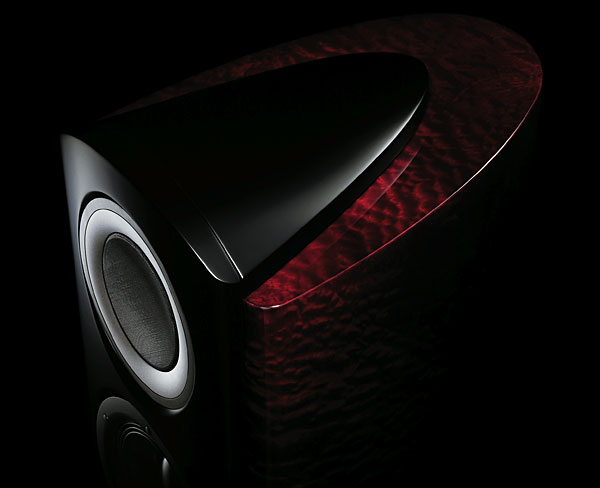
Sonus Faber Guarneri Evolution loudspeaker

At present, my writing chores are divided between two fields: domestic audio and lutherie. Having invested considerable time in both, and having by now met a number of builders who are distinguished in one or the other, I can say with all confidence that the best share a simple, single point of view: Everything makes a difference.

TAD Compact Reference CR1 loudspeaker

High-end audio is in some ways a dynastic beast, though without as many "begats." One of the world's most successful loudspeaker manufacturers in the years following World War II was the Wharfedale company, from Yorkshire in the North of England. Wharfedale was founded by Gilbert Briggs in 1932, who in the 1950s handed over the reins of Technical Director to fellow Yorkshireman Raymond Cooke. Cooke left Wharfedale in 1961 to found KEF Electronics Ltd., where he subsequently appointed Goodmans designer Laurie Fincham as Chief Engineer in 1968. Fincham led a team of young engineers, including Mike Gough, who eventually joined B&W, and Yorkshire-born Andrew Jones, who became KEF's Chief Engineer in 1989, before Fincham was lured to Harman's Infinity division, in Northridge, California, in 1993. Jones followed Fincham across the Atlantic, where he worked on Infinity's Prelude, Overture, and Reference Series speakers, before joining Pioneer in 1997. The Japanese company had established a state-of-the-art speaker-design facility in Southern California, and Jones was invited to lead the design team.

Musical Fidelity AMS100 power amplifier

"That's just silly on so many counts, Antony."


I was talking last winter to Musical Fidelity's Antony Michaelson, who had been enthusing about his forthcoming stereo amplifier, the AMS100. It would be physically enormous—almost a yard deep—and commensurately heavy at 220 lbs. Despite its bulk, its maximum rated output would be just 100Wpc into 8 ohms. It would also be expensive, at $19,999. And to cock a snoot at environmentalists and their concerns, the AMS100's output stage would be biased into class-A up to its rated 8 ohm power, meaning that, even when not playing music, it will draw around 10 amps from a typical US wall supply of 120V. This also means that it will run very hot, making the amplifier impracticable for summer use in homes without central air-conditioning. Like mine.

Advertisement
Advertisement
Advertisement