As We See It

Sort By: Post DateTitle Publish Date

Living Sound Meets Living Art
I've always considered the high end to be industrial art. People who favor a certain brand are saying, in a way, "I like that designer's interpretation. I like his or her art."—David Wilson


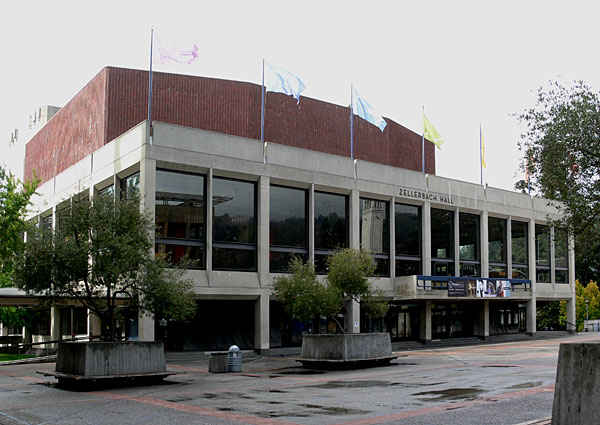
Last March, I had a rare experience akin to hearing the same recording through two different systems. I heard Andris Nelsons conduct the Vienna Philharmonic Orchestra in the same program—Haydn's Symphony 90, and Brahms's Variations on a Theme by Haydn, followed by his Symphony 3—in two very different venues: UC Berkeley's Zellerbach Hall and, 50 miles north, Sonoma State University's Weill Hall.

Know Thyself: Audio Existentialism

Playing recorded music in the home is a complex, coded, cultural experience: We sit, we listen, we think and dream—and, when it feels just right, we admire. We admire who we are and how we arrived at this beautiful moment. This simple act of admiration is usually a happy sort of self-congratulatory expression of our basic desire to have meaningful as well as enjoyable experiences. We are proud of our good taste and love of music. But this type of listening can also provoke anxiety and self-recrimination. We ask ourselves why we like this music and not some other kind. What would my friends think if they knew I was listening to "truckin' wit' th' doo-dah man"—or Deodato?

Start Making Sense

Record-business profits peaked 20 years ago, just before Napster and other file-sharing sites turned their world upside down. There have been occasional surges, but the future of the Compact Disc looks bleak, and while income from downloaded files is still climbing, the shift of profitability from à la carte music sales to unlimited streaming on demand seems inevitable. The realignment is already underway—the vast majority of today's music listeners, young and old, haven't bought a CD, file, or LP in years. It pains me to admit it, but after hearing, at the 2014 Midem music exhibition, a presentation by Marc Geiger, of William Morris Endeavors, I was convinced that music-streaming companies are poised to reboot the industry. If Geiger's predictions are accurate, the music business will be more profitable than ever, and swell to $100 billion in 20 years or less (see www.youtube.com/watch?v=bcNsAR_FM5M&feature=share).

Why Music?

Why does music matter so much to so many of us? Some, like Stereophile's readers, go to great lengths to reproduce it in their homes with accuracy and impact, and build libraries of their favorite works. Others, like my daughters, don't care much about equipment, but find it hard to spend more than five minutes in a car without listening to music. We go to concerts, play instruments, hum tunes, sing. Why? Why does music seem to speak to so many more of us than do, say, painting, sculpture, poetry, architecture, or even literature?

New Sensations

Here's what I've learned in my 35 years in the High End, first as a hi-fi salesman and then as a full-time reviewer and blogger: No hi-fi, no matter how expensive or exalted, will ever deliver the holy grail. While there have been considerable advances over the years, I can cite two 50+-year-old loudspeakers—Quad ESL electrostatics and Klipsch's big horns—whose transparency and dynamic range, respectively, blow away those of many contemporary high-end speakers. The very best of today's speakers, electronics, and source components don't zero in on a single perfected sound indistinguishable from the experience of being in the same room as the musicians—no, every one of them sounds different from all the rest. I want to experience as many of those flavors as I can.

Bully for You

"You know how to whistle, don't you, Steve?"—Lauren Bacall, To Have and Have Not, 1944


Yesterday, I played a minor role in a dustup on Facebook. It began when a fellow journalist posted a controversial quote from a veteran manufacturer known for generating same. The bait proved irresistible, and a long line of audio mavens, myself included, swam around the hook for an hour or so. The manufacturer himself also waded in, and before the fight was over, he'd made a show of demanding the home address of one of his antagonists, thus raising the manly specter of bodily harm. If there were any women in the audience, I'm sure they were impressed.

The Purpose of Music?

Way back when, I met this maenad woman at Caffe Reggio in Greenwich Village and told her I was an artist. She told me she was an art collector and invited me to her loft to see her collection. While she was showing me an impressive assortment of African and contemporary art, she was dropping names: William Burroughs, Bob Marley, John Cage, etc. Hmmm . . . really? I spoke up. "Oh, I love John Cage. What was he like?"

As We Listen, So We Are

You don't need me to tell you that listening habits are changing. Although those who predict that the end of our beloved home stereo systems is near (footnote 1) have more than a little in common with those who predict the imminent destruction of humankind, there's no question that listening via computers, iPods, and headphones has become the order of the day among a large segment of younger Americans.

The New Audio Geek

It's no secret that the high-end audio industry has done a poor job of reestablishing the mainstream respect it enjoyed through the latter half of the 20th century, but its lack of reach has never been as painfully obvious as it is today. Teens are inextricably tied to smartphones, moms and dads are infatuated with Bluetooth streaming, and most people would rather pay too much for an MP3 than anything at all for a DSD download. In a world dominated by fancy gadgets and intriguing technologies, the pursuit of true high-fidelity sound remains an obscure pastime for a relatively small group of aging males. Everyone knows Apple, Beats, and Bose, but few have heard of Vivid, Wilson, or YG.

Snob Appeal

It began innocently enough. In June, Slate.com published a sampling from an exhibit by the photographer Kai Schaefer, in which classic LPs of different eras were partnered with the similarly classic record players on which they might have been played: Tea for the Tillerman on a Dual 1219, Kind of Blue on a Rek-O-Kut Rondine, Sgt. Pepper's on a Thorens TD 124—you get the idea. The photos worked as cultural documents, as good-natured kitsch, as surprisingly beautiful and compelling industrial art. I was thoroughly charmed.
Advertisement
Advertisement
Advertisement