Solid State Power Amp Reviews

Sort By: Post DateTitle Publish Date

PS Audio Stellar M1200 monoblock power amplifier
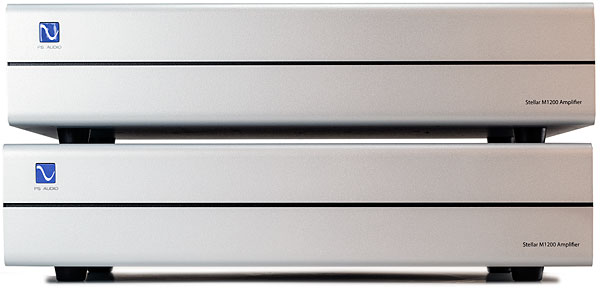
Talk about a Scarlet Letter. The term class-D amplification, which describes PS Audio's new M1200 monoblocks, exists only because another amplifier innovation had already parked in the "C" space. Soon after appearing in high-performance audio gear, class-D became synonymous with "digital amplification" in part because, like early CDs, many listeners found the sound glary, hard, and unpleasant. Besides, class-D is related to "pulse width modulation" and requires a low-pass filter to block high-frequency pulses—that sure sounds digital. But they're not (see Bruno Putzeys sidebar).
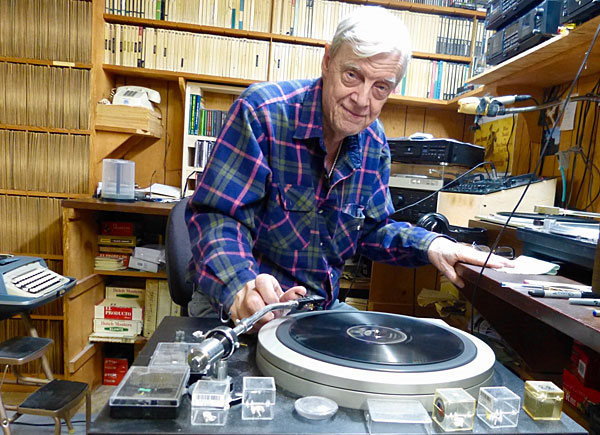
Gramophone Dreams #43: First Watt F8 power amplifier


I spent my childhood summers on the Reichert family farm near Turtle Lake, Wisconsin, where, inside the red 1880s barn, my uncle Harold played 78rpm records for his cows.


He used a wind-up Victrola sitting on a shelf directly in front of the cows, just below a framed reproduction of an Alpine landscape painting. He said the music and the mountain scene relaxed the cows, causing them to give better milk. Harold played the same Gustav Mahler symphony every day.

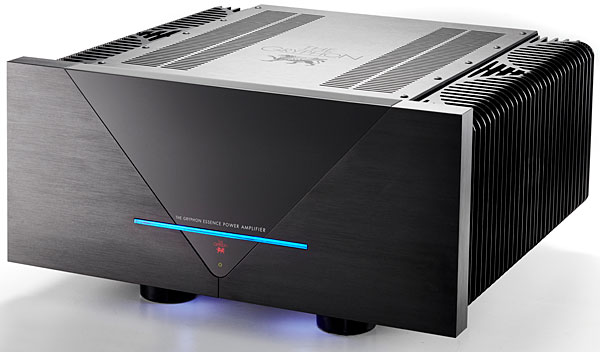
Gryphon Essence Mono power amplifier

"Oh goody!" thought self, to self: "Another Gryphon component to review." As eloquent and revelatory as that statement may be, there's an even more illuminating backstory.


I had been aware of Denmark-based Gryphon Audio since the advent of the Gryphon Exorcist, a now-discontinued demagnetizer that cost far more than your average break-in CD, but I only began to encounter Gryphon electronics at audio shows a few years ago. While at first they seemed available for review only as a complete package, Jim Austin was able to arrange for me to review the Gryphon Ethos CD player–D/A processor ($39,000).

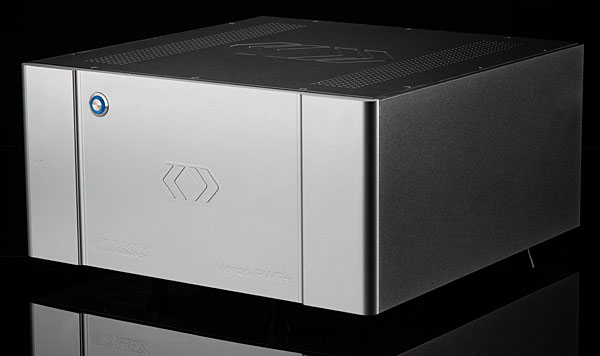
LKV Veros PWR+ power amplifier

As much as I admire Belgian amplifier designer Bruno Putzeys's accomplishments, I have harbored some misgivings about class-D amplifier sound. I do not believe it represents the future of perfectionist audio. Despite the fact that today's active loudspeakers depend entirely on class-D's free horsepower, light weight, and low-temperature operation, I think it sounds vacant compared to class-A.

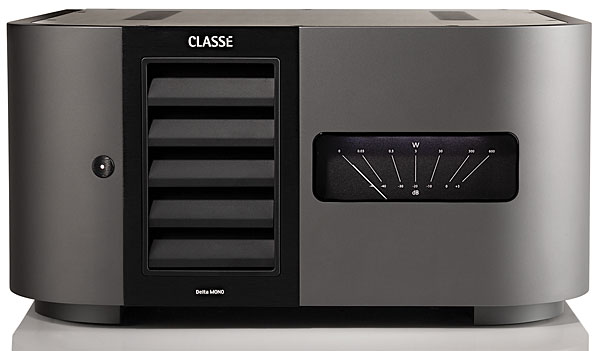
Classé Delta Mono monoblock power amplifier

Canadian audio manufacturer Classé Audio was founded in 1980 by engineer Dave Reich and entrepreneur/audiophile Mike Viglas. The name "Classé" was a pun on the fact that Reich was a firm believer in an amplifier's output stage operating in class-A, where the output devices never turn off (see sidebar). Though the brand was established with the 25Wpc DR-2, the first review of a Classé amplifier to appear in Stereophile, by Larry Greenhill, was of the later DR-3, in December 1985. No fewer than 22 reviews of Classé products are available in our free online archive.

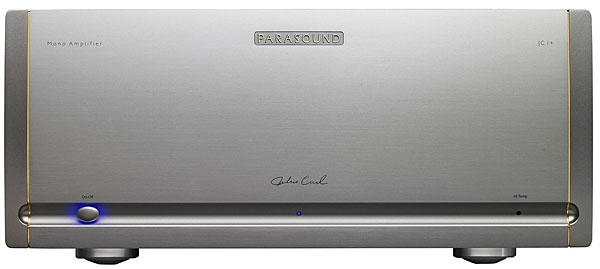
Parasound Halo JC 1+ monoblock power amplifier

Soon after I took over preparing Stereophile's biannual Recommended Components listing from the magazine's founder, J. Gordon Holt, in 1986, I ran into a problem. With so many products listed, the magazine was running out of the necessary pages to include them all. To solve this problem, I looked at how long a typical product remained on the market before being updated or replaced. The answer was 3–4 years. I therefore implemented a policy that unless one of the magazine's editors or reviewers had continued experience with a product, it would be dropped from Recommended Components after three years.

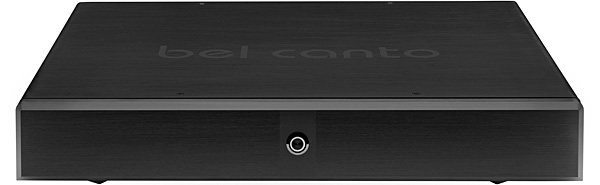
Bel Canto e1X power amplifier


I own and enjoy loudspeakers from seemingly opposite ends of the audiophile spectrum: I'm a huge fan of minimally efficient yet otherwise overachieving flat-panel designs, such as my Magnepan LRS speakers. Yet I'm just as smitten with another, equally outside-the-norm alternative: high-sensitivity full-range loudspeakers, such as my Zu Omens—especially when driven by tube electronics. It's an ongoing yin and yang that keeps my home system in a constant state of flux: Alternating between loudspeakers that use such different technologies, while maintaining relatively optimal positioning for each, is a bit daunting.

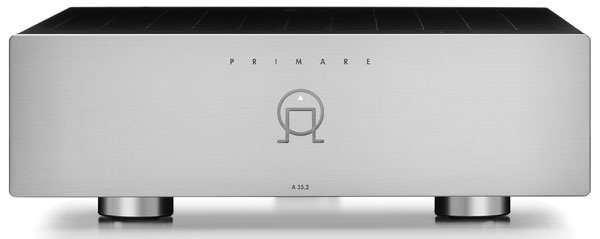
Primare A35.2 power amplifier

My writing desk looks out over a large garden with chickens, bees, and feral cats. My chair sits only six feet from loudspeakers, playing softly on my left. Between the speakers sits whatever painting I am working on. That painting hangs no more than 10 feet from the oscilloscope and drill press in my kitchen. Best of all, my desk is only six feet from squadrons of ravenous sparrows attacking the suet cage on the fence outside my window.

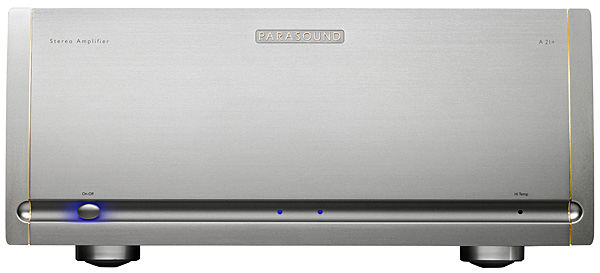
Parasound Halo A 21+ power amplifier

The components I needed to choose for my first system were never in doubt: a turntable or record changer, an integrated amplifier, and a speaker. One of each, please, in those mono days.


Today, even in stereo, that trinity would be regarded as rather traditional—or, if you prefer, purist. Digital has exploded the range of source options and loudspeaker options. Yet amplifiers have not changed much in how and what they do.

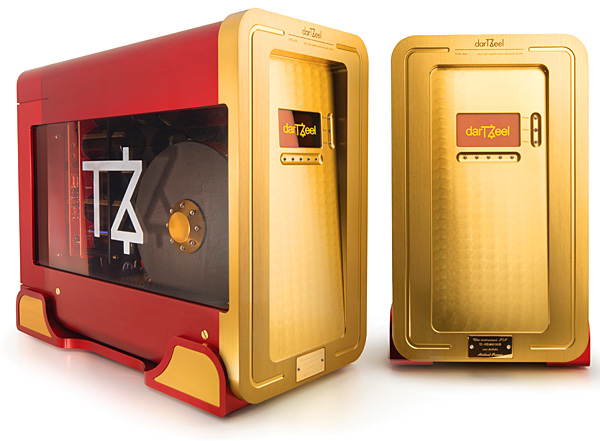
darTZeel NHB-468 monoblock power amplifier

What's the point of reviewing a pair of monoblock amplifiers that costs more than most people spend on two or even several cars— and far more than most audiophiles spend on an entire music system? That's a good question. Another is: Why should I write this review when, just seven years ago, I reviewed a pair of darTZeel monoblocks that look exactly like this new pair?


I realize that products such as the darTZeel NHB-468 ($170,000/pair) are for the very few, but the very few include far more people throughout the world than you may realize— people who can afford such costly audio products and who do buy them. I know, because in my travels I've met a lot of them, and they deserve to read reviews of products they're considering buying—things most of us can only dream of owning.

Advertisement
Advertisement
Advertisement