Floor Loudspeaker Reviews

Sort By: Post DateTitle Publish Date

DeVore Fidelity Orangutan O/93 loudspeaker
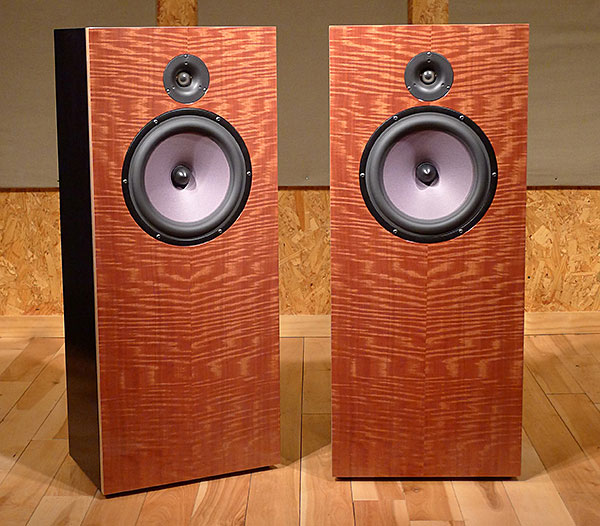
John DeVore names his speakers after primates—apes, to be specific. Something to do with a family member being a zoologist.


John once worked at a hi-fi retailer in lower Manhattan. Now, as president and chief designer of DeVore Fidelity, he manufactures loudspeakers across the bridge, in the former Brooklyn Navy Yard. I talked with John the other day about his new speaker, the Orangutan O/93.


John makes two Orangutans, both floorstanders: the O/96, with a sensitivity specified as 96dB, over which Art Dudley went ape, in the December 2012 issue. Artie has made the O/96 his reference loudspeaker. It goes for $12,000/pair, stands included.


Now there's the new, smaller Orangutan O/93, specified at 93dB. It retails for $8400/pair with a front baffle in fiddleback mahogany veneer (other veneers are available).

Wilson Audio Specialties Alexia loudspeaker

With the help of 20:20 hindsight, it looks as if I made a decision when I joined Stereophile: to review a loudspeaker from Wilson Audio Specialties every 11 years. In June 1991, I reported on Wilson's WATT 3/Puppy 2 combination, which cost $12,740/pair in an automotive gloss-paint finish. This was followed in July 2002 by my review of the Wilson Sophia ($11,700/pair). And now, in December 2013, I am writing about the Wilson Alexia, which costs a not-inconsiderable $48,500/pair.

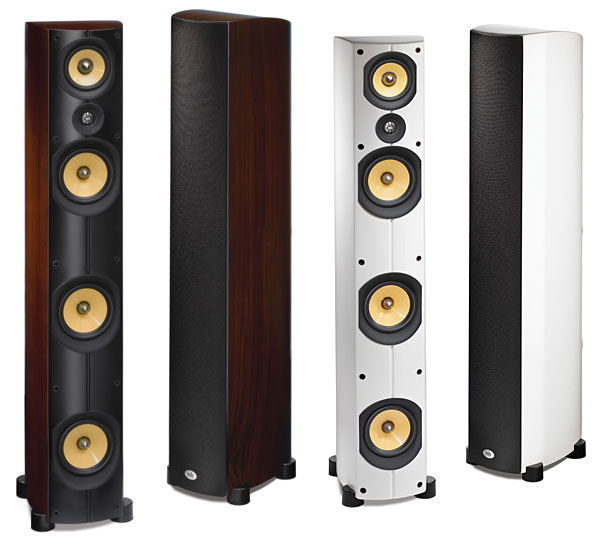
PSB Imagine T2 Tower loudspeaker


What can you tell about the intrinsic sound quality of a loudspeaker if you've heard it only at an audio show? Arguably, not much. If it sounds bad, there may be a number of reasons for that, only one being the speaker itself. It may be the acoustics of the room, problems with speaker setup, poorly matched associated equipment, insufficient break-in/warm-up, or poor choice of demo recordings.

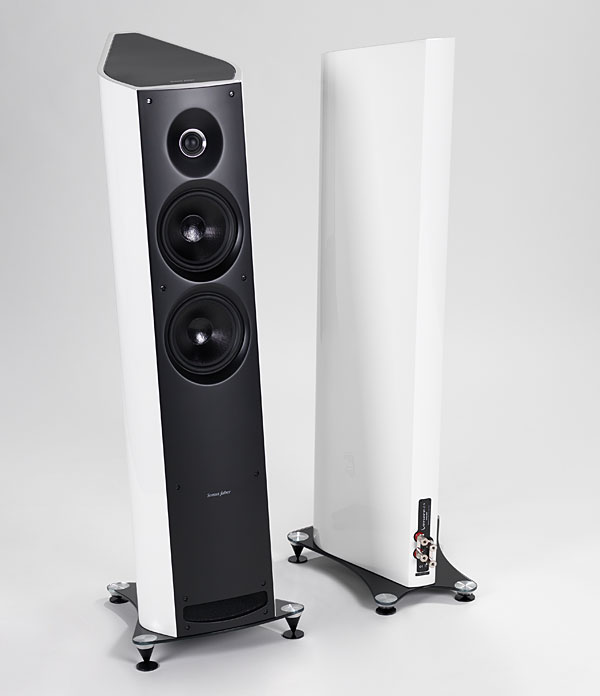
Sonus Faber Venere 2.5 loudspeaker

Sonus Faber is an iconic Italian high-end company whose loudspeakers have always evinced innovative technical design, superb construction, spectacular appearance, and great sound. I was intrigued with the design and performance of their stand-mounted Extrema (reviewed by Martin Colloms in the June 1992 Stereophile, Vol.15 No.6), which combined a proprietary soft-dome tweeter and a mineral-loaded polypropylene-cone woofer with an electrodynamically damped but passive KEF B139 driver that occupied the entire rear panel.

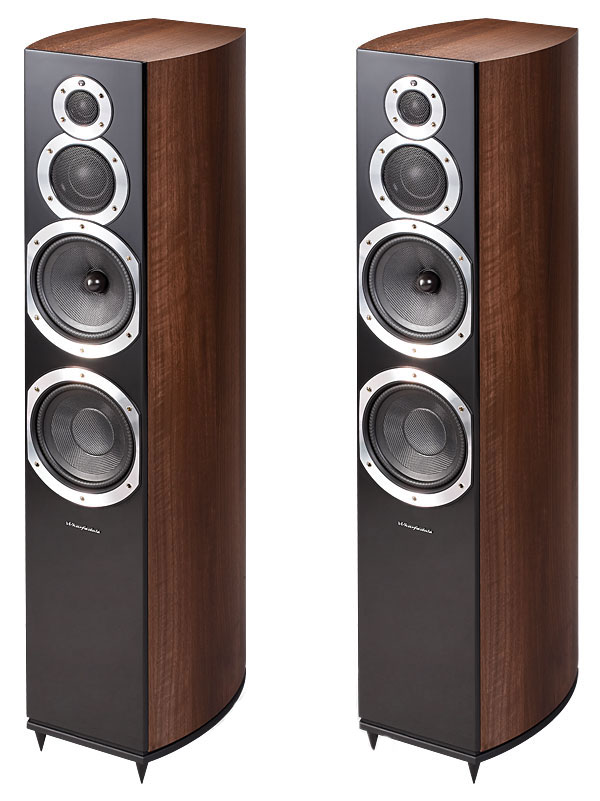
Wharfedale Diamond 10.7 loudspeaker

In a recent email, a reader, having read my review of the Monitor Audio Silver RX6 loudspeaker in the June 2012 issue, said that he'd like to see it compared with the similarly priced Wharfedale Diamond 10.7 ($1299/pair) and Epos Elan 10 ($1000/pair). That sounded interesting. The floorstanding 10.7 is the flagship model of Wharfedale's Diamond series, six models up from the Diamond 10.1 bookshelf (which I reviewed in reviewed in July 2011) and featuring the same dome tweeter. And the Epos Elan 10 essentially replaces the Epos M5i, which I reviewed in February 2011, and which has served as my reference bookshelf speaker ever since. I requested samples of both. (My review of the Epos Elan 10 is scheduled to appear in the February 2014 issue.)

Sony SS-NA2ES loudspeaker


The door to a professional reviewer's listening room is one that revolves: As one product leaves, another enters. After a while, it becomes difficult to remember exactly when you auditioned any specific component. But some products stick in your memory—you fondly remember the time you spent with them, and wish they hadn't departed quite so quickly. With loudspeakers, I recall a few such: Revel's Ultima Salon2 ($22,000, footnote 1), MBL's 111B ($17,000), Dynaudio's Confidence C4 ($16,000), Sonus Faber's Amati Futura ($36,000), Vivid's B1 ($14,990), TAD's Compact Reference CR1 ($40,600 with stands), and even the much less expensive Harbeth P3ESR ($2195–$2395) and KEF LS50 ($1500). Among the most recently reviewed of those fondly remembered speakers is Sony's SS-AR2ES ($20,000).

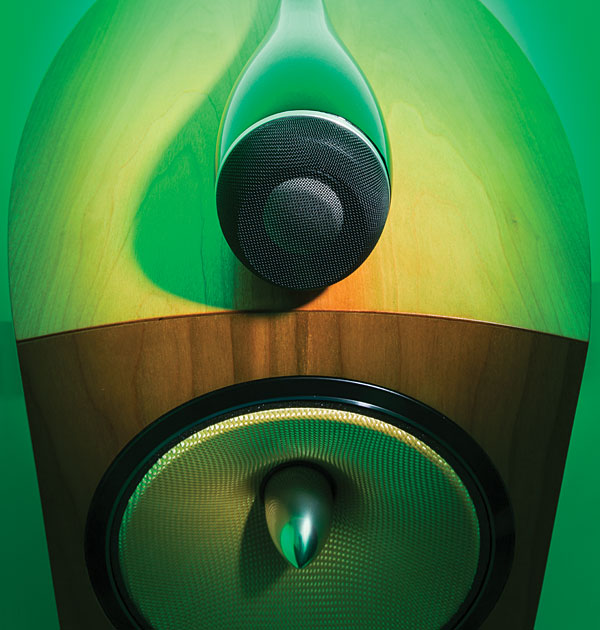
Bowers & Wilkins 804 Diamond loudspeaker

I don't think that the Bowers and Wilkins 804, in any of its incarnation, gets its due respect. As the smallest floorstander in B&W's elite 800 series, it has historically been overshadowed by its larger brethren and outmaneuvered by the smaller, stand-mounted 805. However, the 804 Diamond is unique, and deserves special attention for reasons I discovered when I chose the earlier 804S for the surround channels of my 5.1-channel surround system.

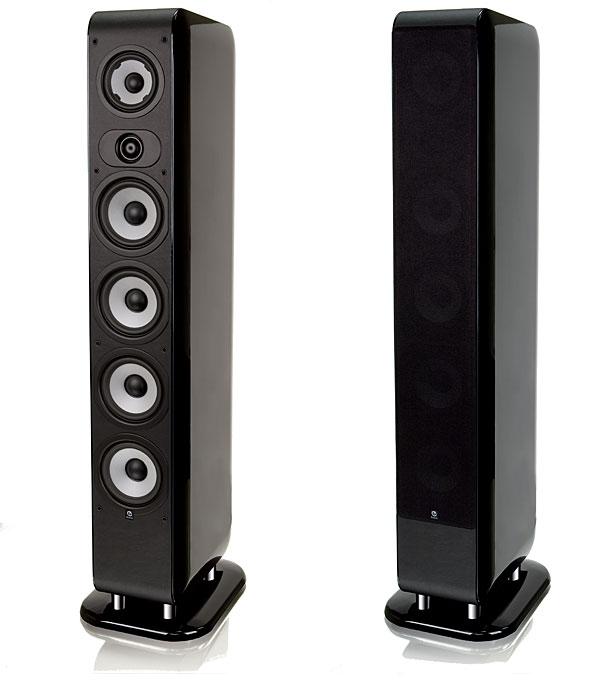
Boston Acoustics M350 loudspeaker


Boston Acoustics made its name in the early 1980s with the A40, an inexpensive two-way bookshelf design that became one of that decade's best-selling speakers. Stephen Mejias was impressed by the A40's spiritual descendant, the Boston Acoustics A25 bookshelf speaker ($299.98/pair), when he reviewed it in November 2011, and I was similarly impressed when I had the speaker on the test bench for measurement. So when, in the fall of 2012, Boston's soon-to-be-departing PR representative Sara Trujillo let me know that the company was introducing a range of more expensive speakers, I asked to review the top-of-the-line, floorstanding M350.

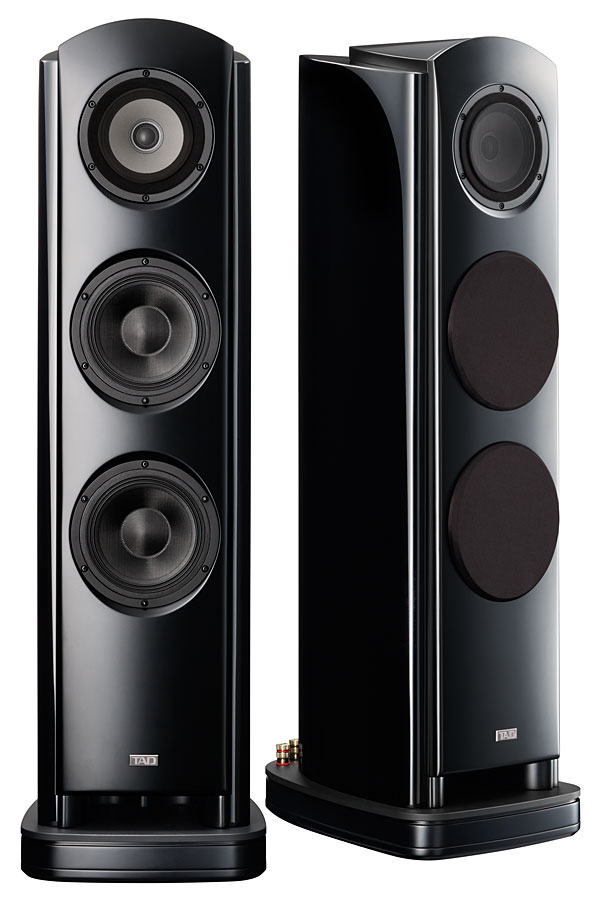
TAD Evolution One loudspeaker

I had been anticipating getting to audition a pair of TAD loudspeakers in my system since the introduction of the original TAD Model-1, in 2003. It was designed by Andrew Jones, who had recently assumed the mantle of chief designer at Technical Audio Devices Laboratories (TAD), at that time a subsidiary of Pioneer. Although TAD dates back to the mid-1970s, its research and development efforts had been focused on the professional sound market, something that continues. Jones came from a long line of speaker innovators at KEF and was assigned the goal of developing state-of-the-art speakers for the domestic market.

YG Acoustics Sonja 1.3 loudspeaker

The advertisements run by Colorado manufacturer YG Acoustics in 2008, when it launched its flagship loudspeaker model, the Anat Reference II Professional, unequivocally claimed it to be "The best loudspeaker on Earth. Period." They caused a stir. The YGA speaker cost $107,000/pair at the time of Wes Phillips's review in the March 2009 issue. Wes didn't disagree with the claim, concluding that, "Like my pappy used to say, it ain't braggin' if you can actually do it."
Advertisement
Advertisement
Advertisement