

CH Precision C1.2 D/A processor
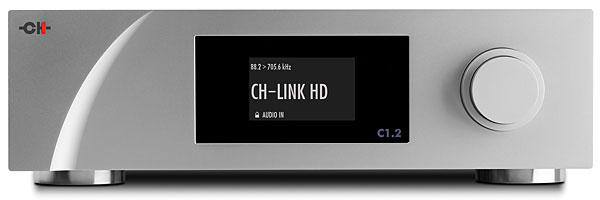
If you're reasonably handy, you can probably build your own digital-to-analog converter. It won't cost much, and if you're careful, and knowledgeable enough to understand and follow some rather technical instructions, or if you have patience enough to follow advice from a few different online discussion forumsand the judgment to distinguish the good advice from the badthen the DAC you make may end up sounding very good.
CH Precision C10 D/A processor
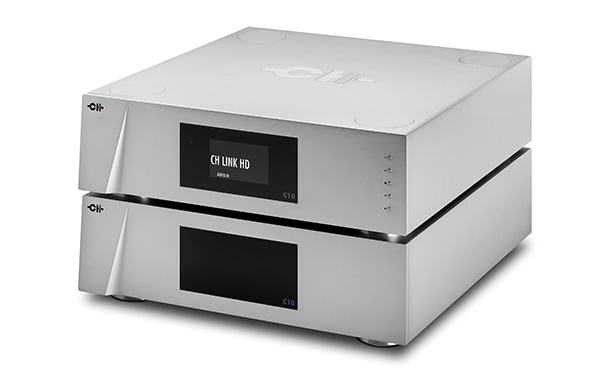
It takes audacity for a company that already builds one of the finest DACs on the planet, which is already expensive, to set out to build one that's so much better that it warrants an extra digit in the model number and a much higher price tag. But then CH Precision has never lacked audacity.
Channel Islands Audio Transient Mk.II & VDC•5 Mk.II USB D/A processor & power supply
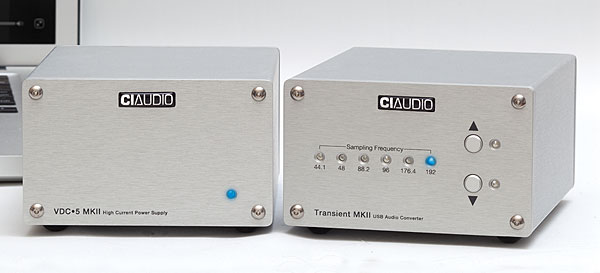
Most folks don't even know they exist, but the Channel Islands are a chain of eight moderately sized mountains poking through the Pacific Ocean along the coast of southern California, between Santa Barbara and San Diego. The most famous of these is Catalina Island and its city, Avalon, which sit opposite San Clemente. The other Channel Islands are relatively wild and have been preserved mostly uninhabited.
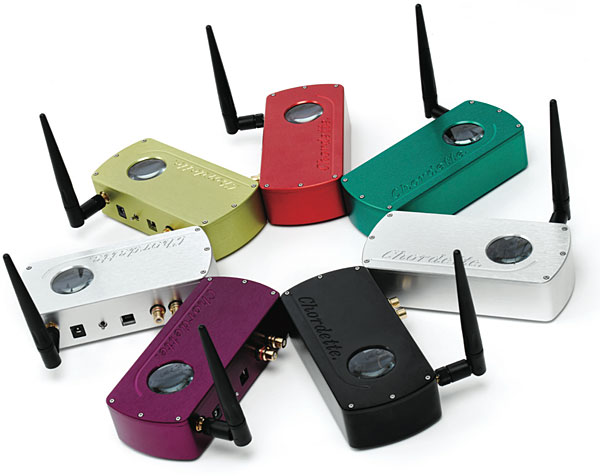
Chord Chordette Gem D/A processor
There's home cooking on one side of the hedge and fast food on the other, and the world moves farther from the former and nearer to the latter with each passing day. So it goes in domestic audio, where virtually every new milestone of the past quarter-century has pointed far more toward convenience than toward quality.
Depressed? Don't be. Those of us in the perfectionist community have a history of dealing with such things, howsoever slowly and inefficiently. (footnote 1). We're getting better at it, too, year by year. An example: Chord Electronics, of sunny southern England, has now brought to market their Chordette Gem D/A converter ($799) which they offer as an affordable means of getting perfectionist-quality sound from computer-music files.
Chord Electronics DAC64 D/A processor
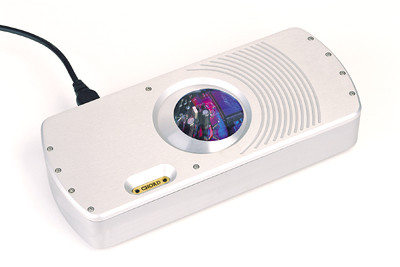
Such is the pace of development in digital technology these days that it is hard not to become convinced that digital playback is a solved problem. The measured performance aberrations are so low in absolute level—and, more important, so low compared with the typical threshold of human hearing—that it is difficult to see why digital components should sound different from one another.
Chord Electronics DAVE D/A processor
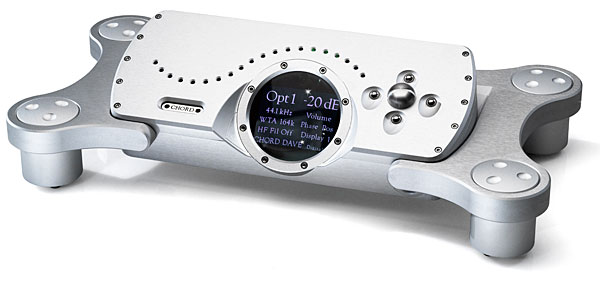
Fifteen years? Has it really been 15 years since I reviewed what was then the flagship D/A processor from English company Chord Electronics? In the July 2002 issue, here's how I summed up my review of the Chord DAC64: "While the Chord Electronics DAC64 is undoubtedly expensive, it is eye-poppingly gorgeous. . . . many listeners should find its silky-smooth highs seductive, as well as its slightly larger-than-life lows." How times and prices changethe "undoubtedly expensive" DAC64 cost only $3040! I did make a couple of criticisms of the DAC64 in my review, but according to Wes Phillips, in his August 2007 review of Chord's revised DAC64, "the Choral Blu [CD transport] and Choral DAC64 are, together, the CD player we music lovers have long prayed for"even if, five years after my own review, the DAC64's price had risen to $5000.
Chord Electronics Hugo M Scaler upsampling digital processor
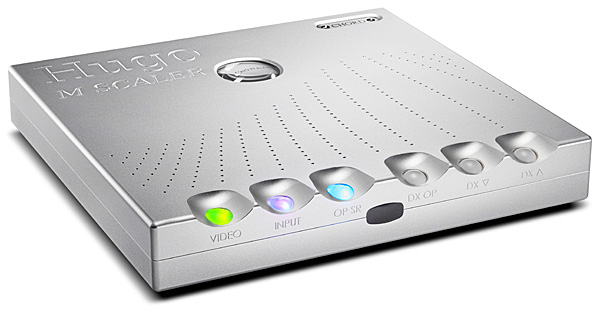
The idea of using digital signal processing (DSP) to convert digital audio data sampled at 44.1kHz or 48kHz to a higher sample rate is not new. I first heard the beneficial effects of upsampling at Stereophile's 1998 hi-fi show in Los Angeles, where a pro-audio dCS 972 digital-to-digital processor was being used to convert 16-bit/44.1kHz CD data to a 24/192 datastream.
Chord Electronics Hugo TT D/A headphone amplifier
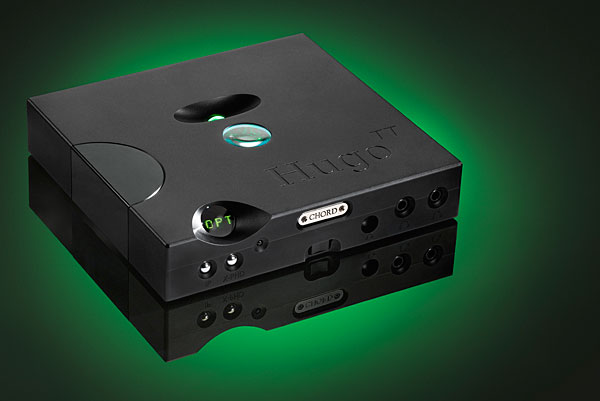
The British company Chord Electronics has always seemed to me to be audio's crazy uncle: Crazy like a fox, maybe, but definitely marching to their own tune. Their casework design often borders on the gratuitously provocative, challenging audiophiles' ideas about good taste. Yet many of my audio pals swear by the sound of Chord components, and I've heard them shine in many respectable showrooms.
Chord Electronics Mojo D/A headphone amplifier
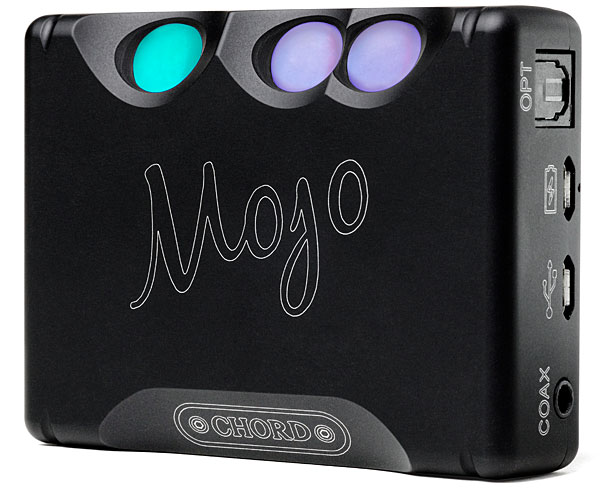
Like all men, I learned at an early age to resist the allure of a pretty face.
OkayI learned that I should try to resist the allure of a pretty face.
Okay, I confess: I have never been able to resist the allure of a pretty face. Which is why, when I first clapped eyes on the Mojo D/A headphone amplifier from English company Chord Electronics, at an event hosted by Manhattan retailer Stereo Exchange, I had to borrow a sample for review.
Chord Electronics Qutest D/A processor
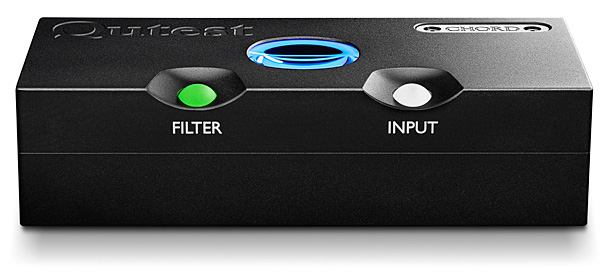
Back in the mid-1990s, I believed that the design of D/A processors was fundamentally a solved problem. The resistor-ladder, multi-bit DAC chips of the 1980s, with their linearity errors, had been replaced by sigma-delta types that had minimal linearity error down to the lowest signal levels. All that remained for the designers of PCM D/A chips was to increase resolution and dynamic range to the theoretical limits, and to improve the mathematical precision of oversampling digital filters to match the performance of the 20- and 24-bit recordings that had just begun to be released.