

California Audio Labs Sigma D/A processor
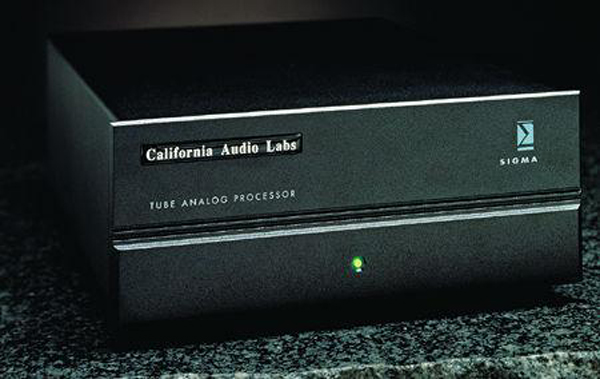
Though their first CD player featured a vacuum-tube output stage, California Audio Labs is recently known for making good-sounding, moderately priced solid-state CD players, like the Icon Mk.II that Jack English reviewed in July 1992 (Vol.15 No.7). The Sigma, a $695 tubed D/A converter, furthers their reputation in both areas.
California Audio Labs Sigma II D/A converter
HistoriCAL Introduction
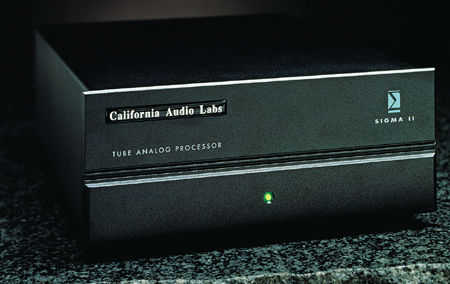
California Audio Labs is a child of the digital age. Originally, they made a noise by offering modified">http://stereophile.com/digitalsourcereviews/654">modified CD players with tube output stages, a practice for which I found no intellectual justification. On the other hand, the results were successful, even if (probably) due to the CAL units' softening of the harshness of early digital sound.
California Audio Labs is a child of the digital age. Originally, they made a noise by offering modified">http://stereophile.com/digitalsourcereviews/654">modified CD players with tube output stages, a practice for which I found no intellectual justification. On the other hand, the results were successful, even if (probably) due to the CAL units' softening of the harshness of early digital sound.
Cambridge Audio Azur 851D D/A processor
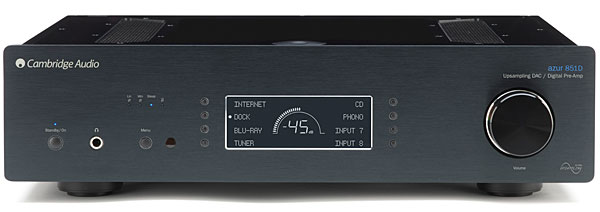
I've enjoyed having one of Cambridge's integrated amps in my office system for years, and the company boasts that the 851 series, designed in the UK and manufactured in China (like the rest of their line), is the best they've produced so far. After spending the last year listening to domestically manufactured DAC-preamps costing $6000 and up, I was curious to hear how a product costing only a quarter of the bottom of that range might stack up.
Cambridge Audio Azur DacMagic D/A converter
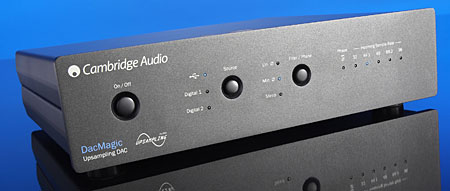
In 1989, Cambridge Audio, then run by Stan Curtiswho is still active in hi-fi introduced their DAC 1. At about the same time, within a few weeks of each other, Arcam introduced their Delta Black Box and Musical Fidelity their Digilog. I forget who was first among the three. Arcam, I think. But the DAC race was on, led by the British. (There was even a DAC called the Dacula.) US companies got into the DAC race, tooat higher prices, of course.
Cambridge Audio MXN10 streamer–D/A processor
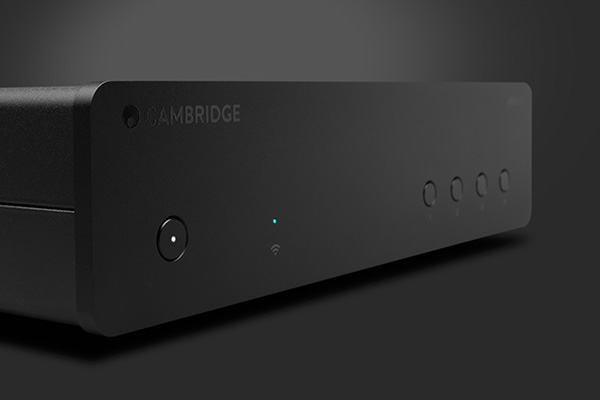
For music listening circa 2024, streaming is both the present and the future. Physical formats are still around, and they are still the best choice in some cases, as with deluxe reissues of beloved albums, which may add value with extra live performances, full-resolution surround sound, and other perks. The niche vinyl market continues to thrive, and that business model obviously works for releases of a few thousand copies. (It also works, apparently, for releases of hundreds of thousands of T-Swift platters to be displayed on shelves and hung on walls.)
But facts is facts: Streaming is now the only mass medium for listening to recorded musicthe primary carrier for musicand has been for a few years now. According to RIAA statistics, the crossover year was 2016. That's when, in revenue terms, streaming outpaced physical formats. By 2022, the latest full year tabulated, streaming accounted for 84% of US recorded-music revenue.
So what's a long-time audiophile, born into the analog world, with strong roots in physical media, supposed to do?
Cambridge EXN100 streaming D/A processor
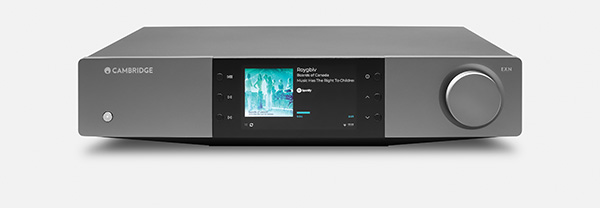
The marriage of little streaming computers to DACs was at first a shotgun thing, a way to add Swiss Army knife capabilities at a price point. That was back when it was cutting-edge to have a NAS server full of digital files on the home network, and when commercial streaming was new, primitive, and lossy. Remember Pandora? Cool idea, but who wants to sit through ads and not be able to skip over more than a handful of disliked tunes every hour. Then Spotify came along. Then Apple and Amazon jumped in, and that's all she wrote. Eventually, streaming even got around to us audiophiles who desired lossless audio of at least CD resolution. Viva Qobuz!
The EXN100 is Cambridge Audio's state-of-the-art streaming DAC. It's half of the new EX line; the other half is the EXA100 integrated amplifier.
Camelot Technology Dragon Pro Jitter Reducer
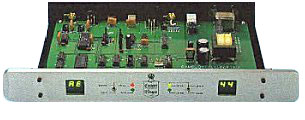 The Dragon Pro is, I believe, the most eagerly awaited of the Camelot products. Since the disappearance of Audio Alchemy's DTIPro 32, no comparable anti-jitter and resolution-enhancement product has come along to replace it. (Yes, there are simpler anti-jitter boxes, and there is the Genesis Digital Lens, but these are not truly comparable in approach.) Well, the Dragon is everything that the DTIPro 32 was, and more!
The Dragon Pro anti-jitter box offers both jitter reduction and resolution enhancement, along with I2S in/out. Considering the number of Web newsgroup ads from folks wanting to buy AA DTIPro 32s, this baby has a waiting market.
The Dragon Pro is, I believe, the most eagerly awaited of the Camelot products. Since the disappearance of Audio Alchemy's DTIPro 32, no comparable anti-jitter and resolution-enhancement product has come along to replace it. (Yes, there are simpler anti-jitter boxes, and there is the Genesis Digital Lens, but these are not truly comparable in approach.) Well, the Dragon is everything that the DTIPro 32 was, and more!
The Dragon Pro anti-jitter box offers both jitter reduction and resolution enhancement, along with I2S in/out. Considering the number of Web newsgroup ads from folks wanting to buy AA DTIPro 32s, this baby has a waiting market.
Camelot Technology Uther v2.0 D/A processor
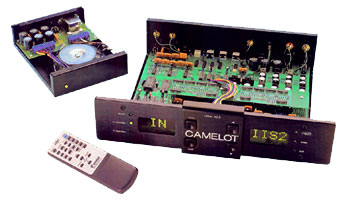 The apparent demise of Audio Alchemy left a niche in the marketplace for a supplier of innovative, high-value digital components to provide the less-than-wealthy audiophile with state-of-the-art technology. Although Camelot Technology existed before Audio Alchemy went away, they have quickly taken over this niche with some interesting components. And I understand that some of the former AA technical personnel consulted for Camelot in the development of these products. (A recent press release indicates that Genesis Technology also played a major role in their design.)
CanEver Audio ZeroUno D/A processor
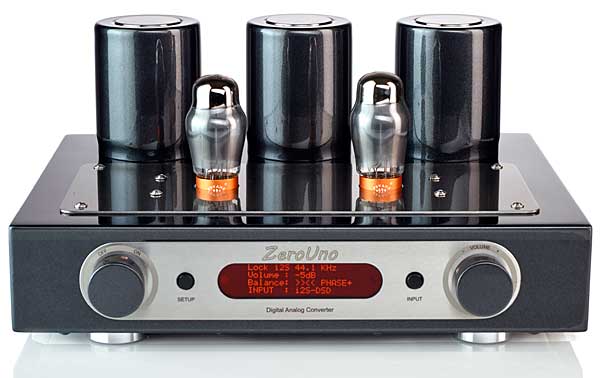
It's the sad realization at the heart of every product review: No matter what the writer has to say, the reader may hear thingsor see or feel or taste thingsrather differently. I refer not only to physiological differences in hearing acuity from person to person, but also to the no-less-critical differences in the ways we process and prioritize the things we perceive. It's an oft-made point that bears any amount of repetition: In our pugilistic little pastime, the priorities of the listener who values, say, fidelity to the musical timing captured in a recording over fidelity to that recording's timbral truths are no less legitimate than those of the enthusiast whose priorities are the other way around. Both approachesand any number of othersbend toward the sun of high fidelity.
CEntrance DACmini CX D/A converter
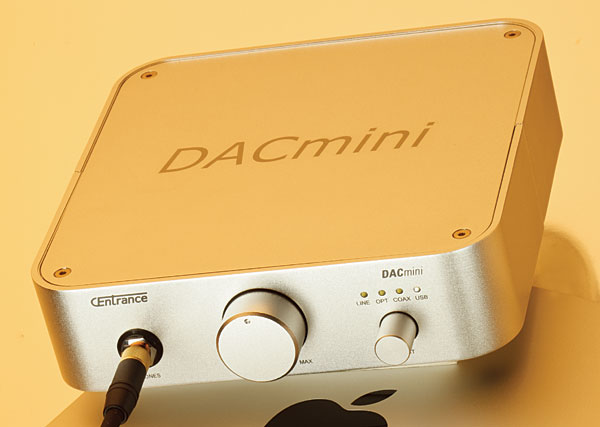
Sure, Stereophile gets letters to the editor. We also get some colorful responses for our "Manufacturers' Comments" section. (Vince Bruzzese and Roy Hall are literary standouts among their component-making peers.) And, as one of the magazine's Contributing Editors (Audio), I get lots of personal mail from readers seeking my advice. I thought I might share some of these letters with you, and my responses.