

Krell KSA-300S power amplifier
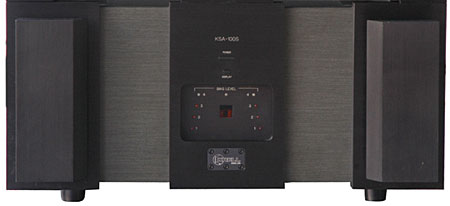
It was a dark and stormy night. A biting, cold wind cut through Sam's skimpy jacket; ice crystals clung tenaciously to his bushy moustache. As he approached his front door, visions of a toasty-warm, Krell-heated listening room softened the chill. He could feel the glow already; his Krell amp had been on all day, awaiting his return.
Krell Reference 64 digital processor
Remember the early days of CD, when some players were touted as having the revolutionary new "2x-oversampling" digital filters?
Kyocera DA-910 CD player
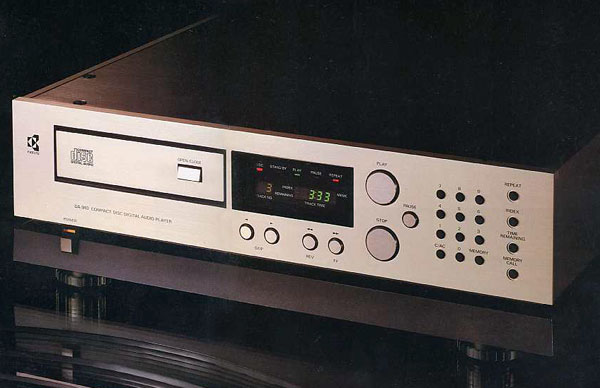
Those of our readers who are still anti-CD are going to be offended by what I am about to say. Partly because they do not want it to be true, but mainly because it is. I shall utter the heresy anyway: the Compact Disc is, right now, doing more for the cause of high-end audio than anything that has ever come along before!
There, I've said it. Now I shall explain it.
Lamm Industries L2.1 Reference preamplifier
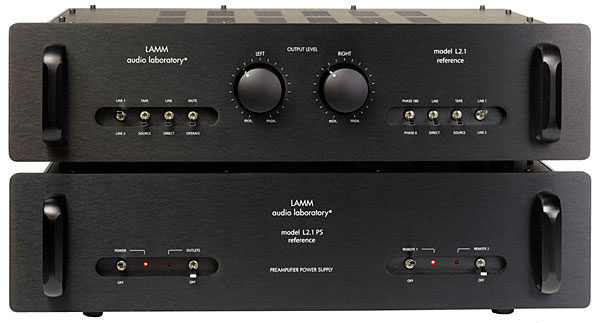
"As the original L2 circuitry was virtually flawless, it was the emergence of new electronic components that opened up a possibility of [even better performance] . . ."
So begins one of two bookletsone a collection of specifications and interior photos, the other a distinctly thorough user's manualincluded with the new L2.1 Reference line-level preamplifier from Brooklyn's Lamm Industries, earlier products from which have impressed me as among the best available. Indeed, coming from almost anyone else, the above quote would strike me as trivial boastingbut I know from experience that there's nothing trivial about designer and company head Vladimir Lamm.
Lamm Industries LL1 Signature line preamplifier
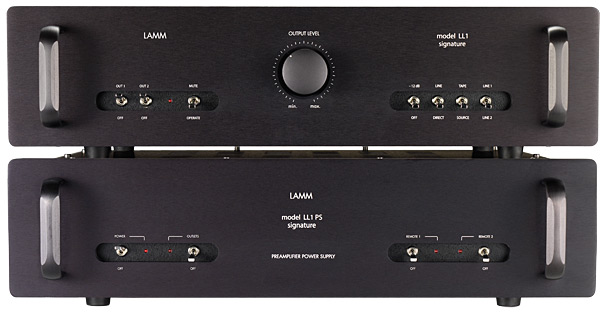
I've long been impressed by the design, construction, and sound of the tubed electronics produced by Vladimir Lamm, but I'd never had a Lamm Industries product in my house. So I asked for a review sample of Lamm's flagship line-stage preamplifier, the LL1 Signature.
Lamm Industries ML3 Signature monoblock power amplifier
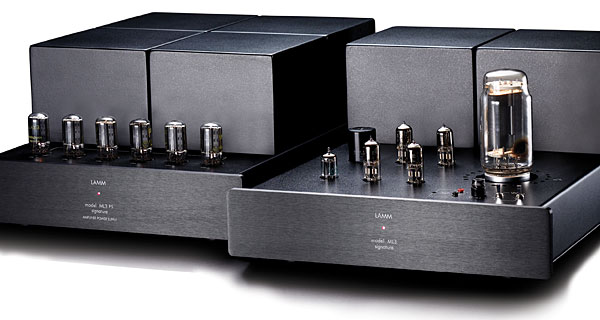
Even as the gulf narrows between the sounds of the best solid-state and the best tubed amplifiers, most listeners remain staunch members of one or the other camp. Similarly, when it comes to video displays, the plasma and liquid-crystal technologies each has its partisans, though that conflict's intensity is relatively mild, perhaps because video performance, unlike audio, is based on a mastering standard that establishes color temperature, gray-scale tracking, color points, and the like (I'm deeply in the plasma camp). But in audio, the "standard" is whatever monitoring loudspeaker and sonic balance the mastering engineer prefers, which makes somewhat questionable the pursuit of "sonic accuracy." Still, in a power amplifier, a relative lack of coloration is preferable to amps that Stereophile editor John Atkinson has characterized as "tone controls"usually, if not exclusively, of the tubed variety.
Lamm LP2 Deluxe phono preamplifier
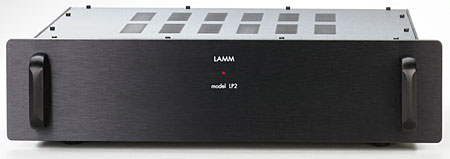
In an ideal world, I'd have every phono section I've reviewed in the past 16 years on hand to compare with these three and with all that arrive in the future. But because I have a life, I don't, and I wouldn't even if I could, though some readers (and one retailer) have insisted that that's the only way that I could possibly be of any use to them. Ha! And for those who are concerned that I've neglected the Manley Steelhead, not so! It's still my reference.
Lamm M1.2 Reference monoblock power amplifier
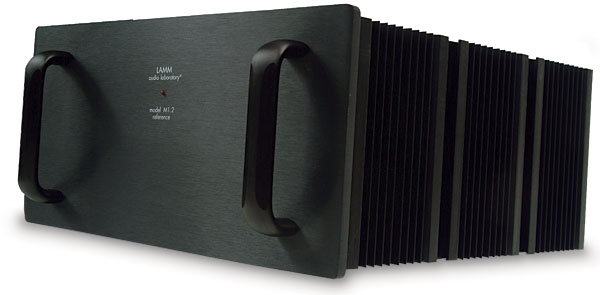
There is always a conflict between the needs of reviewers and the realities of the marketplace. Once a reviewer has invested his time and energy in a review, he would like that product to remain in production for all time, which would allow it to be used as a reliable recommendation forever. But whatever the product and whatever the category, sales of a product almost always follow the same triangular curve: a sharp rise at the product's introduction, a maximum reached sometime thereafter, and then a steady decline to a sustained but low plateau. Marketing-minded manufacturers therefore introduce a new model every three or four years, in hopes of turning that single triangle into a continuous sawtooth wave.
Lamm ML2.2 monoblock power amplifier
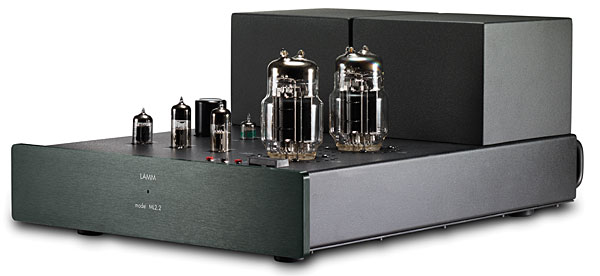
The challenge is biblical in character, if not in scope: A half year after railing, in these pages, against our industry's overabundance of products that cost more than $20,000, fate has given me such a thing to review.
Lansche Audio 5.1 loudspeaker

The phenomenon of the "singing flame" has been known since the 19th century. Place electrodes either side of a flame and, if you apply a high enough audio-modulated voltage to those electrodes, the ionized particles in the flame will cause it to emit sound. (Search YouTube for "singing flame" and you'll find many examples.) This principle was developed into a practical loudspeaker in 1946 by a French inventor, Siegfried Klein, who confined an RF-modulated arc to a small quartz tube, coupled it to a horn, and called the resulting speaker the Ionophone. An intense radio-frequency electrical field ionizes the air between inner and outer electrodes to produce a distinctive, violet-tinged yellow flame in the quartz combustion chamber. When the RF field is modulated by the audio signal, this causes the almost massless ionized flame to expand and contract in what should be a perfectly pistonic manner.