

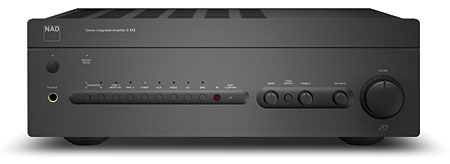
NAD C 372 integrated amplifier
At the extreme high end—Halcro, VTL, Boulder, etc.—reviewers gush about a lack of character. If you're paying $20,000, you want a preamplifier or power amp to disappear. At those price points we also want extreme, unfatiguing resolution, and noise that's well below what most people would consider audible. But at those prices, an absence of character is definitely something most people aspire to.
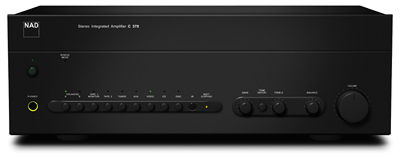
NAD C370 integrated amplifier
NAD has been out there on the leading edge of entry-level high-end sound long enough that some audiophiles reckon they invented the category. Sure, we should give serious props to the likes of Creek, Rotel, Musical Fidelity, Arcam, Denon, and Parasound, all of which have made significant contributions to the musical aspirations of budget-conscious pilgrims. But I continue to harbor warm feelings about my last extended visit with an NAD component: the inexpensive yet supremely musical L40 CD Receiver, which I reviewed in the June 2000 Stereophile.
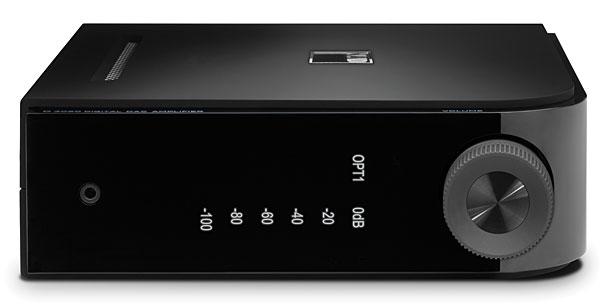
NAD D 3020 integrated amplifier
In the mornings, just before I leave for work, I power up the system, turn the volume down low, and set the CD player to Repeat. I like to think that if I play calm, soothing music while Ms. Little and I are away, the cats will feel less alone and more relaxed. It's also nice, on returning home from work, to walk into a room filled with music. One evening a few weeks ago, I stepped into the apartment, dropped my bags to the floor, settled down into the couch with my iPhone, and began scrolling through text messages. I'd been seated for only a moment before I had to turn my attention entirely to the sound of the system, which, even at a very low volume, sounded warm, detailed, and unusually goodunbelievably, almost unbearably engaging.
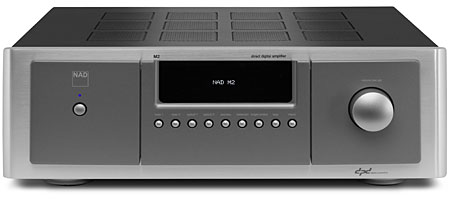
NAD M2 Direct Digital integrated amplifier
A decade ago, many predicted that amplifiers with switching or class-D output stages would come to dominate high-end audio. In a postPeak Oil world in which the price of energy would always continue to rise, a class-D amplifier's very high efficiency in converting AC from the wall outlet into speaker-driving power would be a killer benefit. Although a conventional push-pull class-B amplifier has a theoretical efficiency of 78.5%, which would seem usefully high, this efficiency is obtained only at the onset of clipping; the need for the output devices to carry a standing bias current reduces that efficiency considerably, typically to around 50%. Class-A amplifiers are even less efficient, with a maximum of 25%; ie, three times as much power is dissipated by the amplifier as waste heat as is used to drive the loudspeaker (see "Sam's Space" in this issue).
NAD Master Series M3 integrated amplifier
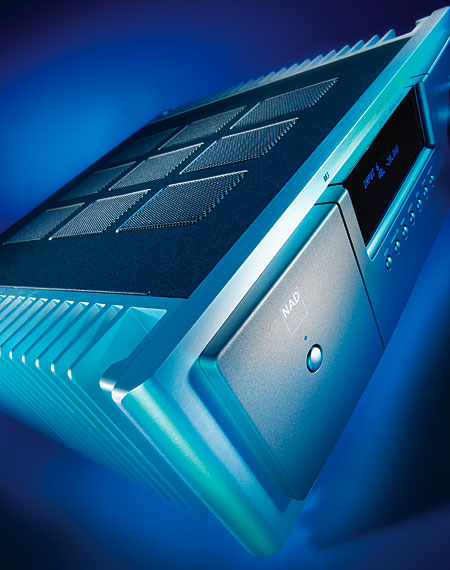
Older audiophiles remember the splash NAD made in the late 1970s with the introduction of their 3020 integrated amplifier ($175). Ridiculously cheap, it looked graceful and sounded warm, inviting, and holographic. Removable jumpers between the 3020's sections permitted enthusiasts to determine whether the magic resided in its preamp, its power amp, or in some synergy of both.
NAD Masters Series M10 streaming integrated amplifier
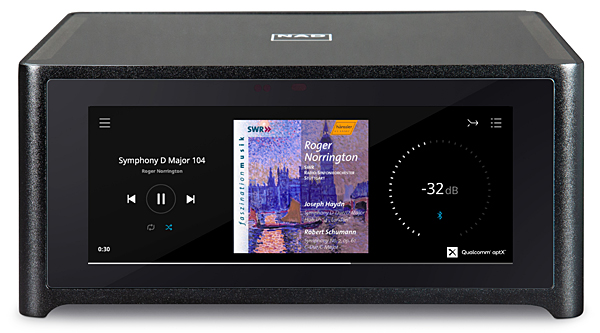
High-quality playback of digital audio is evolving in two opposed directions. One is where a smart wireless loudspeaker, like the KEF LSX or DALI Callisto 6 C, needs to be connected to a simple source of data. The other is where a smart amplifier takes the data from wherever it needs and sends it to a pair of dumb loudspeakers. NAD's Masters Series M32 integrated amplifier ($4848 with its optional MDC DD-BluOS module), which I reviewed in May 2018, is a great-sounding example of the latter approach.
In the spring of 2019, NAD introduced the Masters Series M10 ($2749). At first I assumed that the M10 was a stripped-down, less-powerful version of the M32, but the new amplifier offers a unique set of features.
NAD Masters Series M10 V3 streaming integrated amplifier
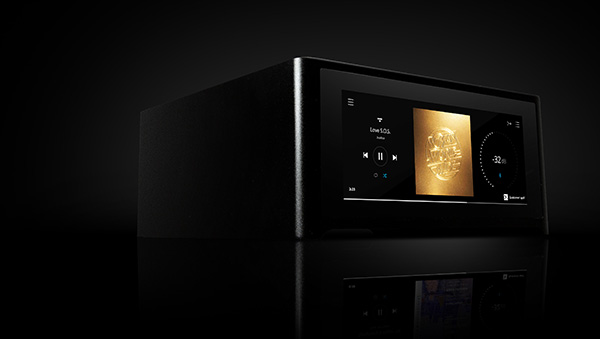
After I reviewed NAD's Masters Series M10 streaming integrated amplifier in January 2020, I bought the review sample to use as my daily driver . . . In 2022, NAD replaced it with a revised version, the M10 V2 . . . I never tried the V2, but when NAD introduced the M10 V3 ($2999) in late 2024, I felt a follow-up review was appropriate.
NAD Masters Series M32 DirectDigital D/A integrated amplifier
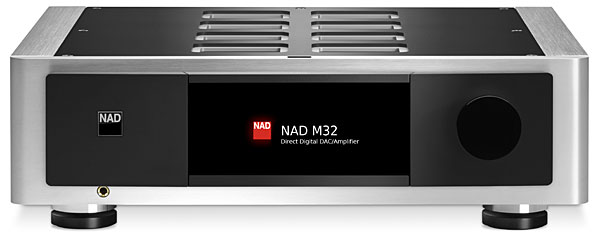
When I asked NAD for a sample of their Masters Series M50.2 digital music player, which I reviewed in the December 2017 issue, they also sent me a Masters Series M32 DirectDigital integrated amplifier, which had also been introduced at the 2017 Consumer Electronics Show. Costing $3999, the M32 offers a continuous power output of >150W into 8 or 4 ohms. The M32 is the same size as the M50.2, and its smart-looking combination of matte black and gray-anodized aluminum panels make it look identical to the player, except for the black volume-control knob to the right of the front panel's four-color touchscreen, and the ¼" headphone jack at bottom left. It even has the same eight ventilation grilles inset in the black top panel.
NAD Masters Series M33 streaming integrated amplifier
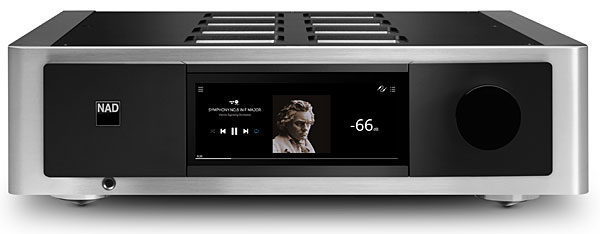
On the cold and sunny morning of February 19, 2020, a dozen or so audio critics and writers gathered at Gilmore's Sound Advice on New York's far West Side to see some new NAD and DALI products that had been unveiled the prior month at CES. It was a friendly group, and we kibitzed over coffee before clustering in the arranged seats for presentations and auditions. I doubt any of us realized that it would be the last time for the foreseeable future that we would experience this familiar rite.
Naim Audio NAIT 5si integrated amplifier
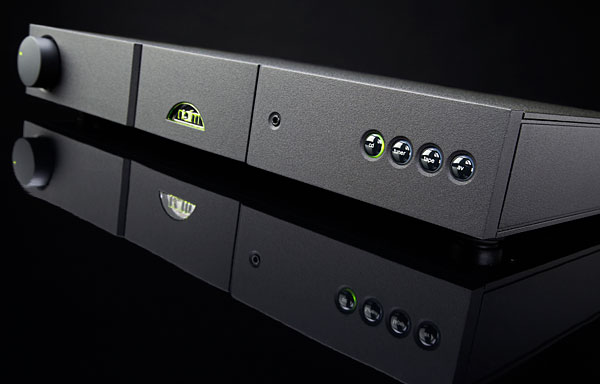
Some among us remember a time when audio was divided into rival interests. On the left side of the pond was the New World, where left-brainers believed that vanishing harmonic distortion meant that "all amplifiers sound the same," and that good loudspeakers are a high-fidelity audio system's most important components. Across the waves, so-called flat-earthers claimed that the most important part of the playback chain was the turntable. (Of secondary importance were the tonearm and cartridge, followed by the preamp and amplifier. Loudspeakers were deemed relatively unimportant.) In the 1980s, this extremist idea of the "front end first" captured the imaginations of audiophiles, mostly in the Mother Country.