

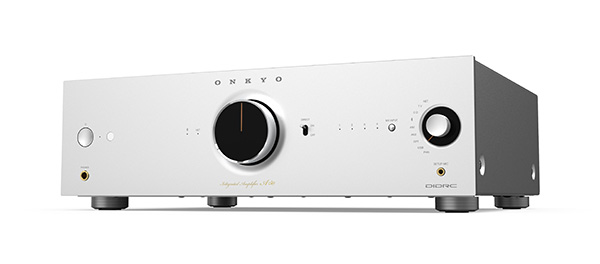
Onkyo Icon Series A-50 streaming integrated amplifier
There are craftspeople and companies in high-end audio doing admirable work. Those at the cost-no-object end of the business are pushing performance limits and doing new and better things with new and better materials. The ones I especially admire, though, are in the high-value end of the business, making extraordinary equipment at approachable prices.
Outlaw Audio RR2150 stereo receiver
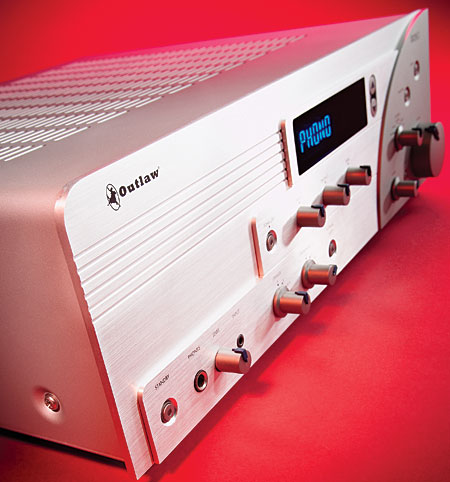
Wilson Audio Specialties' David Wilson likes to say that you should build a stereo system from the speakers down. Of course he does—he sells speakers. But that doesn't mean he's wrong. So recently, when offered an inexpensive new product for review, I decided it would be a good test of Wilson's theory. I tried driving Wilson's $45,000/pair MAXX2http://www.stereophile.com/floorloudspeakers/805wilson">MAXX2; speakers with Outlaw Audio's RR2150, a $599 stereo receiver.
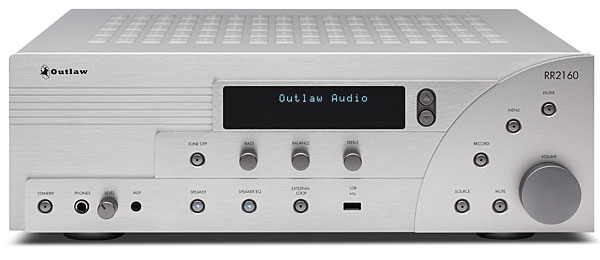
Outlaw Audio RR2160 stereo receiver
For audiophiles of a certain age, the mere mention of NAD Electronics' original 3020 integrated amplifier (1980, designed by Erik Edvardsen), or Adcom's GFA-555 stereo power amplifier (1985, designed by Nelson Pass), conjures up happy memories of audio's last Golden Agean idyllic time when working stiffs could luxuriate in the same audio arcadia as bankers and brokers. Since then, few, if any, audio components have achieved that level of iconic high value. Which caused me to wonder: What would it take, nowadays, to manufacture a genuinely high-value audiophile product: one that delivers exciting, satisfying sound at a price most audiophiles can afford?
Parasound Halo Hint 6 integrated amplifier
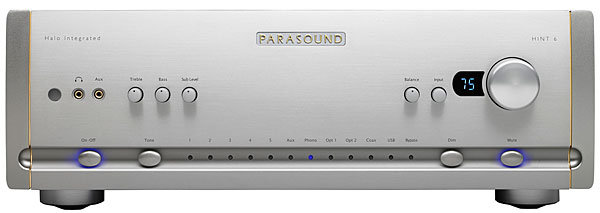
In his review in the November 2015 issue, Herb Reichert wrote that Parasound's Halo Integrated amplifier "has a recognizable sonic personality: easy flowing, mostly smooth, and decidedly mellow. . . . But don't worryit's not milquetoast mellow or unwashed-hippy-stoner mellow. It is, instead, an everything's-under-control, don't-worry-now mellow."
Parasound Halo Integrated integrated amplifier
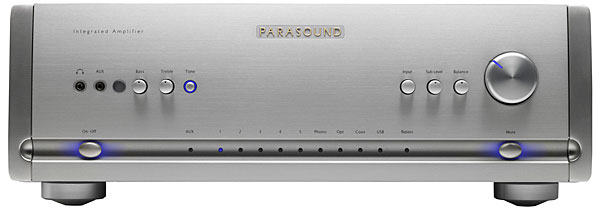
Like baking bread or watering my garden, playing records in my monk's cell is an expression of my devotion to living mindfully. It is part of my search for identity and comfort. It shows me how my thoughts, feelings, and poetic imagination fit in with yours, Keith Jarrett's, and everyone else's. The only problem: Often, the stereo components that most enhance my experiences of devotion and identity are not those that I can sincerely declare to be the most accurate or neutral.
Pass Laboratories INT-60 integrated amplifier
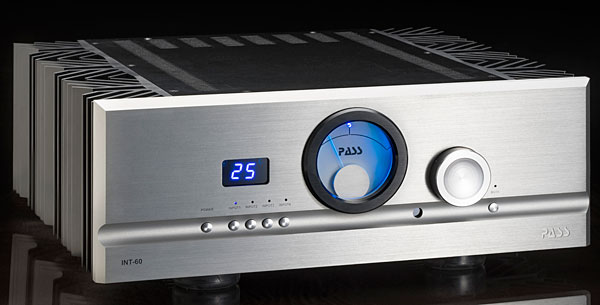
If I told you that Pass Laboratories' INT-60 integrated amplifier ($9000) was engineered by meth-lab trolls, its faceplate was wonky, its transformers buzzed, and it made every instrument sound like a tambourine, you'd think I was a crackpot with some kind of axe to grind, right? Because I suspect that, like me, you've never experienced or even read about a Pass Labs amp that didn't sound good.
Pass Labs INT-150 integrated amplifier
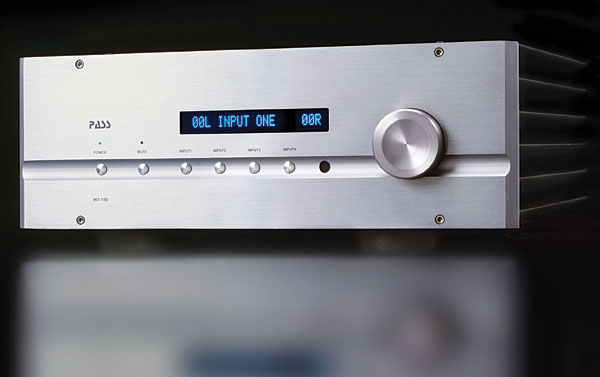
Ten thousand hours. According to Malcolm Gladwell, in his book Outliers: The Story of Success, it takes 10,000 hours of practice to become truly exceptional in your field. For any endeavor, Gladwell contends, what will get you to Carnegie Hall isn't inborn talent but practice, practice, practice.
Pass Labs INT-25 integrated amplifier
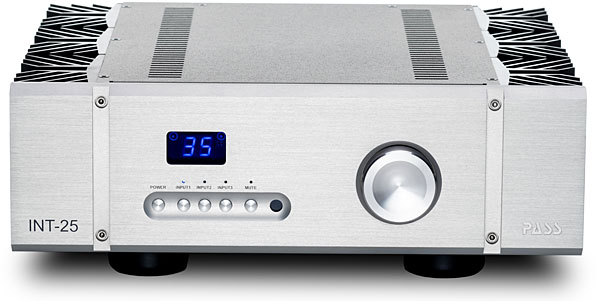
In my personal life I prefer the minimalist, one-box architecture of integrated amplifiers. Always have. Before I started writing for Stereophile, my only audio system consisted of a pair of 15 ohm Rogers LS3/5a loudspeakers (with factory wall mounts) and an ancient Creek integrated amplifier, connected to my computer via a Halide DAC HD, and to an Oppo CD player. That system had pitch-perfect tone and was satisfying with all types of music.
Pathos InPoL Legacy integrated amplifier
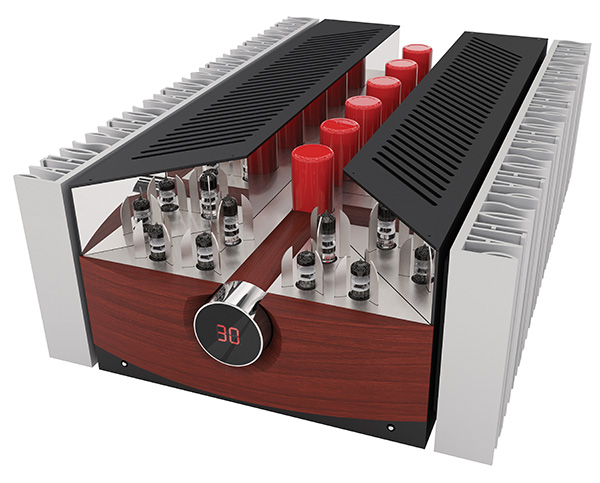
Back when gasoline had lead in it and amplifiers came with circuit diagrams in the back of the manual, there was an unspoken understanding that power meant weight. A professional camera was a Graflex Speed Graphic or a Hasselblad 1000F, built like a small battleship and nearly as heavy. Powerful car engines were cast-iron V8s with cylinders you could stick a fist in. And of course, serious amps had transformers that could double as boat anchors.
These days, amplifier design often emphasizes efficiency. Class-D amps in particular have come a long way. Many are terrific, and they're undeniably practical. But there's still something uniquely satisfying about a design that prioritizes timeless expression over economy of electricity or space.
The Pathos InPoL Legacy, a class-A design, is unapologetically massive and so gloriously overbuilt that moving it requires a tactical plan and a chiropractor.
Pathos InPol Remix MkII integrated amplifier

Sometimes when the world shouts too loudly, I immerse myself in other sounds: in music. I escape the cacophony by diving into my stash of vinyl records (not literally, although that's a fun image) and reveling in the soundwaves they release. The soundwaves liberated from those physical grooves, combined with impressions stored deep in my hippocampus, never fail to soothe, energize, fascinate, excite.