

Smart Devices, Stupid People
The Internet of Things, or IOT, is an extremely hackable network that connects everything from household appliances to cars. To me, it's the ultimate example of technology that, once created, just doesn't need usand I fear that the more tasks that are routinely, magically performed for us puny humans at the touch of a button by "smart" devices, the less capable we become.
Snob Appeal

It began innocently enough. In June, Slate.com published a sampling from an exhibit by the photographer Kai Schaefer, in which classic LPs of different eras were partnered with the similarly classic record players on which they might have been played: Tea for the Tillerman on a Dual 1219, Kind of Blue on a Rek-O-Kut Rondine, Sgt. Pepper's on a Thorens TD 124you get the idea. The photos worked as cultural documents, as good-natured kitsch, as surprisingly beautiful and compelling industrial art. I was thoroughly charmed.
Snob Appeal
A number of recent letters have accused us of snobbishness and elitism because we devote so much space to reports about components that "common folk" can't afford. We are "snobbish" because we seem to look down on anything less perfect than a Wilson WAMM speaker system or an Audio Research SP-10 preamplifier. And we are "elitist" because we seem to show little interest in any components which fall short of state of the art. Far from being chastened by these letters, I am proud, to declare that they are right on target.
Snobs, Slobs, & Marley's Ghost
As often as not, it ain't the heat—it's the stupidity. When confronted by the smattering of self-referential dilettantes, acrimonious Internut wannabes, and obsessive-compulsive types who suck the air out of our aural fun-house, I find myself overcome with the desire to program my phaser for CLIP.
So Many Trees!
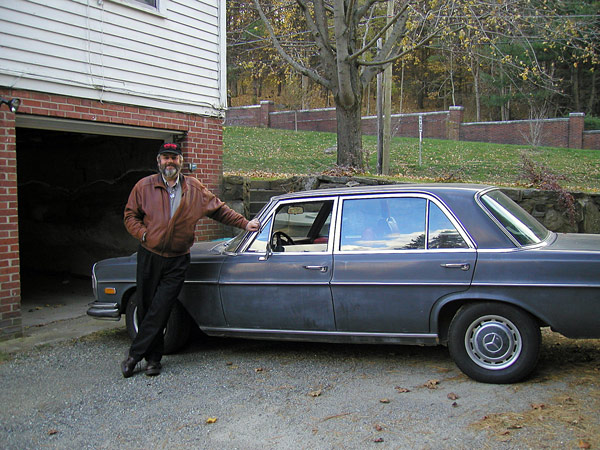
Trees. All I could see from Route 44 was trees. Many, many trees. How many trees? Exactly 251.1 million maples, hickories, pines, hemlocks, ashes, and oaks of all colors, with trunks 5" or greater in diameter, according to an online survey I later found on the Web. Once you get away from I-95 and the coast, Connecticut seems to be one large forest, its towns peeking out from barely adequate clearings. And not just "seems"—the same online survey says that 57% of the Constitution State's 3,205,760 acres are officially classified as "forest."
Some New Music

Recently, I found myself in an email correspondence with David Chesky, the musician/composer/entrepreneur behind Chesky Records and HDtracks, which was the world's first hi-rez music-download service. With his brother Norman, David has long run those businesses while engaging with his art. At the time of our correspondence, he was on tour with his jazz trio and busy "writing operas and children's works to keep me out of trouble," as he wrote in an email. Brother Norman, surely, has had much to do with the success of the Chesky venturesI do not mean to give him short shriftbut it was David I was communicating with, so he is the focus here.
Some new rock music

My As We See It column in the November 2021 issue of Stereophile was a sincere expression of regret over my inability to connect with current rock music. It ended with a request for recommendations. I got 'em. What's more, most (but not quite all) of those who responded found themselves inthe same situation: They too found most current rock'n'roll difficult to relate to.
Some Things Change, Others Stay the Same; Introducing the Spin Doctor
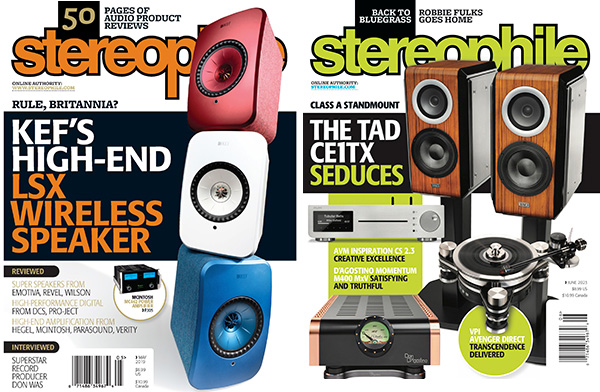
This, Stereophile's June 2023 issue, is the 50th I've produced as editor. That seems like a lotyet the four-plus years it took have flown by; it seems impossible that I've done this 50 times already. Still, the main thing it makes me think is how inexperienced I remain: It will take another 28 years to match JA1's record. That's unlikely to happen: I'm not sure when I'll retire, but I hope it will be before I turn 87. What have I learned? I've learned a lot about producing this magazine, and I've gained a lot of detailed knowledge, especially about specific hi-fi components. I've gained some broader knowledge, too, including a deeper appreciation for the crucial importance of the time domain in hi-fiof the fact that music happens in the time domain and we experience it there. In the very best systems, that fact is respected and exploited.
Sound Pressure: Listening to Loudspeakers
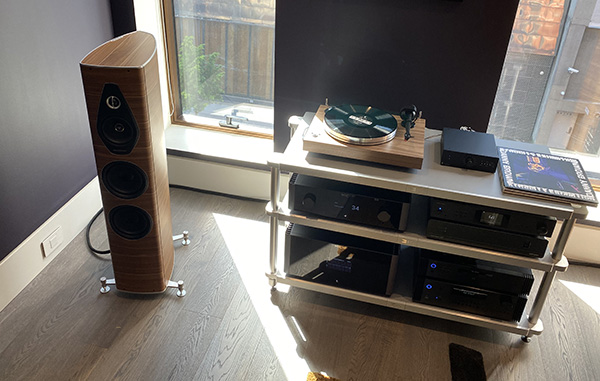
Sometimes speakers talk to me. Usually when they do, they ask me to move them, or to move myself—the listening position—to suit them.
Sounding Off!
"Hoom! Hoom-hoom! HOOM!"