

Spectator Sports, Good and Bad
There is something about the performance of music that is in the nature of a spectator sport. By this I do not mean big-arena stagecraft and lights and fireworks and dance routines. I mean the actual making of the music.
To see Eric Johnson's fingers flying over his Fender Stratocaster as he hits "Cliffs of Dover" out of the park one more time is to enjoy something that is every bit as much an athletic performance and a spectator sport as baseball is. There is a thrill to watching people do difficult things exceptionally well, things that most of us can only take random sidelong swipes at.
Speed Limits & the Music Biz
"Bugger!" A Pennsylvania state trooper had stepped out from behind the overpass on the Turnpike and was aiming his radar gun straight at me. I reflexively jammed on the anchors, which was a) pointless and b) downright dangerous, considering I was in the middle of a phalanx of cars and trucks all cruising 5-10mph over the speed limit. But what can you do?
Spirited Away by Music
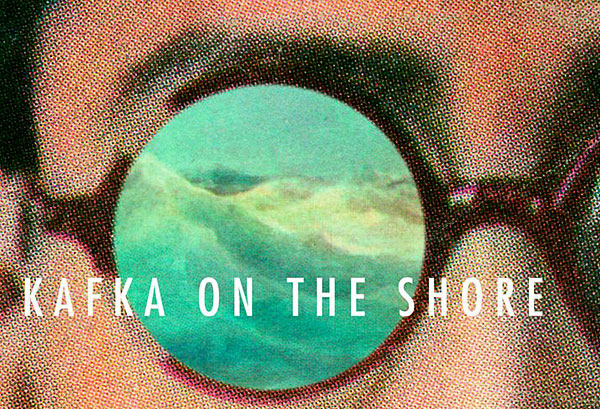
Yup, you're in a strange position, all right. You're in love with a girl who is no more.Haruki Murakami
The quote above, from Haruki Murakami's novel Kafka on the Shore, is addressed to Kafka, a 15-year-old boy who has fallen in love with the teenage ghost of an older woman. The woman is still alive, but ever since the death of her lover many years before, she has existed separate from her spirit. Falling in love with ghosts is something I've done often, starting at about Kafka's age.
Squeezing the Music 'til the Bits Squeak
In this space last January, I enthused about the sound of linear 20-bit digital recordings which, I felt, preserve the quality of a live microphone feed. "I have heard the future of audio—and it's digital!" I proclaimed, which led at least a couple of readers to assume I had gone deaf. Putting to one side the question of my hearing acuity, 20-bit technology has been rapidly adopted in the professional world as the standard for mastering. The remaining debate concerns how to best preserve what those 20 bits offer once they've been squeezed down to the 16 that CD can store. Sony's Super Bit Mapping algorithm and Harmonia Mundi Acustica's redithering device have been joined by new black boxes from Apogee Electronics, Lexicon, and Meridian; it appears likely that, in next to no time at all, all CD releases will be offering close to 20-bit resolution—at least in the upper midrange, where the ear is most sensitive.
Start Making Sense

Record-business profits peaked 20 years ago, just before Napster and other file-sharing sites turned their world upside down. There have been occasional surges, but the future of the Compact Disc looks bleak, and while income from downloaded files is still climbing, the shift of profitability from à la carte music sales to unlimited streaming on demand seems inevitable. The realignment is already underwaythe vast majority of today's music listeners, young and old, haven't bought a CD, file, or LP in years. It pains me to admit it, but after hearing, at the 2014 Midem music exhibition, a presentation by Marc Geiger, of William Morris Endeavors, I was convinced that music-streaming companies are poised to reboot the industry. If Geiger's predictions are accurate, the music business will be more profitable than ever, and swell to $100 billion in 20 years or less (see www.youtube.com/watch?v=bcNsAR_FM5M&feature=share).
Starting Over
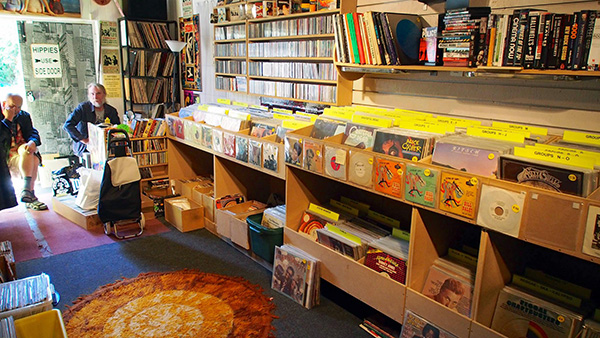
In the excellent My Back Pages essay that closes this issue, Londoner Phil Brett writes, "I bought my first albums in my teens for £2 then sold them off years later for 50p each."
Why did he sell his records? "[I]n those days, most vinyl had the thickness of a butterfly wing without the quality. As I grew older, I went throughahemseveral relationships hence several changes of residence. The hassle of carting boxes of records around grew wearisome; CDs were so much lighter, and often, they sounded better."
Phil predicted Stereophile readers would be horrified by what he did those many years ago. Maybe sobut for many, the horror will arise from regretat the memory of doing the same thing themselves back in the day. As I did.
Starting Over Again for the First Time

"There are two kinds of music. Good music, and the other kind," Duke Ellington is famously supposed to have said. But that doesn't tell us how to recognize "good music," and it doesn't define good. Nor will this essay. Many have described the music of, say, Mozart or J.S. Bach with such phrases as the music of heaven or the mind of God orespecially Bach's musicthat it embodies the basic structure of the universe/existence/reality. I've said such things myself.
Staying in Touch
"The trouble with some reviewers..."
Stereo & the Soundstage
The accuracy of a hi-fi system's "soundstage" reproduction seems to be of paramount importance these days, just as a component must now have "transparency" to possess hi-fi righteousness. If the system in which that component is used doesn't give good soundstage, then the system's owner has definitely fallen by the wayside. But what defines a good soundstage? Stereo imaging must have something to do with it, I hear you all cry. (I would have said stereo imagery until Larry Archibald pointed out that imagery has far less to do with hi-fi than with good writing, something I'm sure we agree has no place in a hi-fi magazine.) OK, what defines good stereo imaging?
Steve Guttenberg's 116th Dream
I'm at Dan D'Agostino's house listening to his triamped Apogee full-range ribbon speakers. It's 1985. His listening room is immense, easily 30' by 45', and we're rocking out to Led Zeppelin and Bonzo Dog Band records. The sound is light-years better than anything I've hearddynamic as hell, beyond vivid, and the soundstage has infinite depthand Dan's obviously loving that I'm blown away by his system. We get to talking. He has three pairs of Krell KMA-160 monoblocks and Reference KRS preamps for me. Thanks, I say, but how can I get them home? No problemDan has a van.