

dCS Rossini Player & Rossini Clock
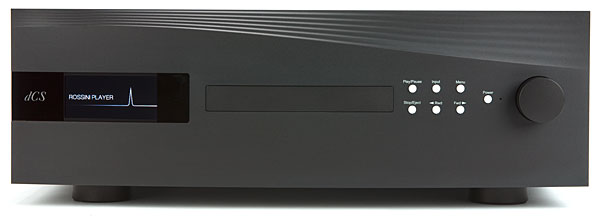
It has been 20 years since I first became aware of the British company Data Conversion Systems, which manufactures audio products under the dCS brand. Rather than use off-the-shelf conversion chips, the groundbreaking dCS Elgar D/A converter, which I reviewed in our July 1997 issue, featured a then-unique D/A design that they called a Ring DAC. This featured a five-bit, unitary-weighted, discrete DAC running at 64 times the incoming data's sample rate2.822MHz for 44.1kHz-based data, 3.07MHz for 48kHz-sampled data and its multipleswith upsampling and digital filtering and processing implemented in Field Programmable Gate Arrays (FPGAs). Oversampling to a very high sample rate allows the word length to be reduced without losing resolution, and use of a low-bit multi-bit DAC makes for very high accuracy in the analog voltage levels that describe the signal. (If this seems like voodoo, for a given signal bandwidth, bit depth and sample rate are related. To oversimplify, double the rate, and you can reduce the bit depth by one bit while preserving the overall resolution.)
dCS Varèse Transport CD/SACD transport
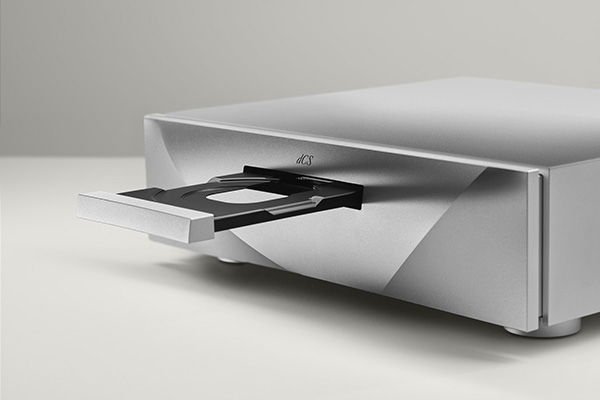
Silver platters and I began divorce proceedings over a decade ago. The separation began when the husband and I contemplated liberating ourselves from crime-ridden East Oakland and moving to placid Port Townsend. There was no way I was going to haul 55 big boxes of CDs 846 miles and have no place to put them.
Denon DCD-2560 CD player
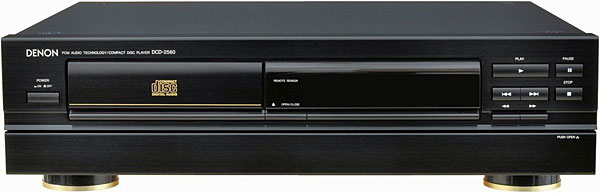
My first CD player was a Denon DCD-1800, the grandpappy of 'em all. It was big, clunky, and sounded like, well, you can read back issues to find out what it sounded like. But I was living in a fraternity house at the time, the kind of place where you wake up the next morning after a blow-out to find five plastic cups half full of stale margaritas merry-go-rounding on your turntable because whoever broke into your room during the party snapped your cartridge's cantilever off trying to hear the backwards messages on The Wall and decided to leave you an artistic message to buy a better needle next time, dude.
EAR Acute Classic CD player
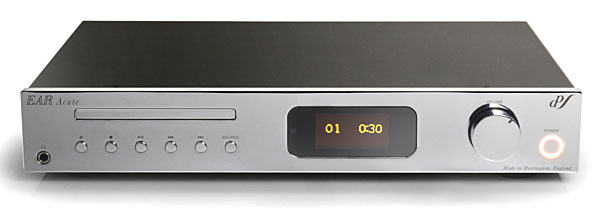
In Stereophile's January 2016 issue, I began a series of reviews of $10,000 CD players and transport-DAC combinations: an informal and serial survey, the goal of which was to gather, over time, the likeliest candidates for one's Last CD Player Ever. My choice of $10,000 as the target price was more or less arbitrary, although, in retrospect, that's about what I've invested in my go-to combination of turntable, tonearm, and pickup headso, who knows? Maybe my subconscious was acting out.
Emotiva ERC-2 CD player
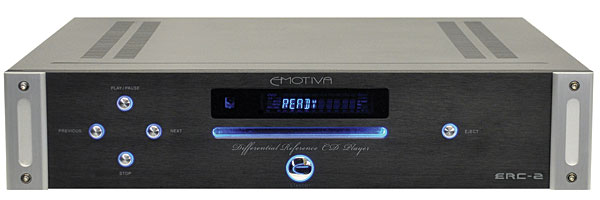
Because I am an audiophile, I want to hear that music through the best possible source component. Lately, I've been enjoying CDs through the Emotiva ERC-2 CD player ($449).
The Emotiva ERC-2 measures 17" (435mm) wide by 4.25" (110mm) high by 14" (360mm) deep and, at 17.5 lbs (8kg), is the heaviest component to enter my listening room since the 25-lb Simaudio Moon i3.3 integrated amplifier ($3300, discontinued). The player's distinct appearance was developed by Emotiva's president and CEO, Dan Laufman, and VP of engineering, Lonnie Vaughn. In building the ERC-2, their goal was to "keep it simple, easy to use, and elegant . . . in a machine-oriented way."
Ensemble Dirondo CD player
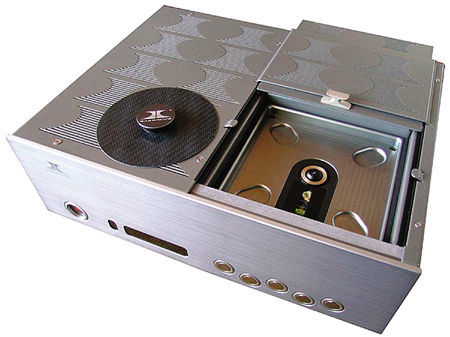
I've encountered a number of audio products over the years whose thoughtful design and intricate craftsmanship brought to mind the expression "built like a Swiss watch." As often as I'd thought or even written that phrase, however, I don't think I'd ever stopped to seriously consider what an audio component might be like if actually built by the nation that produces Rolex and Breitling wristwatches.
Esoteric P-2 CD transport
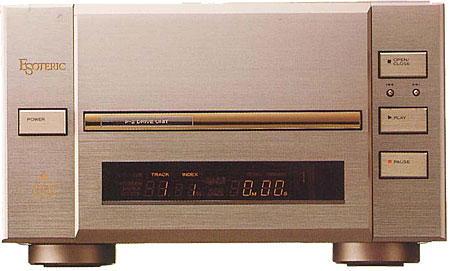
The whole idea that different CD transports have different sonic characteristics when driving the same digital-to-analog converter is a vexing problem. It is easy to prove that even the cheapest CD players recover the data stored on most CDs with bit-for-bit accuracy, thus disproving the widespread and erroneous belief that errors in the digital code are commonplace and affect presentation aspects such as imaging, soundstage depth, textural liquidity, etc (footnote 1). If the datastream driving the digital converter is comprised of the same sequence of ones and zeros, regardless of the transport, what other factors could account for the sonic differences between CD drives reported by many listeners?
Exposure CD Player
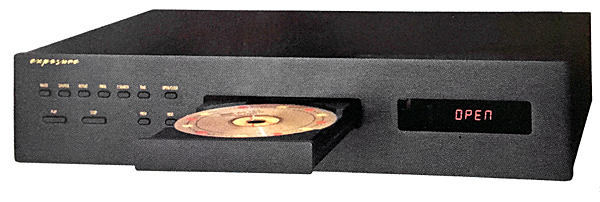
Exposure owner/designer John Farlowe graduated from the UK's University of Sussex at the end of the swinging '60s. He put his B.Sc in electronic engineering to use at HiWatt, manufacturers of tube guitar amplifiers. His keen interest in pro audio, particularly in sound reinforcement for rock bands, led him to Midas (studio mixing desks and systems), where, as director and designer, he designed and built mixing desks and got together with the late Dave Martin of Martin Audio. They became heavily involved in sound systems for Pink Floyd. Midas desks and Martin speakers were used at many live venues, including those at London's Rainbow.
Four 3rd-Generation CD players: Adcom, Magnavox, Onkyo, Yamaha
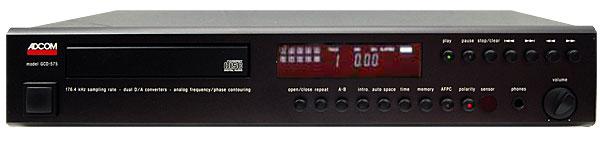
I once told Stereophile publisher Larry Archibald it might be worth, say, a 10% loss in sound quality with CD not to have to jump up and turn over the damned record. Sometimes a CD saves you from popping up twiceMahler's Fifth or Bruckner's Seventh on a single disc instead of three LP sidesor three timesMozart's Magic Flute on three CDs instead of 6 LP sides. That might be worth a 15% sacrifice.
GamuT CD 1 CD player
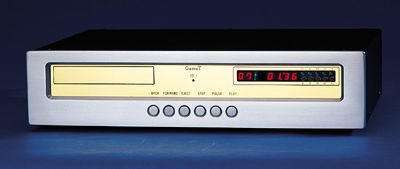
I was in a jam. John Atkinson was gently reminding me of rapidly approaching deadlines, and my longtime reference CD player, the Simaudio">http://www.stereophile.com//digitalsourcereviews/343/">Simaudio Moon Eclipse, had just been recalled for an upgrade. This wouldn't normally have been a problem, but I was also in the middle of relocating from New Mexico to California, and all of my backup gear was either in storage or on a moving truck somewhere.